


MIT Historian Reveals Chinese Tea Label Wasn’t From the Boston Tea Party
A Chinese tea label long believed to be connected to the Boston Tea Party was created nearly a century later, according to new research by Tristan Brown, an associate professor of history at the Massachusetts Institute of Technology.
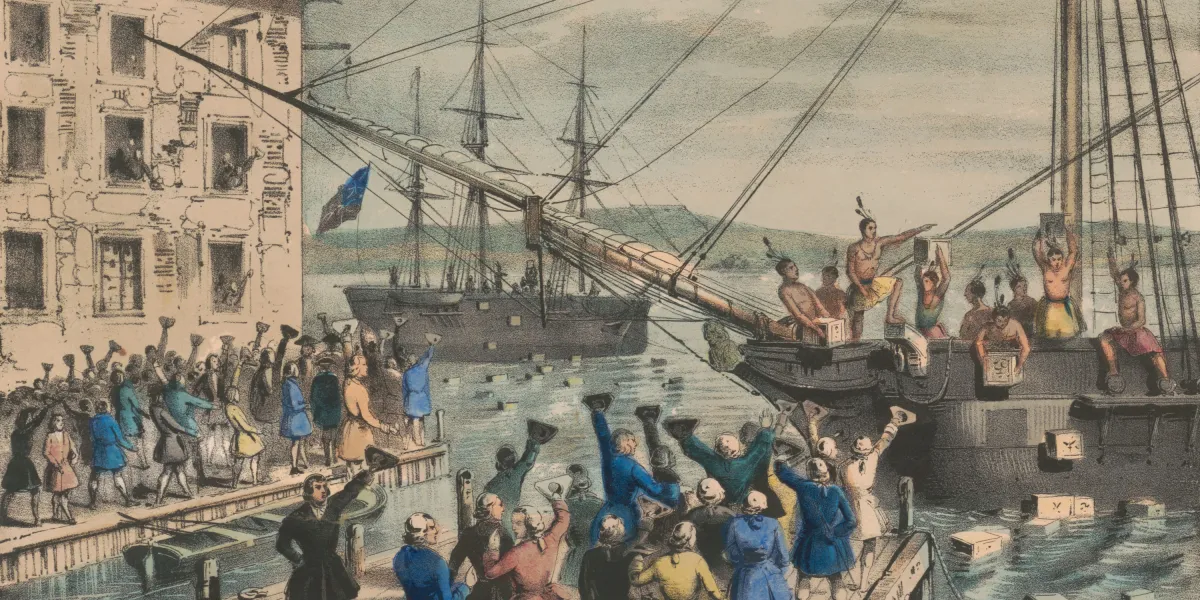
The label was displayed at Boston’s Old South Meeting House after descendants of Boston blacksmith Thomas Wells donated it in 1987. The family said it had been recovered after colonial protesters threw tea into Boston Harbor in 1773.
A Cantonese Translation Changed the Story
Brown initially had no reason to doubt the account. But after a year of research, he reached a different conclusion. The key clue emerged when he examined the Chinese text in Cantonese rather than Mandarin, as previous scholars had done.
Brown found that the characters were used phonetically, in slightly different forms across modern sources, to represent the name of the American company Smith, Archer & Co. The company acquired Asian tea for shipment to the American market during the 1860s and 1870s—almost a century after the Boston Tea Party.
How the Label Became a Revolutionary Artifact
Working with the Wells family, Brown traced the label to a relative who traveled from Michigan to California during the Gold Rush. The relative later returned to run a business called the California Tea Store.
Brown argues that the label’s revolutionary origin story probably developed later, during centenary celebrations in the 1870s. The research suggests that the object’s connection to the Boston Tea Party was part of a broader process through which ordinary items acquire historical authority.
What the Discovery Reveals About Historical Memory
The discovery does not make the label less historically important, Brown says. Instead, an investigation into an alleged Boston Tea Party artifact became a study of how objects gain meaning—and how historical memory is created.
“History never ends,” he says. “Even if an item has sat in a museum for decades, asking new questions can reveal a whole new story.”
Source: www.technologyreview.com