


Nature Briefing: Brain-Computer Interface Translates Voice and Movement Into Text
Hello Nature readers. Would you like to receive this briefing free in your inbox every day? Sign up here.
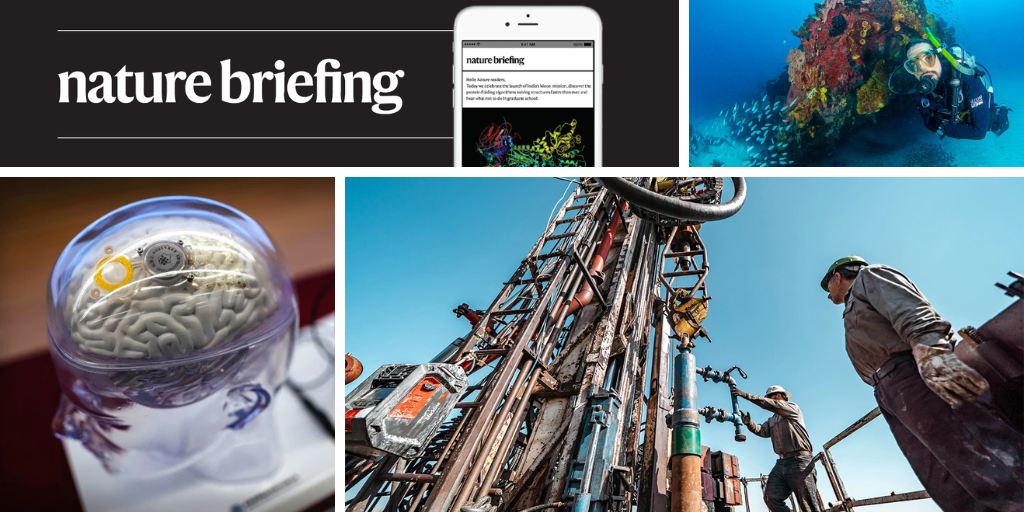
A brain-computer interface decodes the user’s brain signals.
Credit: Kevin Frayer/Getty
Brain-computer interface translates voice and actions
A new brain-computer interface (BCI) is the first of its kind to simultaneously translate a user’s voice and actions. Tested on two people with paralysis, the device uses artificial intelligence to convert electrical activity in the brain into text displayed on a screen. It also prompts a personalized animated avatar to move.
The process happens within seconds, depending on the user’s intent. Bioengineer and study co-author Samantha Brosler says the research is “a step toward a more versatile BCI” that captures the expressive power of communication better than current technology.
Nature | 5-minute read
Reference: Nature Neuroscience paper
Reading for pleasure linked to brain changes and better mental health
Reading for pleasure is associated with structural changes in the brain. A review of its many positive effects highlights potential benefits including improved mental health and a lower risk of cognitive decline.
A review of the evidence also suggests that beginning to read at a young age is associated with improved attention, memory, executive function and academic performance, as well as fewer mental-health problems. The key, says neuropsychologist and co-author Barbara Sahakian, is joy: “When you read for pleasure, you read more often and for longer.”
New Scientist | 4-minute read (Free registration required)
Reference: Psychiatry review
Private funding grows in Brazilian science
Brazilian philanthropists have begun investing heavily in science, a trend that could help protect research funding unless the winner of next month’s presidential election prioritizes science.
Scientists at Brazil’s leading universities have historically argued that science should be fully funded by the government and have criticized other universities for accepting private funding. However, researchers who have received charitable support say it has provided flexibility and helped them launch projects when public funding is insufficient.
Nature | 5-minute read
Features and analysis
Could underground hydrogen transform clean energy?
“Right now, we don’t yet know whether it’s almost nothing or completely ubiquitous,” says geophysicist David Waltham. That uncertainty is challenging energy explorers searching for deposits of hydrogen trapped in underground rocks.
Excitement grew after researchers estimated that Earth’s underground could contain tens of trillions of tons of clean-burning gas. “If that happens, I would expect to see proof of concept, or flowing hydrogen gas, within the next two to three years,” says geologist Chris Valentine.
Nature | 7-minute read
EU gene-edited crop rules could reshape agriculture
The European Union’s relaxed stance on growing gene-edited crops could be a game-changer for the region’s agricultural sector. But flaws in the new rules, including strict limits on the number of gene edits allowed in crops, could restrict their usefulness and undermine public perceptions of gene-edited agriculture, argues plant geneticist Nico de Storm.
“As implementation progresses, the EU should consider building in flexibility,” he writes. The alliance “missed out on the revolution in agricultural technology brought about by genetically modified organisms, and we must not make the same mistake again.”
Nature | 5-minute read
The controversial legacy of zoologist Paul Kammerer
Paul Kammerer, a renowned zoologist with a dramatic romantic history and a reputation for self-promotion, died by suicide weeks after being accused of academic fraud. A century after his death, his ideas deserve a fresh look, writes evolutionary biologist Max Telford.
Nature | 15-minute read
More science and practical advice
We’re always happy to hear about fuel-economy improvements, but this example is out of this world. NASA’s Nancy Grace Roman Space Telescope has more than doubled its projected lifespan. The achievement is credited to “exquisite planning by the orbit mechanics team, masterful execution by the operations team, and precise launch,” says NASA’s Jamie Dunn.
Drivers who want to improve fuel economy can consider reducing their top speed to 70–80 kilometres per hour (45–50 miles per hour). They can also turn off the ignition when stopped for more than a few seconds. If possible, leave the car at home.
Source: www.nature.com