


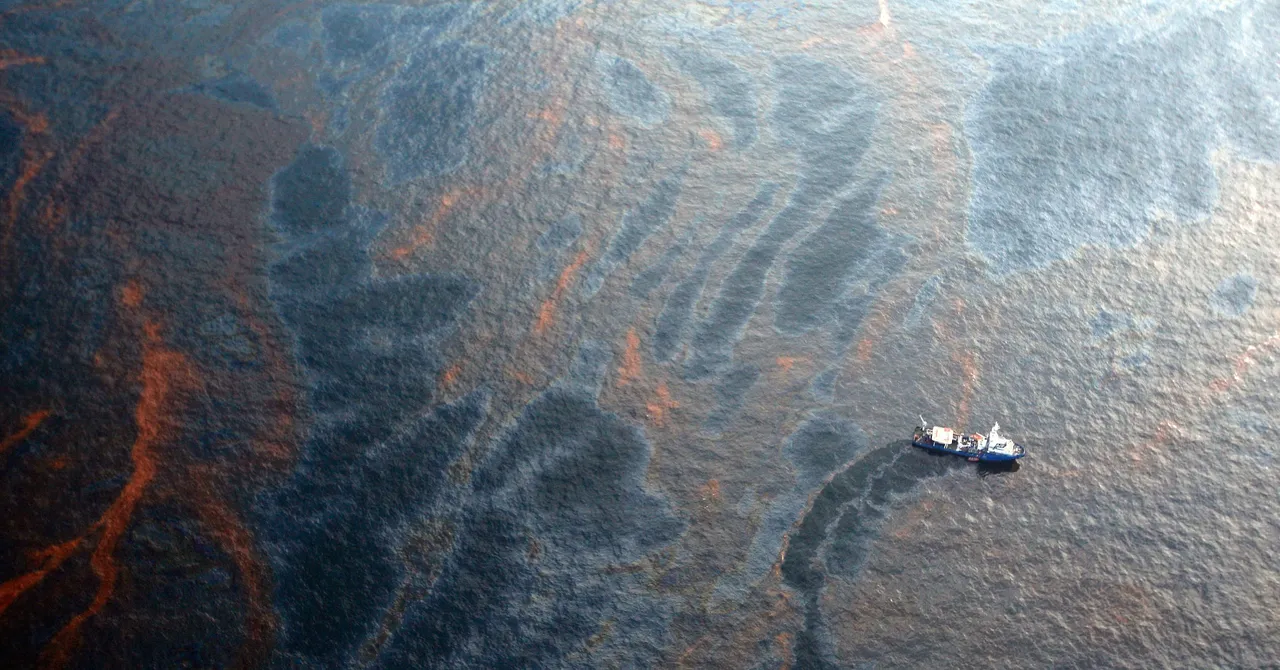
More than 15 years after the Gulf oil spill, researchers continue to find evidence of lasting damage to marine ecosystems. Reported effects include impaired development and reproduction, increased mortality, and persistent health problems in dolphins and whales. A new study suggests that residual pollutants may also interfere with some species’ highly developed sense of smell, making it harder for them to find mates in the dark.
Declines in deep-sea marine life
Tracy Sutton, a professor of marine and environmental science at Nova Southeastern University in Florida and the study’s lead author, said the spill’s effects continue to ripple through the ecosystem. A 2024 study found that the number of toothed whales diving into the deep ocean had decreased by 80%.
“We used to have a lot of sperm whales right near the Mississippi River, but we haven’t seen one in 10 years,” Sutton said. Large predators sometimes require large prey populations at high densities, but those prey have disappeared, Sutton added.
The research used a nine-month sampling baseline from 2011 and compared it with nine subsequent surveys conducted from 2015 to 2023. Researchers sampled deep-sea habitats across a large grid around the spill site, from about 650 feet below the surface to roughly one mile deep. The bathypelagic zone accounts for approximately 90% of the Gulf’s total volume.
Multiple methods confirmed the findings
At stations across the grid, scientists worked with specialists in different species groups on the ship’s slippery decks. They identified animals caught in nets that opened and closed at different depths. Sampling took place around noon and midnight to account for species that migrate vertically each day.
A scientific echo sounder on the ship provided an independent measurement by detecting sound reflected by marine life in the water column. The researchers also used genetic sampling alongside net catches and acoustic surveys.
Bruce Robison, a senior scientist and marine biologist at the Monterey Bay Aquarium Research Institute, said in an email that the study was “comprehensive and carefully constructed.”
“To my knowledge, no other study has used such a large net sample,” said Robison, who was not involved in the research.
The study focused on species that are not commercially fished. Robison said it was the first to show that human impacts can cause declines in marine life even in very deep waters.
Long-term consequences
“It’s important that the public understands how catastrophic this oil spill was,” Robison said. “The Gulf has not recovered and it’s been more than 15 years.”
Robison added that other activities, including deep-sea mining, could also significantly harm deep-sea pelagic ecosystems by releasing wastewater containing metals and lubricants.
Geoffrey Drazen, a marine ecologist at the University of Hawai’i at Mānoa who was not involved in the study, said the three lines of evidence—net catches, acoustic surveys and genetic sampling—supported one another. Together, he said, they provide “unusually strong evidence supporting his conclusion.”
The researchers examined possible causes of the decline, and Drazen said only one was consistent with the available scientific evidence.
“By logical elimination, without actually pointing fingers, there is no question that the oil spill is the cause of the decline,” he said.
Source: www.wired.com