


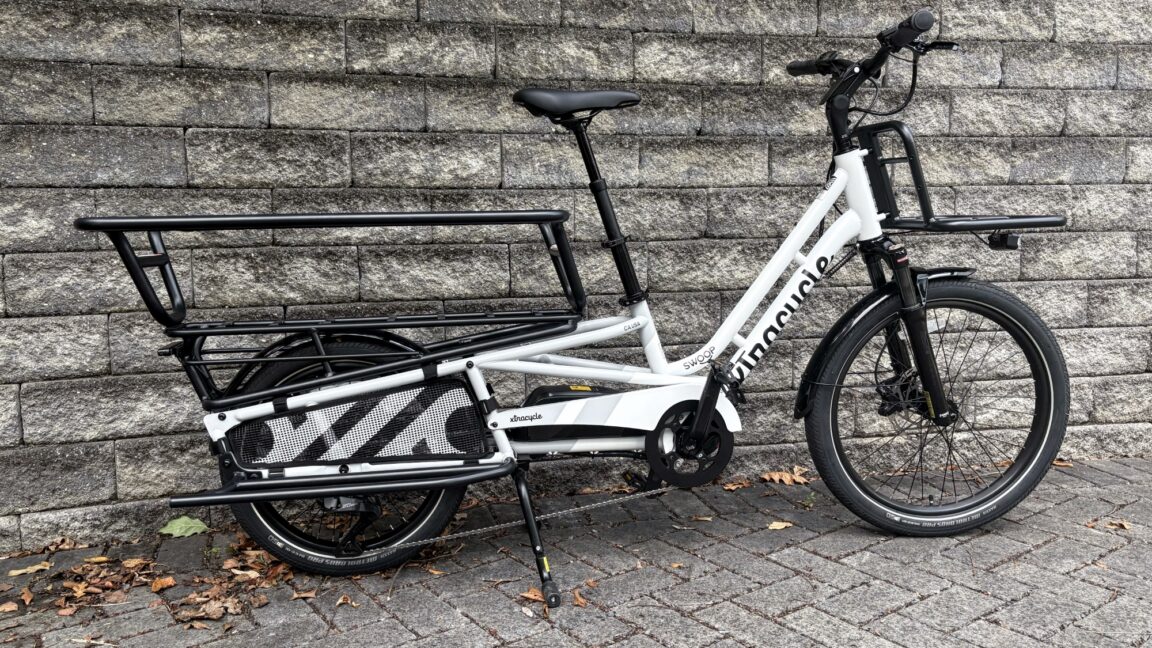
The mid-drive motor offers three levels of pedal assistance, controlled by a left-hand unit with a power button and easy-to-read display. Shifting is managed by a separate right-hand controller without a screen. This divided setup keeps both controls compact and intuitive, making it easy to operate them by feel while riding.
The Shimano e-bike system performed impressively during testing. Gear changes were smooth and nearly silent, while the three assist modes covered most everyday riding needs. The system only began to feel limited when tackling steep hills with a heavy load. This is not an e-bike designed for effortless riding in hot weather: there is no throttle, and even the highest assistance setting still requires meaningful pedaling effort. However, the motor significantly reduces the work required on longer rides and inclines.
Despite its compact size, the battery delivered enough range for dozens of miles between charges. For many riders, that means several days of regular errands before needing to recharge. The battery does not include a built-in carrying handle, but it pivots sideways out of the frame for easy removal. When installed, it also helps keep items on the left side of the bike from sliding off, catching in the drivetrain, or becoming tangled in the chain.
This was the first Shimano e-bike system I tested, and it performed as expected from a company known for high-quality bicycle drivetrains. Shimano Cues may be positioned as an entry-level drivetrain, but there is no obvious compromise in its construction or operation. The system becomes even more appealing when you consider the useful technology and additional features Shimano brings to the bike.
Smart Features and Useful Ride Data
Shimano’s software gathers a wide range of information during each ride, including speed, pedal force, gear position, and cadence. The system can then use that data to deliver more responsive assistance and enable several useful features for everyday cycling.
Source: arstechnica.com