


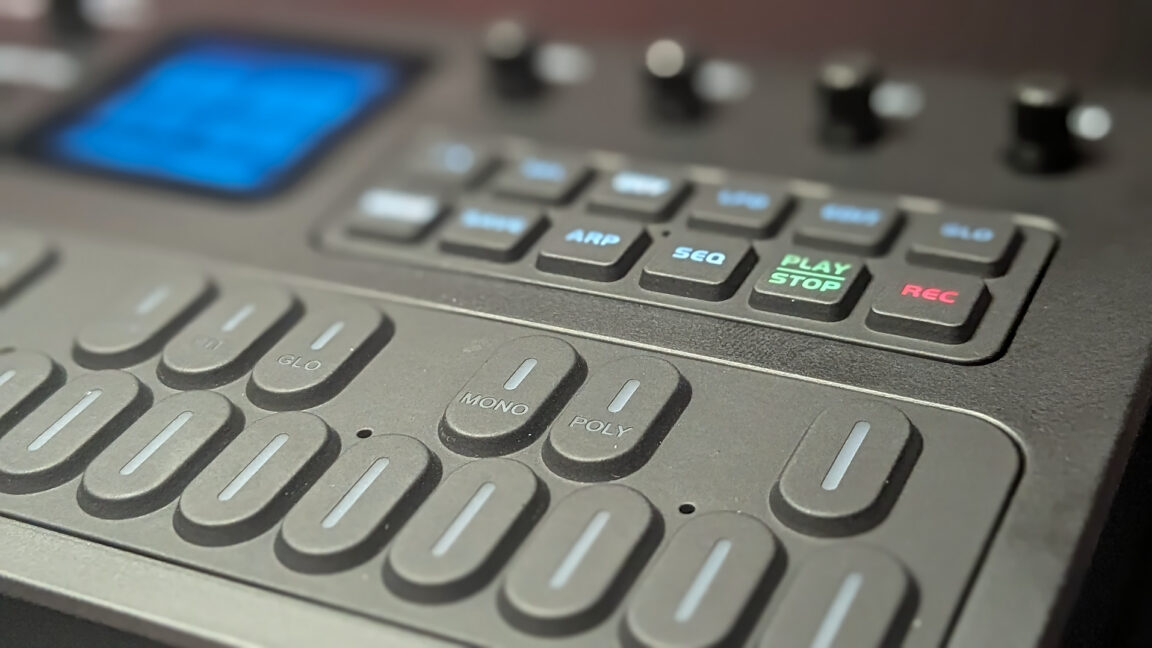
M-Vave’s $59.72 FM-1 is a pocket-sized FM synthesizer originally marketed as a low-cost version of Yamaha’s famous DX7. Although the device initially offered little beyond its advertised features, community developers began reverse-engineering its firmware in July, with custom firmware projects appearing by September. M-Vave later responded by releasing the FM1 Open development package, turning the inexpensive synthesizer into an open platform for experimentation—including, apparently, running Doom.
From budget synth to modding platform
The FM-1 is exactly the kind of device that can be difficult to ignore: a frequency-modulating synthesizer that may have no obvious practical use for everyone, but combines a low price with a high coolness factor. Originally billed as a pocket version of Yamaha’s DX7, it costs just $59.72 after fees.
When it was released, the FM-1 was an appealing device that largely did what it claimed, but not much else. In July, however, some intrepid modders on Reddit’s r/synthdiy community began reverse-engineering the synthesizer’s stock firmware to expand its capabilities.
By September, custom firmware projects had begun to appear. Before October had even arrived, there were already numerous community firmware projects available for installation. I decided to try a few. To be clear: Yes, the FM-1 does play Doom.
Stock firmware and FM1 Open
On October 17, M-Vave announced FM1 Open, a software package intended to encourage FM-1 owners to develop custom firmware and transform the synthesizer into a platform for a wide range of projects.
The FM1 Open package includes an SDK, a browser-based workbench, and version 15 of the stock firmware. Together, these tools allow owners to flash the device and build on it. The FM-1’s 27 physical piano keys and unobtrusive 1.54-inch TFT display could support a variety of musical and other projects.
When an enthusiast community reverse-engineers a device with previously unavailable firmware, manufacturers often respond by applying an official patch or otherwise restricting access. M-Vave took the opposite approach. The application source code is published under the GPLv3 license, and the company includes an in-browser emulator for testing custom firmware before flashing it to physical hardware.
There are some limitations. The underlying synthesizer engine used by the stock FM-1 package remains a closed binary, so the part that is truly open is the application layer of the software stack. That does not necessarily undermine M-Vave’s support for the community, but it is an important distinction.
Source: arstechnica.com