


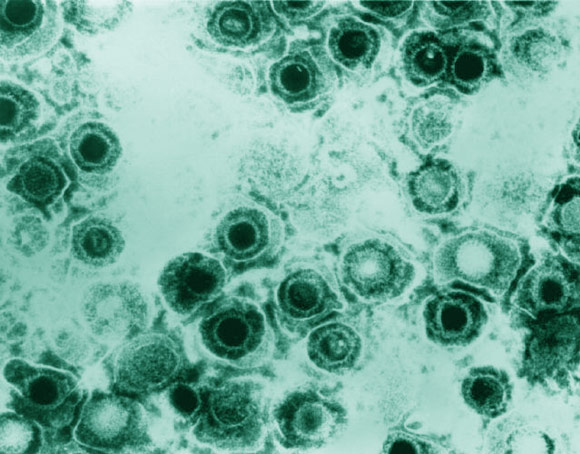
Herpes simplex virus type 1 (HSV-1), the virus that causes cold sores, reshapes microglia in localized regions of the mouse brainstem, according to a study led by the University of Colorado Anschutz College. The researchers found that infection produced interferon-dominated immune activity and altered gene regulation in areas where the virus was detected. It remains unknown whether these changes persist or influence the risk of Alzheimer’s disease.
HSV-1 infects a large portion of the world’s population and remains dormant in nerve cells throughout life. Although serious complications are rare, growing evidence suggests a link between HSV-1 and the chronic inflammation associated with Alzheimer’s disease. How the virus initiates and maintains this inflammation, however, is not clear.
Localized changes in microglia
“Microglia serve as both the brain’s security system and its maintenance personnel,” said study co-senior author Kristy Niemeyer, Ph.D., of the University of Colorado Anschutz College.
“When HSV-1 enters the brain, these cells go into emergency defense mode.”
“This helps fight the virus, but it can also impair the ability to function in daily life even after the virus is gone.”
For the study, the researchers infected mice with an HSV-1 strain and examined their brains six days later, when the innate immune response is thought to be at its peak. Using advanced molecular techniques, they analyzed how individual brain cells responded to the infection and identified where those changes occurred.
The researchers found that HSV-1 infection generated distinct populations of microglia dominated by interferon signaling, a powerful antiviral defense mechanism. At the same time, activity in genes involved in the cells’ normal protective and maintenance functions was reduced.
These changes were concentrated in brain regions where the virus was detected, suggesting that HSV-1 produces areas of localized, heightened immune activation.
Changes to gene regulation
The researchers also identified changes in chromatin, the material that packages DNA inside cells. Such changes can affect how easily genes are switched on and off.
“Interestingly, the way HSV-1 fine-tunes the microglial immune response is similar to patterns seen in response to other factors that cause Alzheimer’s disease,” said co-author Kimberly Bruce, Ph.D., also from the University of Colorado Anschutz College.
“While HSV-1 has not been proven to cause Alzheimer’s disease, this study highlights the microglial immune program as a common factor linking infection, aging, and genetic risk factors.”
“Alzheimer’s disease is influenced by multiple genetic and environmental factors,” Dr. Niemeyer said.
“Understanding how common viruses alter the brain’s immune environment may help identify why some people are more vulnerable to neurodegeneration.”
The study was published online in PLoS Pathogens.
S. Frietze et al. 2026. “Intranasal HSV-1 infection promotes region-specific interferon-dominated microglial remodeling.” PLoS Pathogens 22 (10): e1014684. doi: 10.1371/journal.ppat.1014684.
Source: www.sci.news