


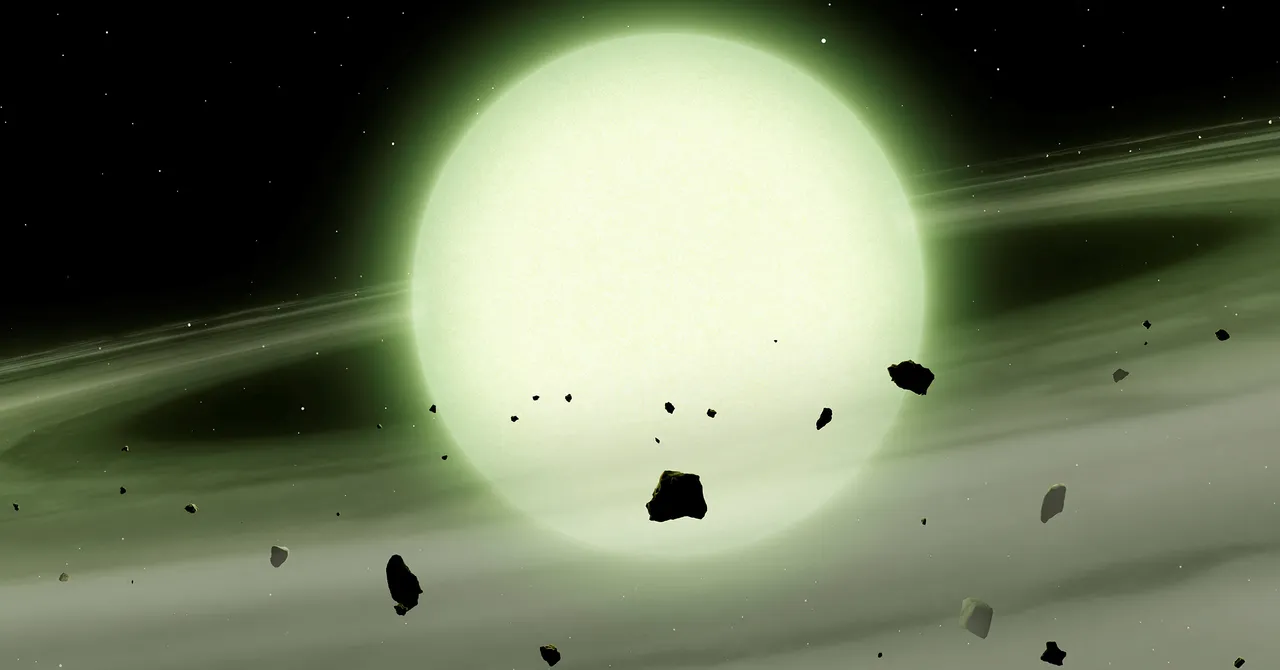
Stars are usually classified by the colors produced by their temperatures, but white dwarfs can display a far wider palette. A new study published in the journal RAS technology and equipment suggests that some white dwarfs may appear pink, green or purple because of the extreme density of their atmospheres and material left behind by destroyed planetary systems.
Why white dwarfs form
Stars with masses similar to the Sun expand into red giants near the ends of their lives. They then shed their gaseous outer layers, creating planetary nebulae that can be observed through telescopes. What remains is a white dwarf: a highly condensed celestial body with approximately the same volume as Earth but roughly the same mass as the Sun.
White dwarfs begin their lives at extremely high temperatures. The first examples discovered appeared white to light blue, which led to their name. As these stellar remnants cool, however, their atmospheres can produce a much broader range of colors.
How dense atmospheres create unusual colors
According to the researchers, density is a key factor. The atmospheres of the coldest white dwarfs can reach a density of about 1 gram per cubic centimeter. That is approximately the density of water, but it is extremely dense for a stellar atmosphere—about a million times denser than the Sun’s atmosphere.
Under these conditions, trace elements such as carbon, calcium and sodium interact with the surrounding dense helium plasma. These interactions cause the elements to absorb a wider range of light wavelengths, changing the colors that may be observed from Earth.
Debris from ancient planetary systems
Material from old planetary systems can also influence a white dwarf’s appearance. A planet close to its star may be destroyed during the star’s red giant phase. Other planets, particularly asteroids, can collide or migrate toward the stellar remnant. Debris from these bodies may then become incorporated into the white dwarf’s atmosphere.
Through a hobbyist telescope, white dwarfs generally look like other faint stars. Closer observations, however, may reveal a range of colors. Carbon-rich white dwarfs tend to appear pink or purple. Calculations indicate that a white dwarf whose atmosphere has been enriched by shattered asteroids and other celestial bodies may take on a yellow or even green tint.
The coldest white dwarfs are often light blue. The study attributes this color to collisions between hydrogen and helium atoms in their extremely dense atmospheres.
WD J1330+6435
One example is WD J1330+6435. With a temperature of about 4,000 degrees Celsius, the star is accumulating rocky material from planetary systems, enriching its atmosphere with calcium, lithium and sodium.
These elements give WD J1330+6435 its bright chartreuse color, making it the first known green star in our galaxy, according to the study.
Source: www.wired.com