


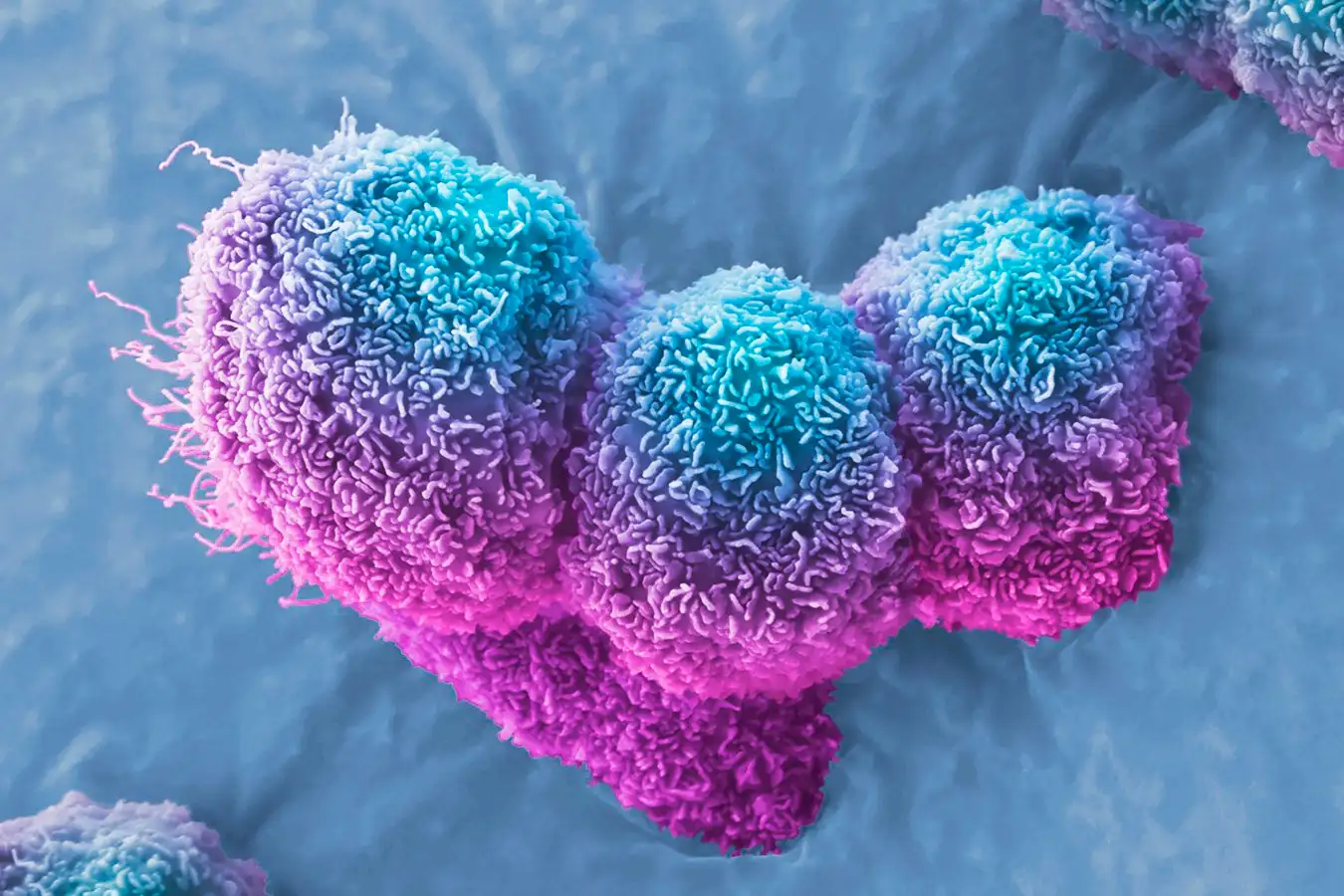
Scanning Electron Micrograph of Pancreatic Cancer Cells
Anne Weston, EM STP, Francis Crick Institute/Science Photo Library
In a groundbreaking clinical trial conducted in the United States, a specialized virus has shown potential in halting the progression of pancreatic cancer in three patients. While further research is essential through larger trials, the initial findings are promising, particularly as only minimal amounts of the virus were used in the initial safety assessments.
“The treatment’s efficacy exceeded our expectations, especially for pancreatic cancer, as we administered only one-tenth of the intended final dosage,” explains Masato Yamamoto, who spearheaded the viral treatment development at the University of Minnesota.
Pancreatic cancer is often labeled as the most lethal cancer, largely due to its late-stage symptoms that usually manifest after the cancer has spread, making surgical removal difficult. Typically, patients diagnosed with this type of cancer only survive for 3 to 6 months.
Additionally, pancreatic tumors possess a tough, fibrous outer layer that hinders chemotherapy drugs from effectively penetrating them. “Pancreatic tumors are as hard as a hockey puck,” emphasizes Dr. Yamamoto. These tumors can also evade detection by the immune system, rendering immunotherapy—which aims to boost the immune response against cancer—largely ineffective.
The first patient in the viral trial had a tumor measuring 7 cm in diameter and was treated a year ago, with two additional patients treated subsequently. At the time of treatment, their tumors had not spread beyond the pancreas, and there has been no further tumor growth since the intervention. “All three patients are alive and show clinically stable disease,” stated Yamamoto during the recent Annual Meeting of the American Society for Gene and Cell Therapy in Boston, Massachusetts. An additional 15 patients will now receive higher doses to determine optimal treatment levels.
“While these early results are intriguing, as a pancreatic surgeon, it’s crucial to stay realistic,” remarks Kai Brown, a pancreatic surgeon at the Royal North Shore Hospital in Sydney. “The history of oncology is filled with early positive indications that did not persist through rigorous phase III studies. Thus, these preliminary findings should be seen as a foundation for future hypotheses.” He further notes that so far, the trial has not included a control group, complicating the evaluation of whether the cancer-targeting virus outperforms other treatments or is ineffective altogether.
This cancer-fighting virus is an adenovirus that has been genetically engineered to replicate exclusively within tumors, sparing healthy tissues. Its replication is activated by an enzyme called cyclooxygenase 2 (COX-2), which is typically found in much higher concentrations in cancer cells than in normal cells. When the virus infects cancer cells, they can rupture and die, subsequently releasing more virus particles that can infect adjacent cancer cells.
In the current trial, the virus was administered directly into a patient’s tumor through a thin tube inserted down the patient’s throat and into the pancreas. The end of the tube was equipped with an ultrasound probe, allowing for precise visualization of the tumor.
The reason the tumor has ceased growing without diminishing in size might be attributed to the low treatment dosage, Yamamoto suggests. He hypothesizes that the tumor size may start to decrease as the virus gains time to replicate.
As tumor cells start to disintegrate and release their contents, the immune system may be alerted to recognize and combat the cancer, Yamamoto mentions. “The patient’s immune system could potentially realize there’s a problem and start attacking the tumor,” he adds. If this occurs, there’s hope that the immune system will also target tumor cells that have metastasized to other areas of the body, making the treatment potentially useful for metastatic pancreatic cancer.
To enhance this inherent immune response, Yamamoto and his team are planning to integrate viral treatments with immunotherapies, including checkpoint inhibitors (drugs that block proteins preventing the immune system from attacking cancer cells) in upcoming clinical trials.
Adenoviruses, in their natural state, typically cause cold- and flu-like symptoms; however, there has been a long history of research into their use as potential cancer therapies. For instance, in the 1950s, unmodified adenovirus was injected into women with cervical cancer, yielding partial success in a clinical trial. However, for safety and efficacy, it became evident that adenoviruses require genetic engineering to selectively target cancer cells.
The only FDA-approved cancer-targeting virus is T-VEC, a genetically modified herpes simplex virus that is injected directly into melanoma tumors, causing those cells to rupture and die.
Source: www.newscientist.com