


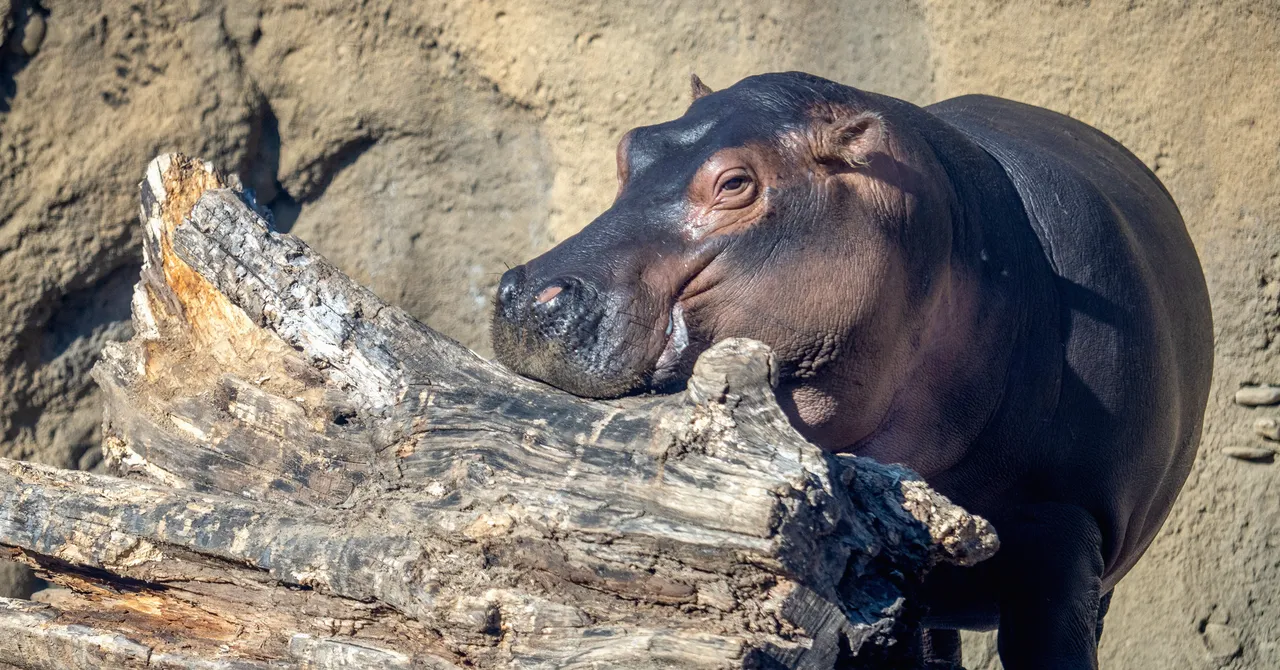
Fiona, the Cincinnati Zoo’s famous hippopotamus, died Thursday at age nine from complications after ingesting a knitted hat that entered her enclosure the previous week, zoo officials said. The young hippo initially appeared healthy, but her condition deteriorated several days after she swallowed the hat.
Zoo officials said a child threw the hat into the air, where it struck a ceiling fan and flew through the “1-foot gap above the 12-foot-tall viewing window.” The hat then landed inside Fiona’s enclosure. The incident has raised questions about how a small knitted object could become life-threatening for a roughly 2,500-pound animal, why surgery might not have been possible and what treatment options are available in such cases.
How a swallowed hat could kill a hippo
Jean Hawkins, director of clinical sciences at North Carolina State University’s College of Veterinary Medicine, told WIRED that Fiona’s death was likely caused by one of several complications that can occur when a foreign object becomes lodged in the intestinal tract. However, the precise cause will not be known until a post-mortem examination is completed.
Hawkins compared an intestinal blockage in a hippopotamus to a car accident on an extremely long, single-lane highway. A hippo’s intestinal tract is probably more than 100 feet long, she said, while the small intestine alone may measure more than 70 feet. By comparison, the combined length of the human small and large intestines is about 25 feet, according to the National Library of Medicine.
A healthy hippopotamus may take at least 12 hours to digest water and two to three days to digest food, Hawkins said. Zoo officials said Fiona swallowed the hat on Sunday, or around that time, according to a Cincinnati Zoo statement. She was initially asymptomatic, officials said, but began losing her appetite several days later.
If a swallowed object passes through the digestive tract naturally, Hawkins said, it would likely do so within five days. In Fiona’s case, however, the hat may have become lodged in her intestines, triggering a dangerous chain of events.
How an intestinal blockage can become fatal
According to Hawkins, a blockage can cause severe swelling and pressure inside the abdomen. That pressure may restrict blood flow to intestinal tissue, eventually causing the tissue to die.
As the damaged tissue turns green or black, it can become porous and rupture. The rupture may release gastrointestinal contents into the bloodstream, increasing the risk of toxic shock. A post-mortem analysis should help determine whether this or another complication caused Fiona’s death.
Source: www.wired.com