


Researchers have identified how a metabolic molecule helps preserve a form of immune memory in innate immune cells, allowing them to respond more rapidly and forcefully to later threats. The findings, reported in mouse cells, live mice and some human cells grown in the laboratory, could eventually inform research into cancer, aging and Alzheimer’s disease, although the authors say more human evidence is needed.
How innate immune memory works
The immune system has several ways to remember threats and mount stronger defenses in the future. One of these mechanisms, known as “trained immunity,” involves innate immune cells, including macrophages, switching into a primed state after encountering bacteria or other threats. Unlike the targeted memory produced by adaptive immune cells, trained immunity broadly strengthens cellular defenses, enabling cells to respond more quickly and forcefully than “untrained” cells.
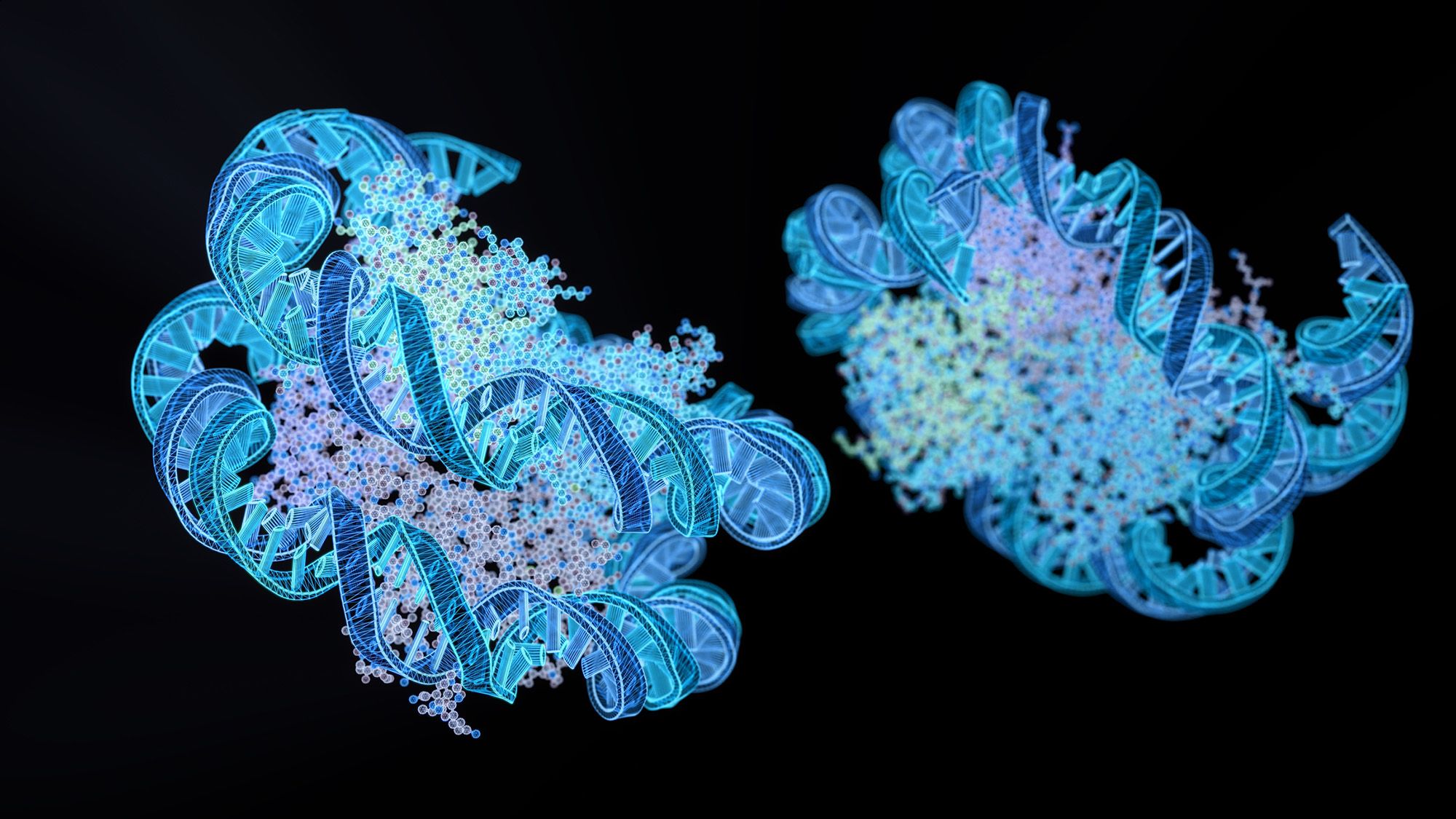
This process involves epigenetic changes — chemical adjustments that control gene activity without altering the underlying DNA sequence. DNA is wrapped around protein structures called histones, and the way it is packaged helps determine which genes are active. Epigenetic markers can fine-tune this packaging, activating or repressing specific genes.
Earlier research showed that these changes can prime immune cells against threats. Molecules attached to histones near genes involved in inflammation can leave those genes ready for rapid activation, said Musa Mhlanga, a cell biologist and molecular geneticist at the Radboud Institute for Molecular Life Sciences in the Netherlands, who was not involved in the new study.
However, scientists had not understood how the epigenetic changes remained in place over time. Mhlanga told Live Science in an email that the immune memory might be expected to disappear soon after it formed because “cells have enzymes whose entire job is to strip away that mark.” The persistence of the memory therefore raised the question of how such marks survive for weeks or even months while those enzymes are actively removing them.
NAD+ inhibits an epigenetic “eraser”
The new study, published Oct. 30 in the journal Science Immunology, investigated trained immunity in mouse immune cells, live laboratory mice and some human cells grown in laboratory dishes.
Previous research suggested that immune cells undergo metabolic changes when they enter a primed state. One result is increased production of nicotinamide adenine dinucleotide, or NAD+, a molecule long known to help regulate how DNA is packaged inside cells.
In this study, however, NAD+ appeared to play an unexpected role. The molecule normally is consumed when enzymes coordinate chemical reactions, but that does not happen with KDM5A, an enzyme that normally helps erase immune memory.
NAD+ attaches to KDM5A without being depleted. Instead, it suppresses the enzyme, effectively switching off the molecular “eraser.” As a result, immune cells remain primed and ready to activate inflammation when they encounter a new threat.
In experiments with mice, reducing or eliminating NAD+ from immune cells prevented the cells from entering the primed state. In mice with cancer, this disruption impaired the immune system’s ability to attack tumor cells.
Possible links to aging, vaccines and disease
The researchers also found that NAD+ levels decreased in aging mice alongside a decline in the innate immune system’s ability to respond to threats. Mhlanga said the study established a convincing “molecular bridge” between these observations and raised the question, “Why does immunity decrease with age?”
The findings could also help explain why some vaccines protect against diseases they were not specifically designed to prevent. For example, the tuberculosis vaccine Bacillus Calmette-Guérin, or BCG, is thought to produce a broad immune response and may help prevent outcomes ranging from viral infections to Alzheimer’s disease. Some scientists propose that Alzheimer’s results partly from a dysregulated immune response and that BCG could help normalize it.
More broadly, understanding how innate immune cells enter and remain in an activated inflammatory state may help researchers investigate cancer, immune aging and Alzheimer’s disease. Mhlanga said the work could help explain “why some vaccines protect against diseases for which they were not originally designed.”
Human evidence remains limited
The study has important limitations. The researchers performed several experiments with human cells and compared some findings with data from human cancer patients, but Mhlanga noted that “human data are sparse compared to mouse studies.” Further research is needed to confirm that the mechanism operates in people in the same way.
Mhlanga said he is interested in future studies examining NAD+ in relation to immune-system aging, cancer and Alzheimer’s disease. Recent research suggests that raising NAD+ to optimal levels might address aspects of each condition, but he cautioned that the effects may vary substantially. In cancer, in particular, the biology differs by tumor type and stage, so “it’s not just a case of ‘the more NAD+, the better.’”
The study was published as: Jin, H., Wang, Z., Liu, Y., Wang, Z., Li, M., Xue, J., Zhang, Y., Yu, T., Wang, S., Huo, B., Li, C., Wang, X., Yao, R., Zhang, H., Yi, J., Lin, Y., Cui, L., Guo, H., Guo, Z., … Xia, X. (2026). Nuclear NAD+ promotes innate immune memory by inhibiting KDM5A-dependent histone demethylation. Science Immunology, 11(124).
Source: www.livescience.com