SpaceX Falcon 9 Rocket Stage Will Crash Into the Moon on Aug. 5 — Here’s How to Watch
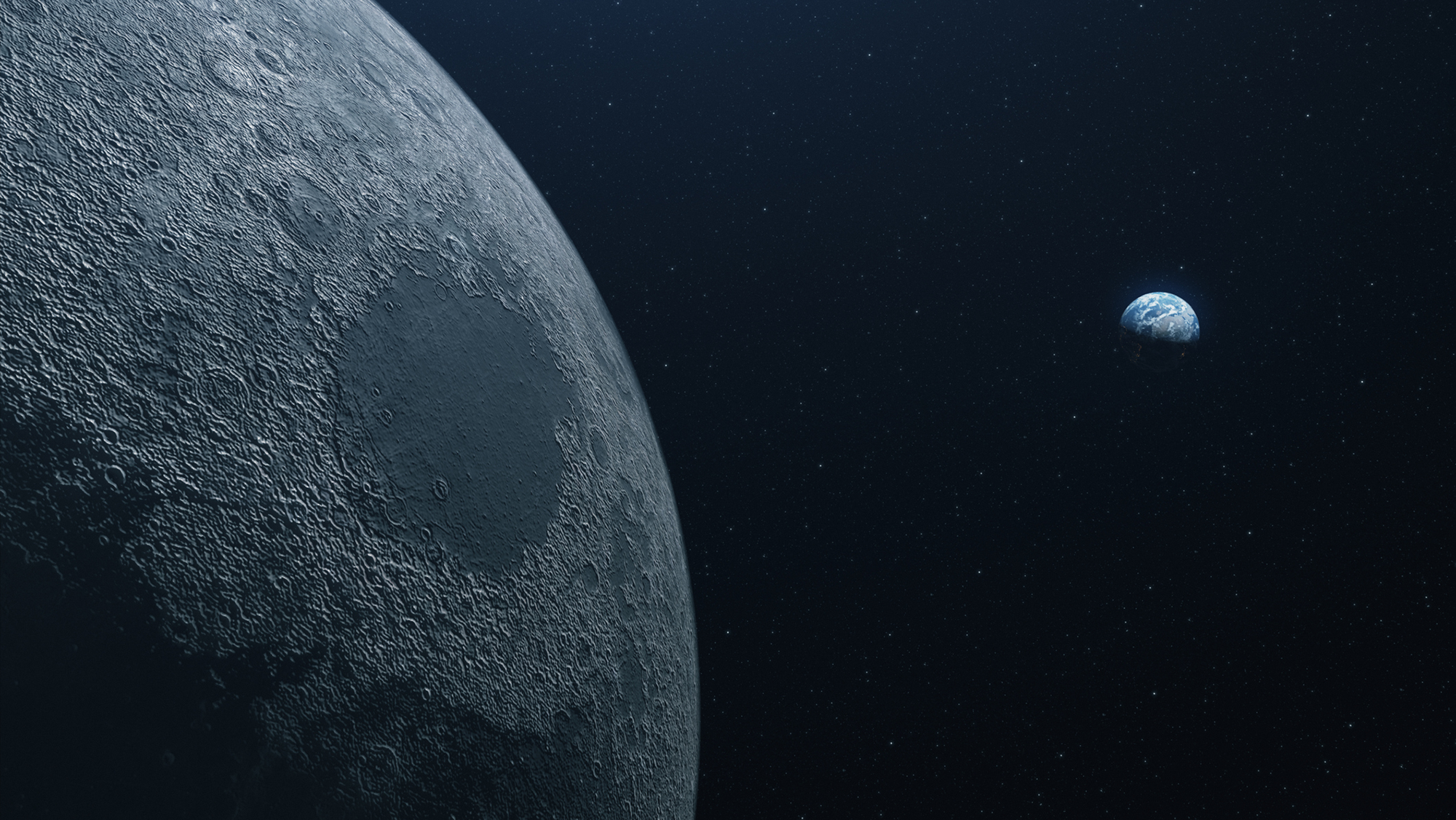
An abandoned SpaceX Falcon 9 rocket stage is expected to collide with the moon at approximately 2:35 a.m. EDT on Aug. 5. Two new studies suggest the lunar impact could be visible through telescopes across parts of North and South America, giving amateur and professional astronomers a rare chance to observe a spacecraft impact in real time. Both studies are available as preprints on the arXiv server.
The impactor is the truck-sized, spent upper stage of a Falcon 9 rocket. In 2005, the rocket delivered two privately owned landers toward the moon. After completing its mission, the upper stage remained in an elongated orbit around Earth, according to OrbitalRadar.com.
Earlier this year, a report estimated that the rocket stage will strike near the moon’s Einstein crater at roughly 5,436 mph (8,748 km/h). Although that is an enormous speed, it is about six times slower than the velocity of a typical natural impactor, such as an asteroid.
Latest Videos FromLive Science
Can You See the Falcon 9 Moon Impact With a Telescope?
The initial impact flash will last less than a second and will occur on the sunlit side of the moon, making it unlikely to be visible to casual skywatchers. The brightest projections suggest that the flash could be about 20 times dimmer than Saturn.
The crater created by the Falcon 9 stage will probably also be too small to see from Earth. Researchers estimate it could measure approximately 90 feet (27 meters) across and up to 16 feet (5 meters) deep.
Computer simulations suggest the impact plume could rise as high as 31 miles (50 kilometers) above the lunar surface.
(Image credit: Jo et al. 2026)
The most promising viewing opportunity will come from the plume of lunar soil, or regolith, thrown into space by the collision. The impact could also release water vapor and other material. Simulations from the second study indicate that the plume may rise as high as 31 miles (50 km) and spread debris as far as 112 miles (180 km) from the impact site.
Unlike the brief impact flash, the plume could remain visible for up to 400 seconds — nearly seven minutes — as sunlight reflects from the suspended debris. However, the plume will still be too faint to see without optical equipment. William Jo, a graduate research assistant at the University of Texas at Austin and co-author of the second study, told Live Science that observers will need a good backyard telescope.
Where and When to Watch the Lunar Impact
Although the event will be faint and take place on the moon’s illuminated surface, astronomers are preparing coordinated observing efforts. Benjamin Fernando, a postdoctoral researcher at Los Alamos National Laboratory and co-author of the first study, told Live Science that professional and amateur astronomers around the world are expected to take part.
Get the world’s most fascinating discoveries delivered straight to your inbox.
Observers in South America and mainland North America are expected to have the best view because the moon will be high in the night sky during the collision. Fernando said viewers should use a telescope with an aperture of at least 4 inches (10 centimeters).
Jo cautioned that the observation may be challenging for amateur astronomers. Successfully locating the plume will require precise pointing, favorable weather and corrections for atmospheric refraction. Even so, he encouraged experienced observers to try, because the observations could provide valuable scientific data.
Studying the impact will help researchers understand how spacecraft and other human-made objects alter the lunar surface. The observations could reveal how far impact debris travels, how future rocket-stage disposal affects the moon and whether ejecta could damage sensitive instruments or future lunar bases.
Earlier artificial impacts have already produced important discoveries. In 2009, NASA’s Lunar Crater Observation and Sensing Satellite mission studied the crash of a Centaur rocket upper stage. The collision exposed evidence of subsurface ice near the lunar south pole, helping establish the region as a leading target for missions seeking to build a permanent human presence on the moon.
How much do you know about the moon? Test your lunar knowledge with our moon quiz!