


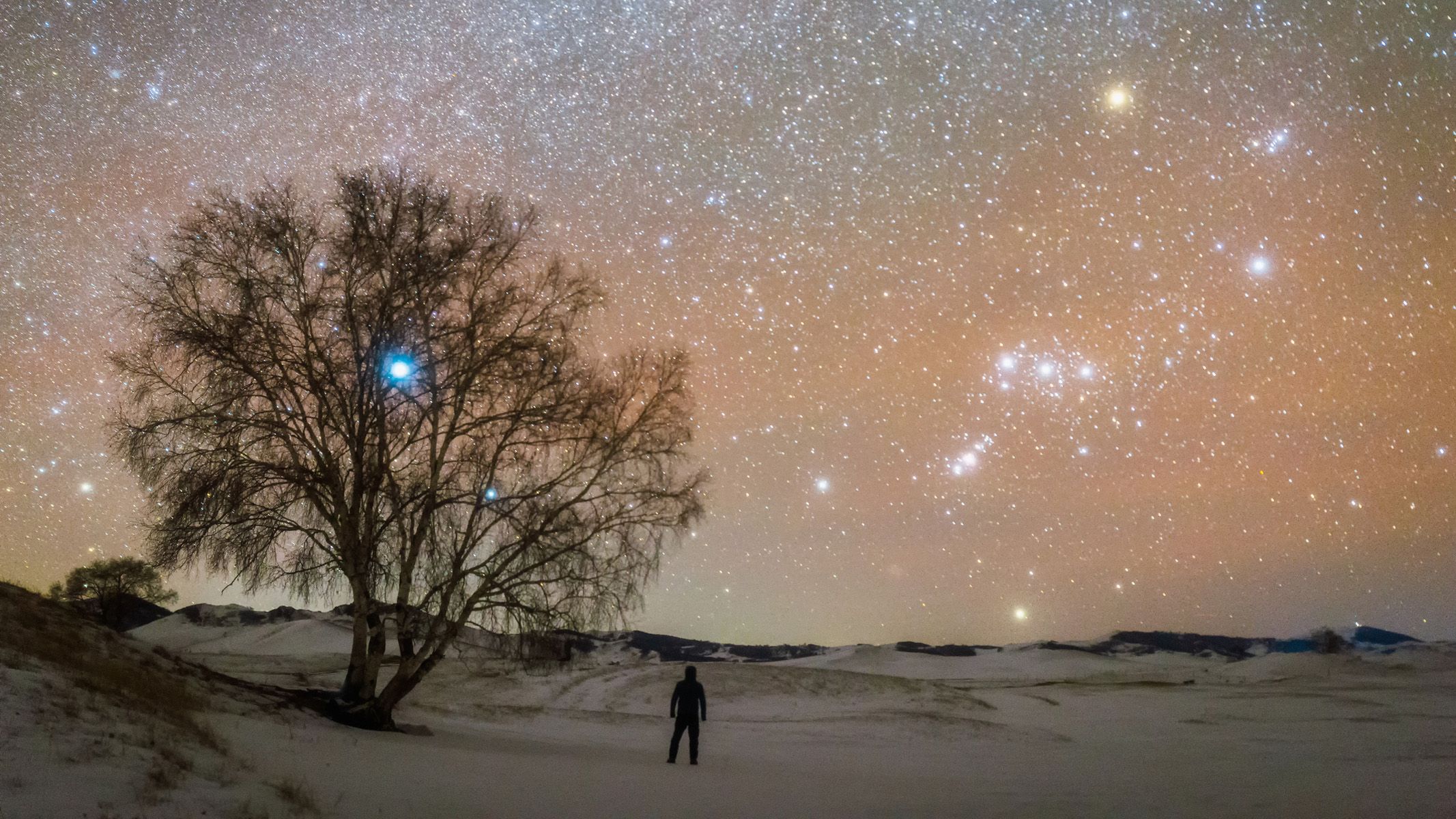
Winter brings long, dark nights and a wide range of targets for stargazers. From three consecutive supermoons, a penumbral lunar eclipse and an annular “ring of fire” solar eclipse to Jupiter, Saturn, Mars, meteor showers, familiar constellations and deep-sky nebulae, there is plenty to see between December 2026 and February 2027 with the naked eye, binoculars, telescopes and smart telescopes.
This is not an exhaustive list of every object visible during the season, but it highlights some of the most appealing sights. Some events are specific to the 2026/2027 winter, while the constellations and deep-sky objects are seasonal favorites that return each year.
Lunar and planetary events
Three winter supermoons
Winter 2026/2027 will feature three consecutive supermoons, following another supermoon in November. The first is the Christmas Eve supermoon, which peaks on December 24, 2026, at 01:28 UTC. In North America, that corresponds to late evening on December 23. Traditionally called the Cold Moon, this full moon will appear up to 14% larger and 30% brighter than a typical full moon.
The first full moon of 2027, the Wolf Moon, peaks on January 22, 2027, at 12:17 UTC. The final event is the Snow Moon, which peaks on February 20, 2027, at 23:24 UTC, alongside a penumbral lunar eclipse.
A penumbral eclipse occurs when the Sun, Earth and Moon are loosely aligned and the Moon passes through Earth’s faint outer shadow, or penumbra. The Moon dims only slightly during this type of eclipse, so the effect is much subtler than a total lunar, or “blood moon,” eclipse.
Annular solar eclipse
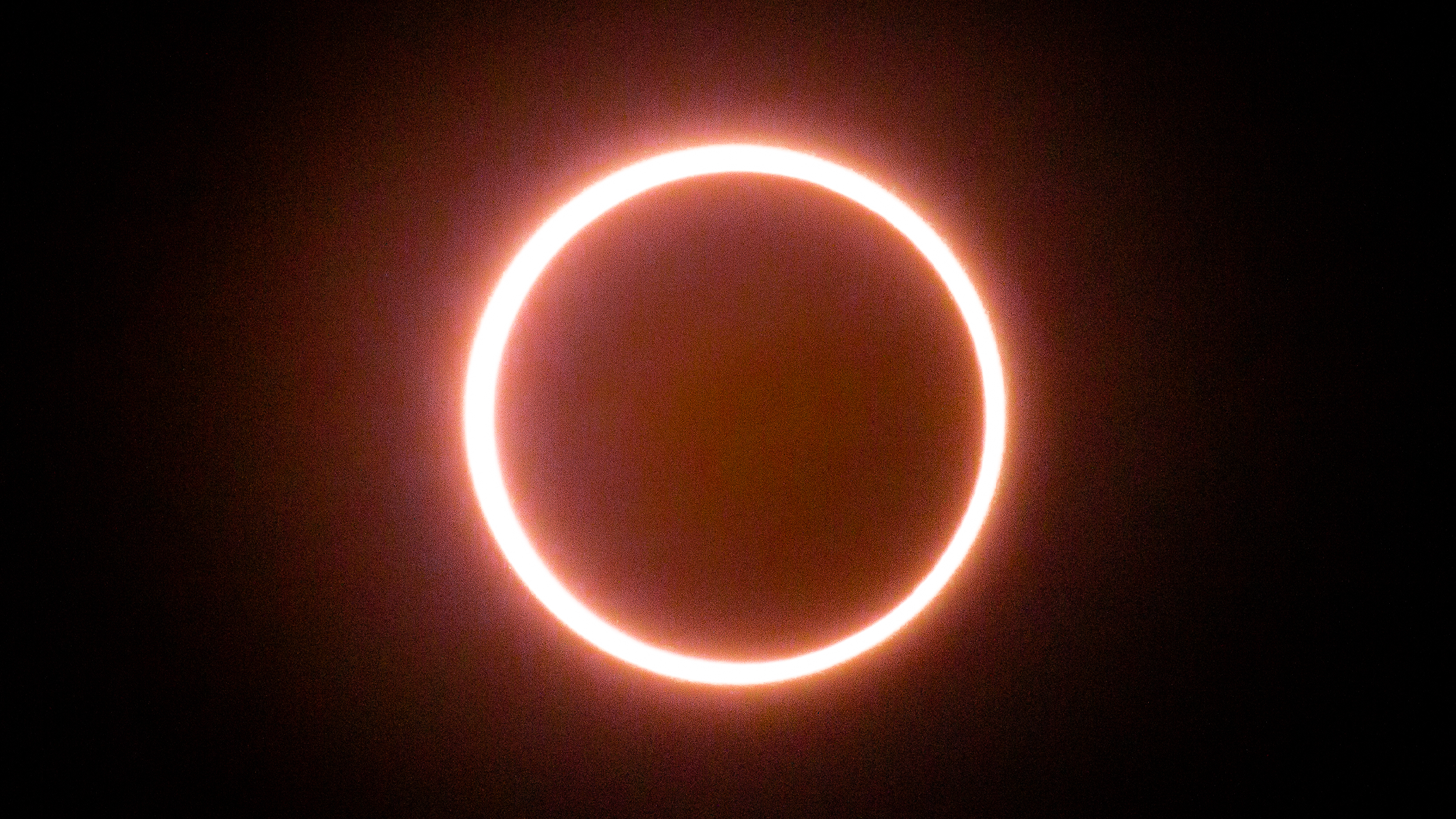
Observers in South America and Africa will see an annular solar eclipse on February 6, 2027, peaking at about 16:00 UTC. It will appear as a “ring of fire” because the Moon will pass between Earth and the Sun while near its farthest point from Earth, known as apogee.
Because the Moon will appear slightly smaller than the Sun, it will not completely cover the solar disk. Unlike a total solar eclipse, an annular eclipse does not turn the sky dark.
Saturn in the evening sky
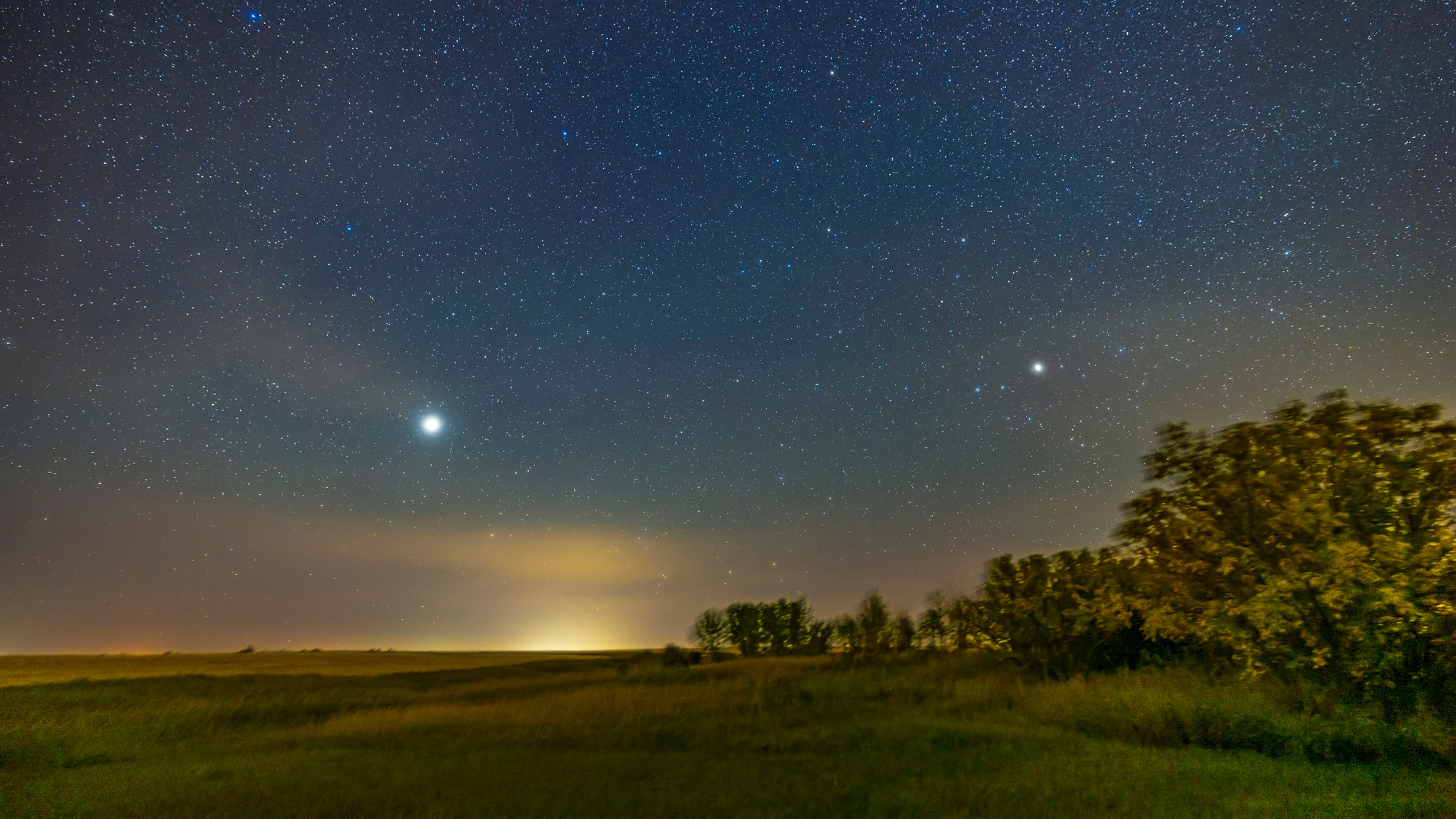
Saturn returned to the evening sky in fall 2026 and will rise earlier as winter progresses, making it easier to observe at a reasonable hour. The planet’s rings will not be fully open for several more years, but in 2026/2027 they should show more detail after appearing edge-on the previous year.
Viewing Saturn’s rings clearly requires an observational telescope with at least 4 or 5 inches of aperture and an eyepiece providing at least 100x magnification. Smart telescopes and binoculars do not have sufficient reach for this view. Even so, seeing Saturn’s rings directly through a telescope can be one of the most striking experiences in amateur astronomy.
Jupiter at opposition
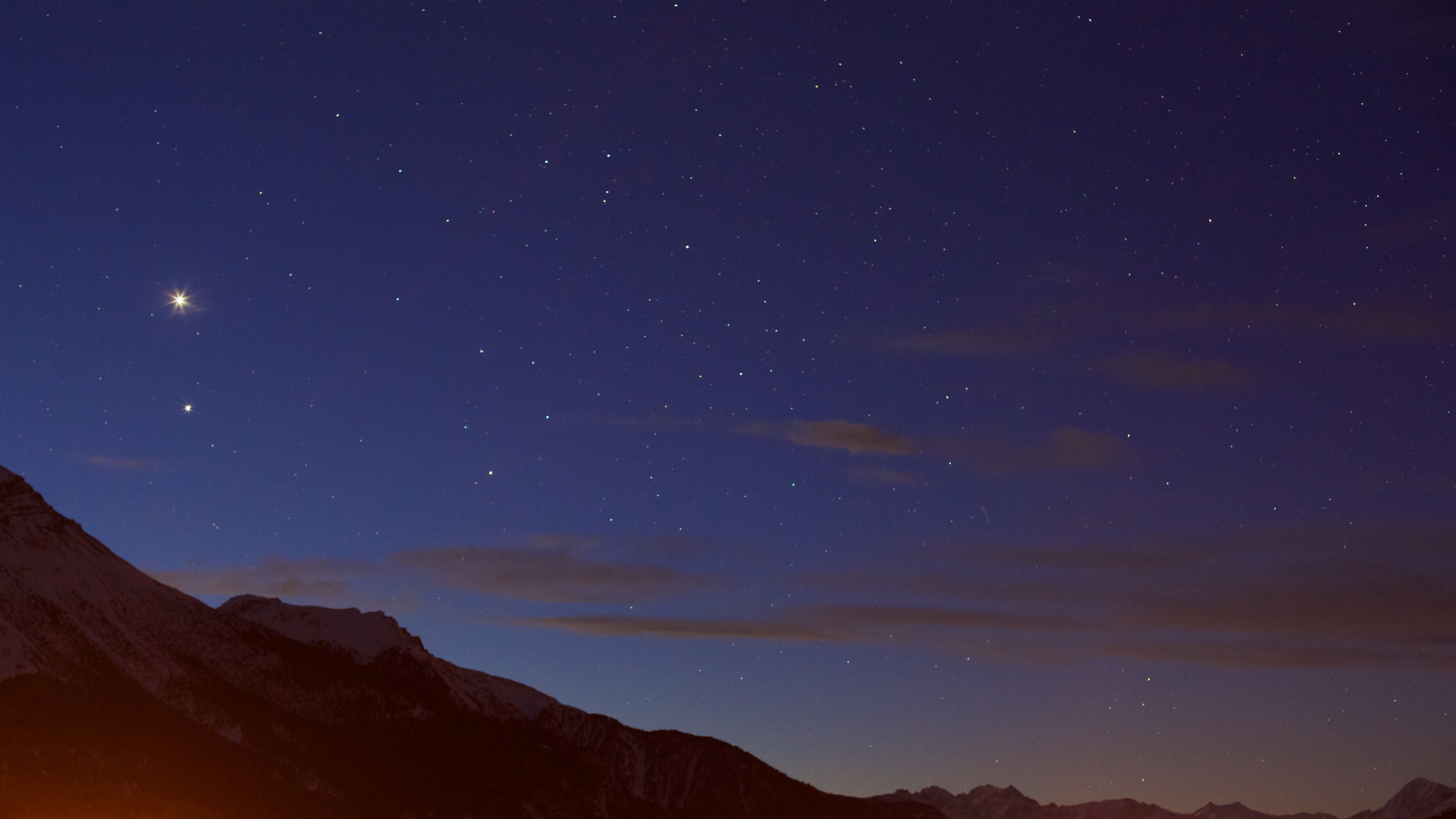
Jupiter reaches opposition on the night of February 10–11, 2027. At opposition, a planet is opposite the Sun in Earth’s sky, so it is at its brightest and closest to Earth and appears largest.
A telescope should reveal Jupiter’s cloud bands, the Great Red Spot and its four Galilean moons. The moons are visible through large astronomy binoculars, such as 15×70 binoculars, but a telescope is needed to see finer detail on the planet itself.
Mars at opposition
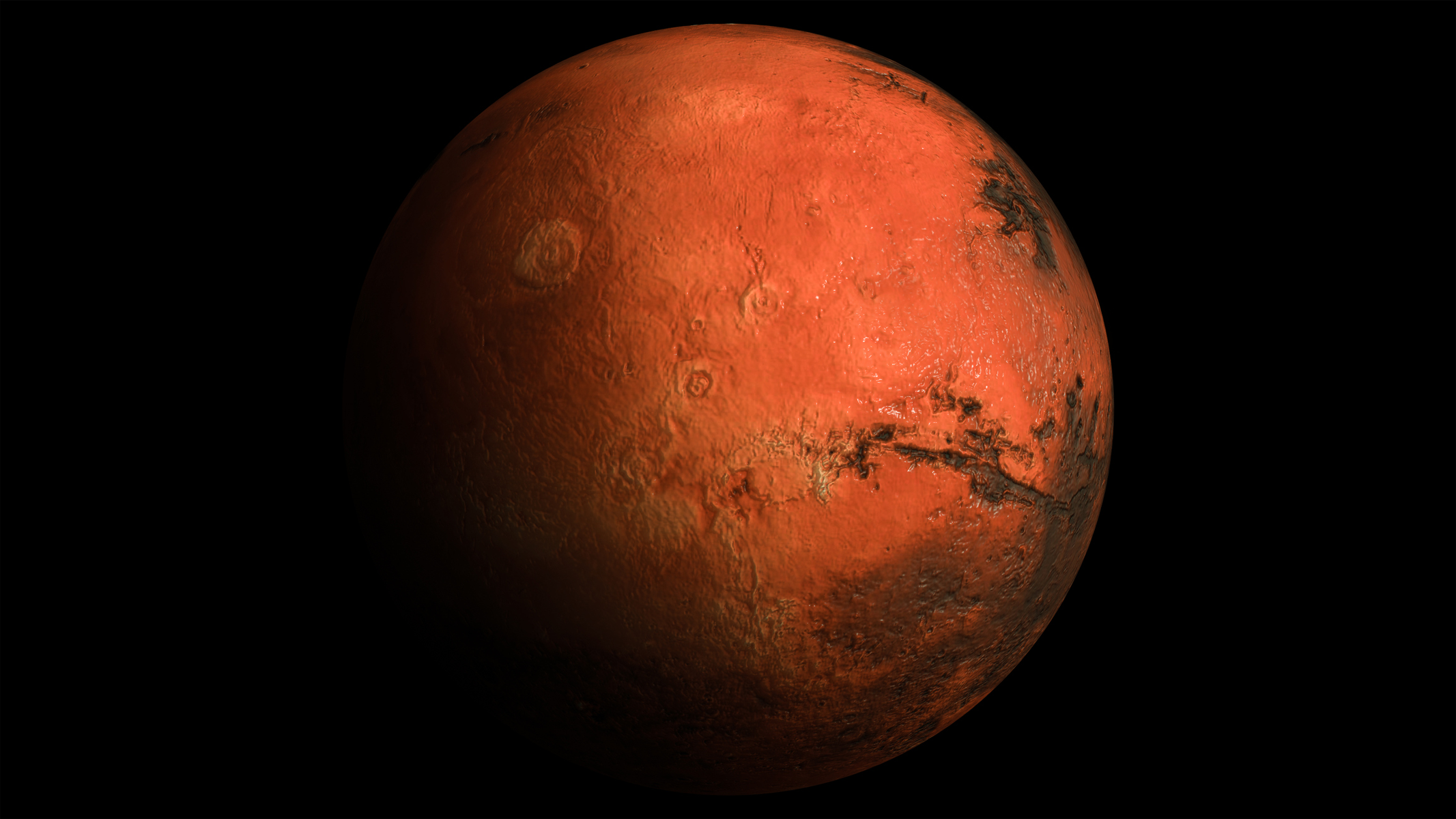
After almost a year away from the evening sky, Mars returned in November, although it initially appeared late at night. The planet reaches opposition on February 19, 2027, offering the best opportunity of the season to observe it.
Mars can be surprisingly difficult to study despite being closer to Earth than Jupiter, Saturn and deep-sky objects such as the Andromeda Galaxy and Orion Nebula. The planet is small, its surface features have low contrast, and it approaches Earth closely for only a few months every 26–27 months. Even through larger telescopes, it often appears as a fuzzy orange disk.
Observers attempting to see detail should use at least 4–6 inches of aperture, depending on the type of telescope. Good atmospheric seeing, high-quality optics, a stable—preferably motorized—mount, a good focuser and an eyepiece with comfortable eye relief are also important. Magnification of 100x or more may be needed. The nearly full Moon on the date of opposition could make conditions less favorable.
Beginners can also simply look for the orange point of light and enjoy spotting Mars without any equipment.
Meteor showers
Geminids
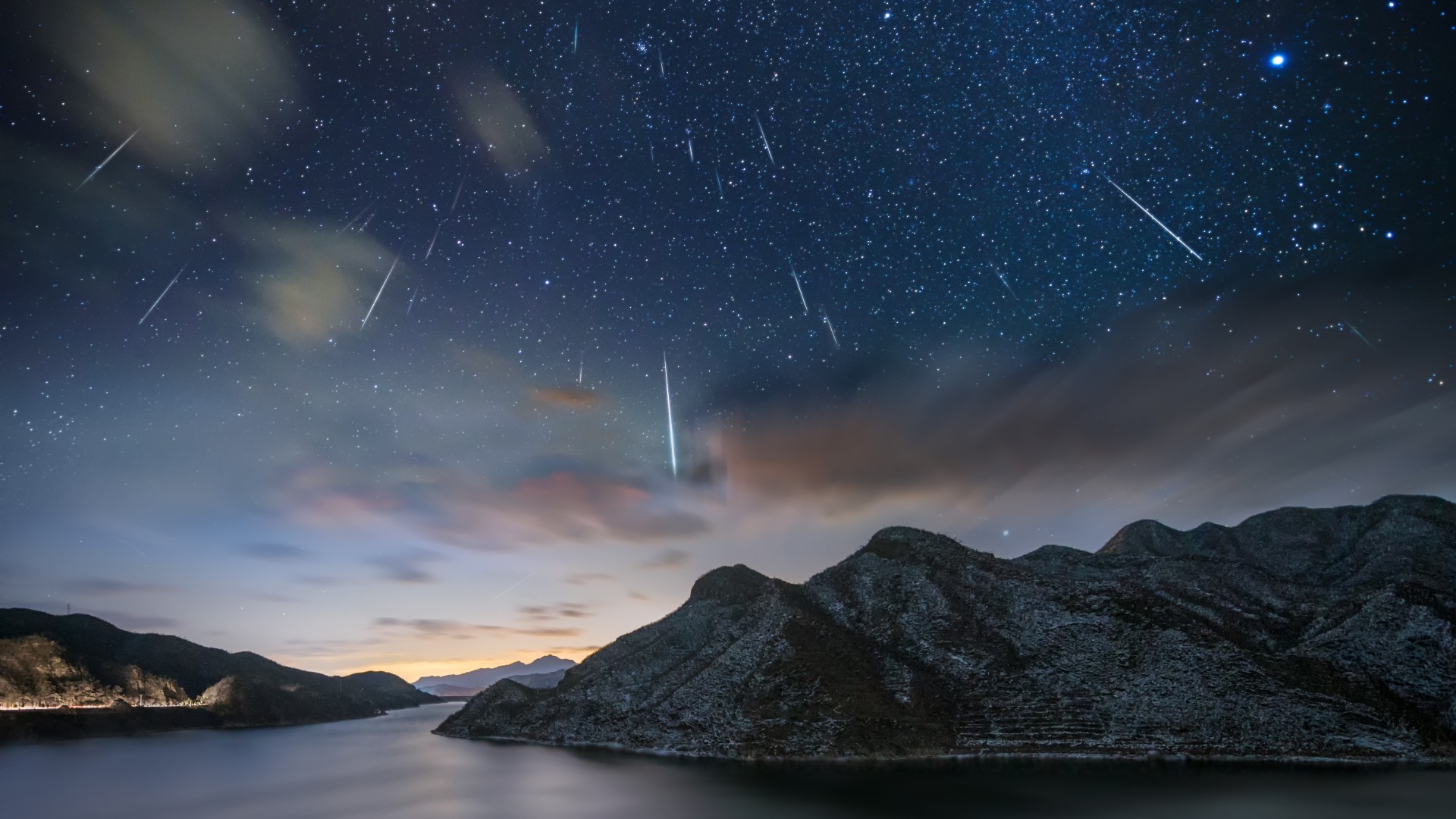
The Geminid meteor shower is active from December 4–20 and peaks on the night of December 13–14, 2026. The waxing crescent Moon will set early, leaving dark skies after about 9 p.m. for meteor watching. Unlike many showers, the Geminids reach their peak before midnight.
The Geminids are among the strongest annual meteor showers. Under clear, dark skies, this year’s display is expected to produce about 120–150 meteors per hour, making it a promising opportunity for astrophotography.
Most meteor showers originate from icy comets, but the Geminids come from the rocky asteroid 3200 Phaethon. Its debris is denser than cometary dust and can survive deeper in Earth’s atmosphere before burning up. As a result, Geminid meteors can produce bright, strong and colorful fireballs.
Ursids
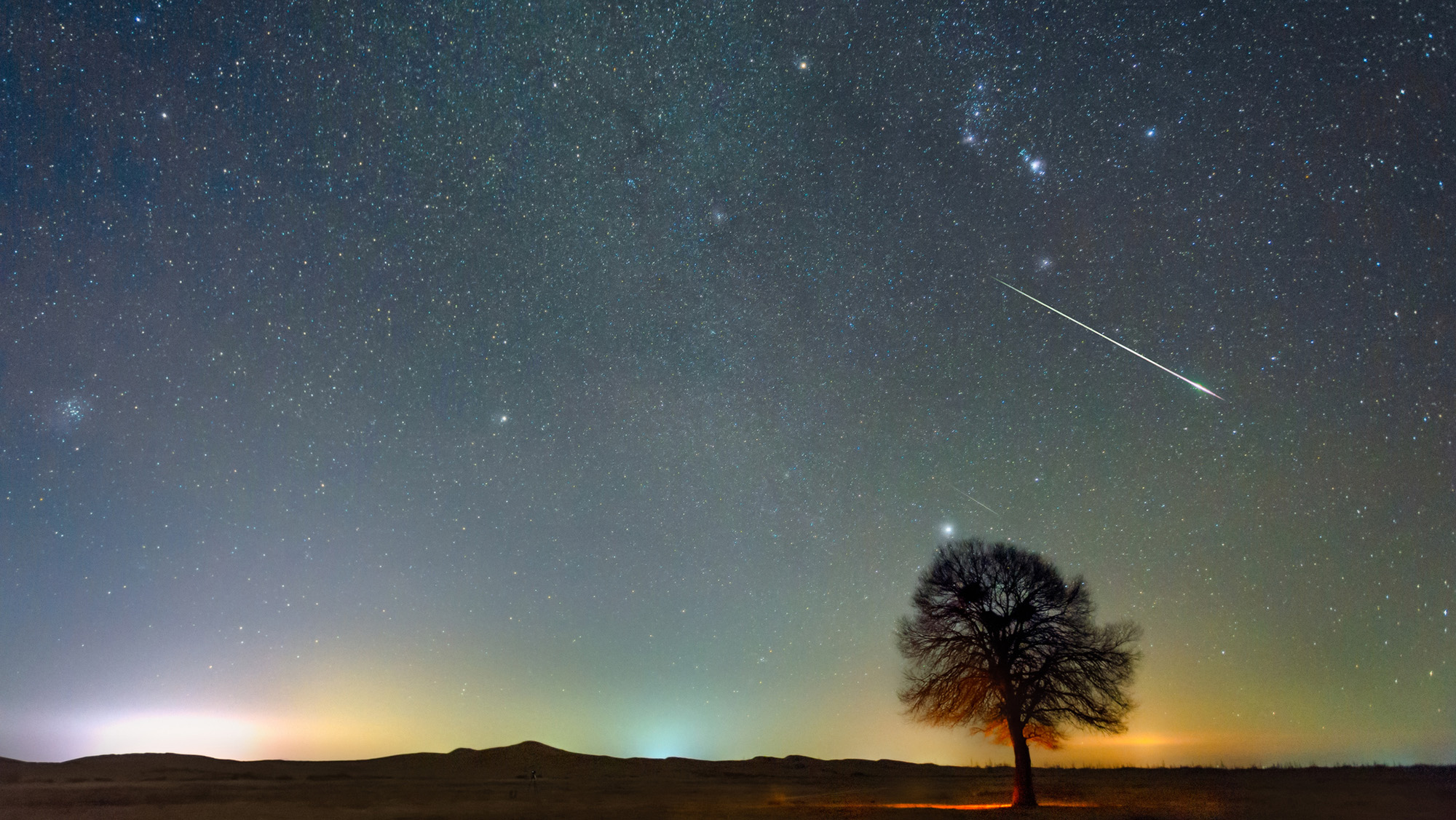
The Ursids peak on December 22–23, 2026, only a few weeks after the Geminids. Their normal activity is much lower, at about 5–10 meteors per hour, and the nearly full Moon will wash out all but the brightest meteors.
The shower’s radiant lies in Ursa Minor, a circumpolar constellation, so it remains visible throughout the night. The best viewing time is expected to be between 21:00 and 22:00 UTC, an earlier and more convenient window than for showers that peak in the middle of the night.
Quadrantids
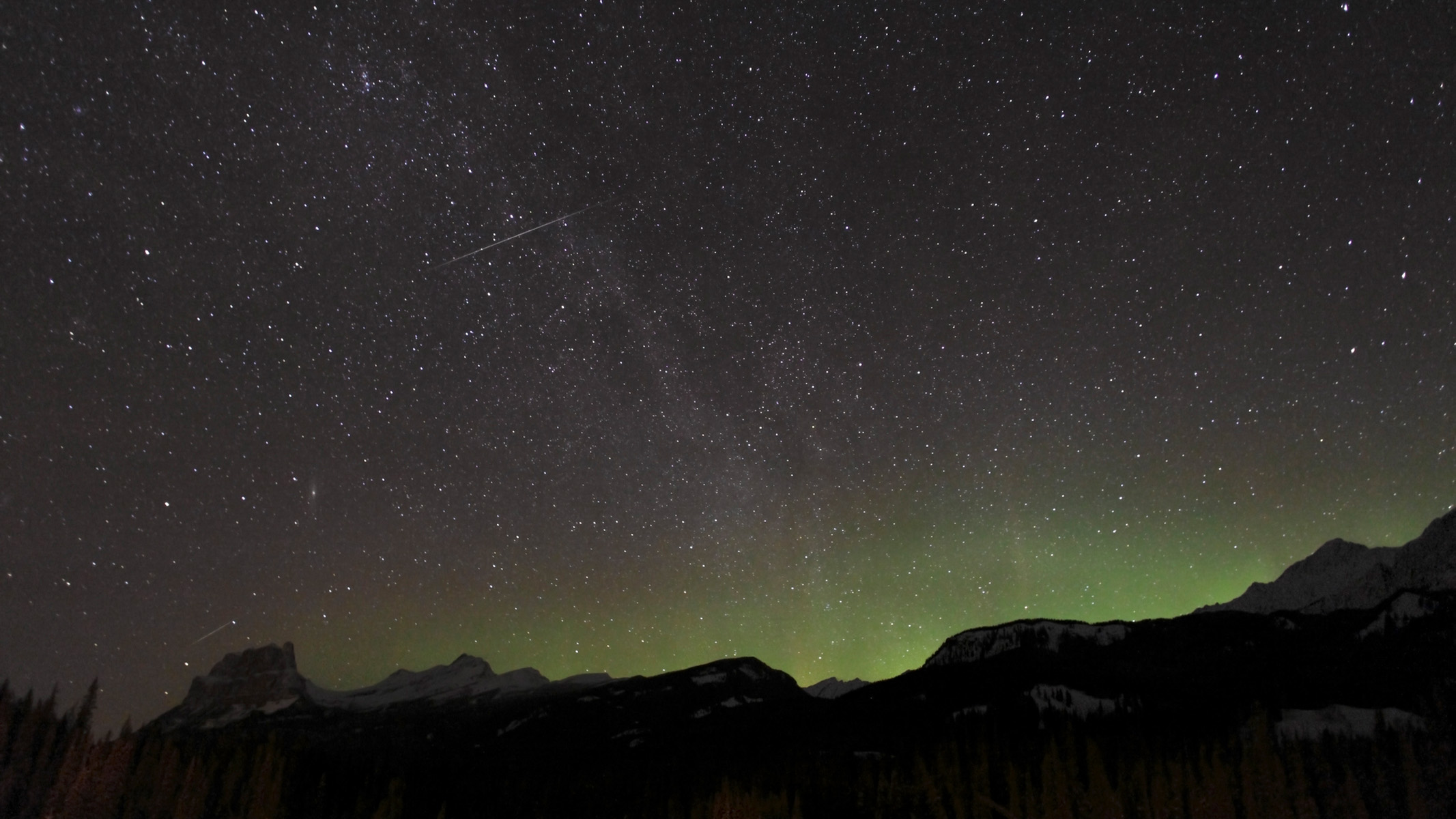
The first meteor shower of 2027, the Quadrantids, is active from December 28, 2026, through January 28, 2027. It peaks on the night of January 3–4, 2027. A thin waning crescent Moon should not significantly interfere with viewing, and rates could reach 100–120 meteors per hour.
The best time to watch will be from midnight until dawn, when the shower’s radiant in Bootes is highest in the sky.
Constellations, asterisms and star clusters
Sirius and Canis Major
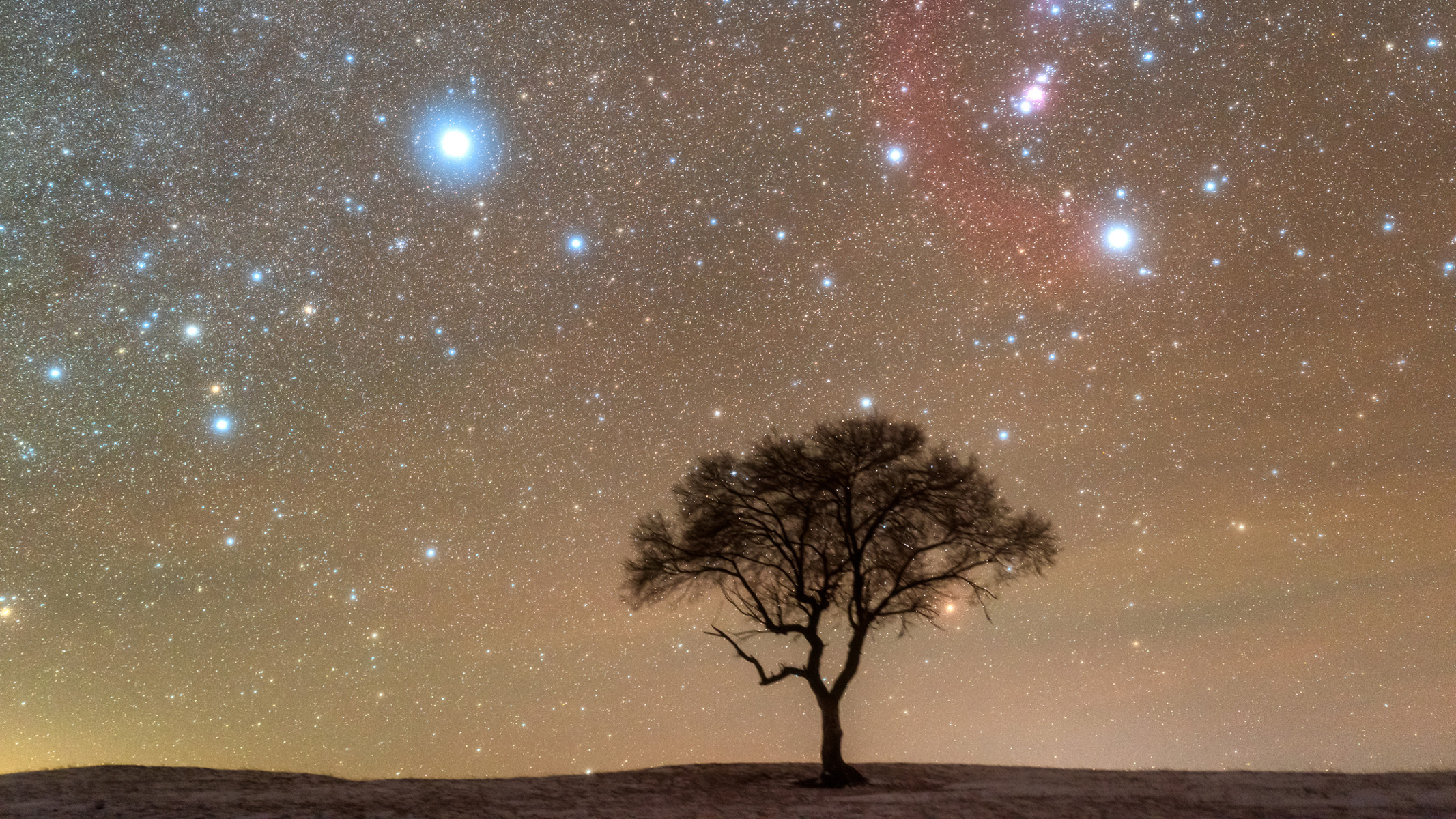
Canis Major, the “Greater Dog,” remains visible through winter and into spring. Its most recognizable feature is Sirius, the brightest star in the night sky. At a distance of 8.6 light-years, Sirius is one of the closest stars to the solar system.
Because Sirius is bright and often low in the sky, its twinkling and flashes of color are especially noticeable. This effect, called scintillation, occurs when turbulence in Earth’s atmosphere bends starlight as it passes through layers of air. The effect becomes stronger when a star is low because its light travels through more atmosphere.
Sirius is easy to see without equipment. With binoculars, observers can even try to spot it during the daytime at certain times of year.
Canis Minor
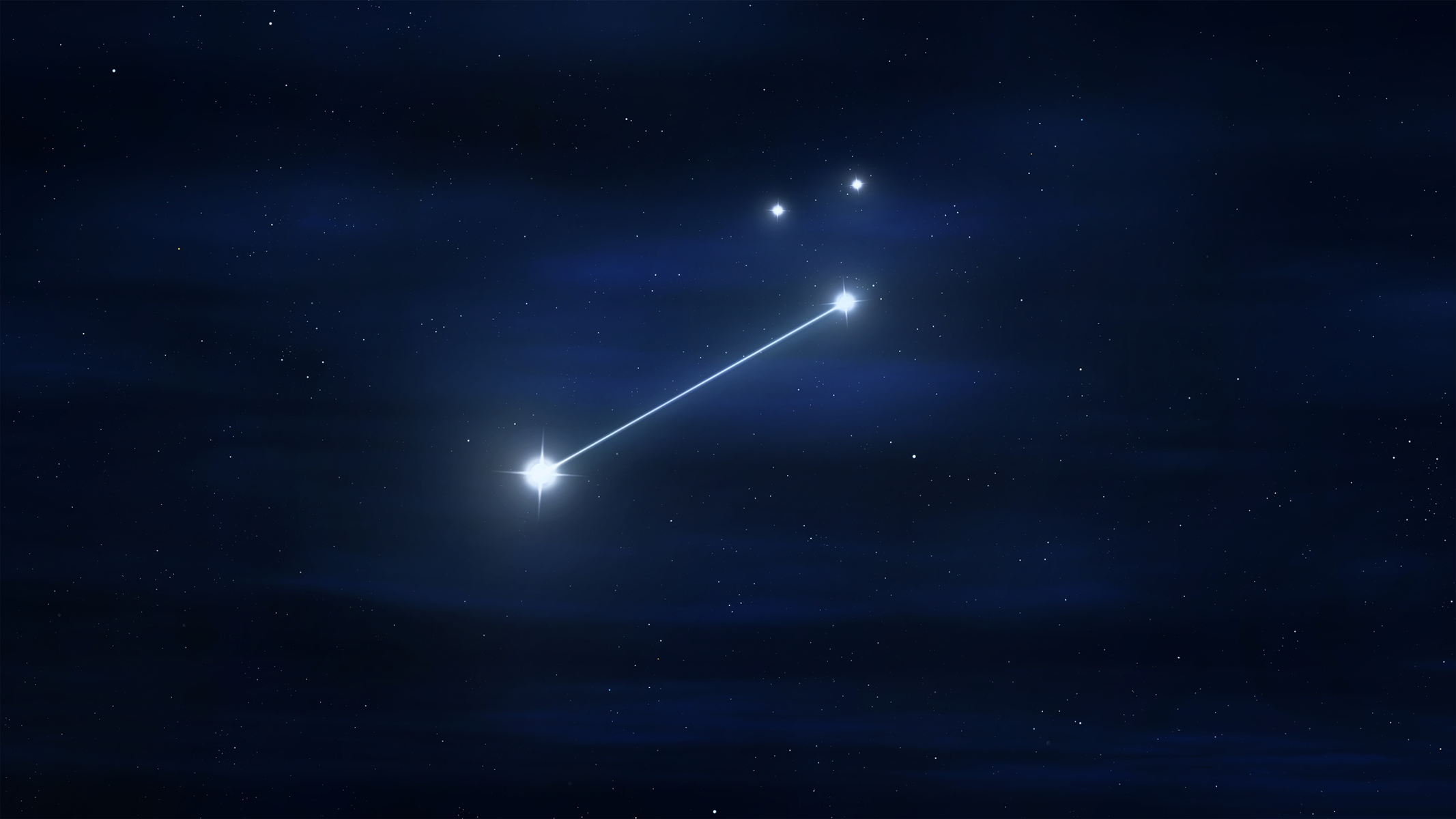
Above Canis Major lies Canis Minor, the “Little Dog.” The constellation is dominated by two bright stars, Procyon and Gomeisa. Procyon is part of both the Winter Triangle and the Winter Hexagon.
Canis Minor is relatively faint, but binoculars can make it easier to see. In mythology, Canis Minor and Canis Major are the hunting dogs of Orion, who spent seven years pursuing the Pleiades sisters.
Orion’s Belt
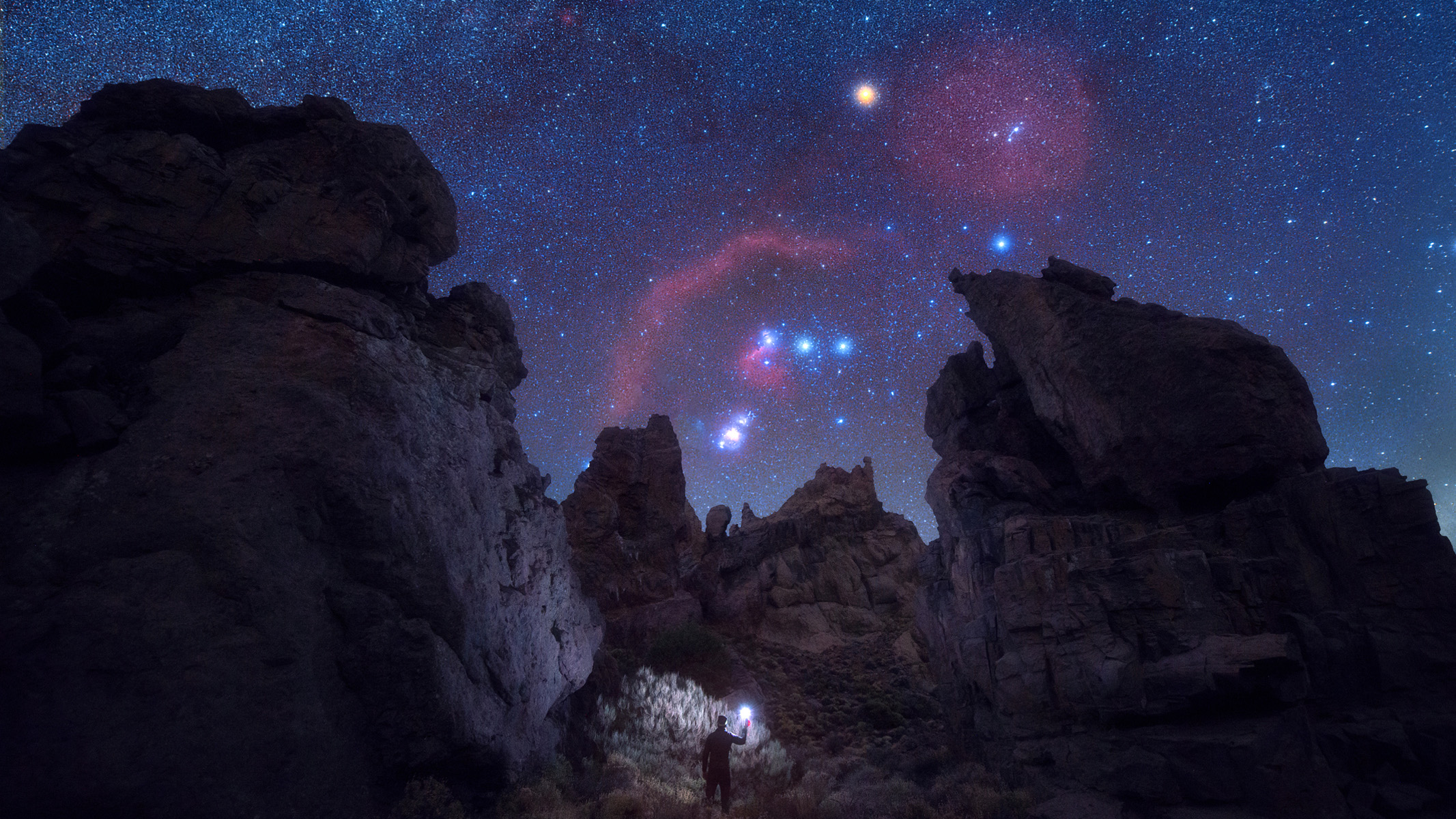
Orion’s Belt is one of the most recognizable patterns in the sky. It consists of three bright stars in a straight line: Alnitak, Alnilam and Mintaka. Because Orion is prominent during winter, the belt has served as a celestial reference point for navigation, timekeeping and mythology throughout human history.
Orion is rewarding to observe with the naked eye, binoculars or a telescope. The constellation includes Betelgeuse, a red supergiant that astronomers expect to explode as a supernova within the next 100,000 years. When that happens, it should be visible in daylight and could shine as brightly as the full Moon for several months.
Betelgeuse, Sirius and Procyon form the Winter Triangle. Orion also contains Rigel, its brightest star, which marks the hunter’s foot, and Orion’s Sword, a line of stars hanging below the belt that includes the Orion Nebula.
Taurus, the Bull, and the Pleiades
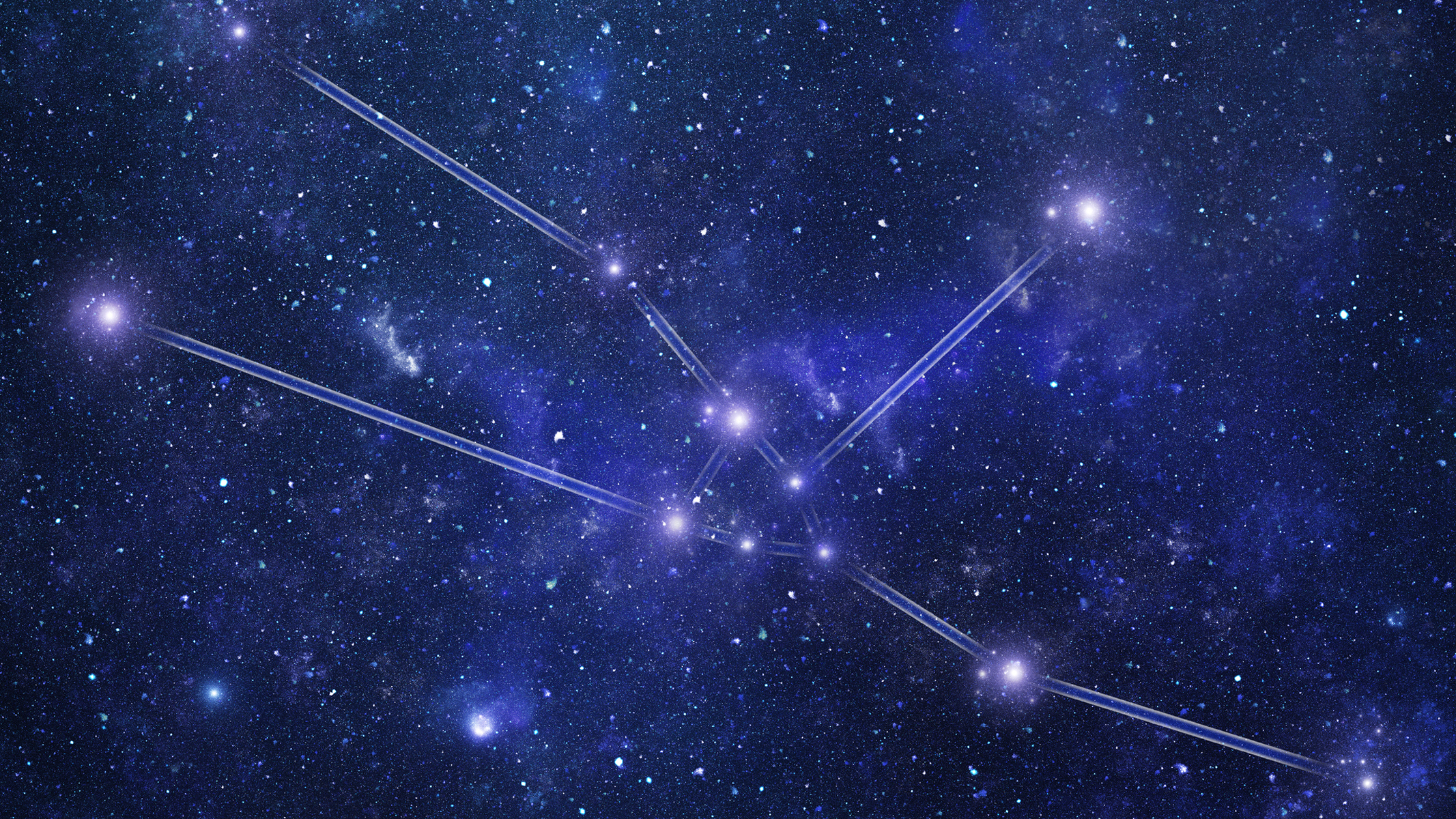
Taurus returned to the evening sky in fall, but winter provides especially good views because the constellation rises higher earlier in the evening. Aldebaran, its brightest star, appears orange-red and marks the bull’s eye.
Binoculars reveal two prominent star clusters in Taurus: the Pleiades, or M45, and the Hyades. The Pleiades is a bright open cluster often identified with seven stars, or the Seven Sisters. Under very dark skies, it is just visible to the naked eye. The Hyades forms a V-shaped cluster outlining the bull’s face and head.
The Pleiades is also a useful first target for an entry-level smart telescope and is easy to capture in wide-field iPhone images of the night sky.
Auriga
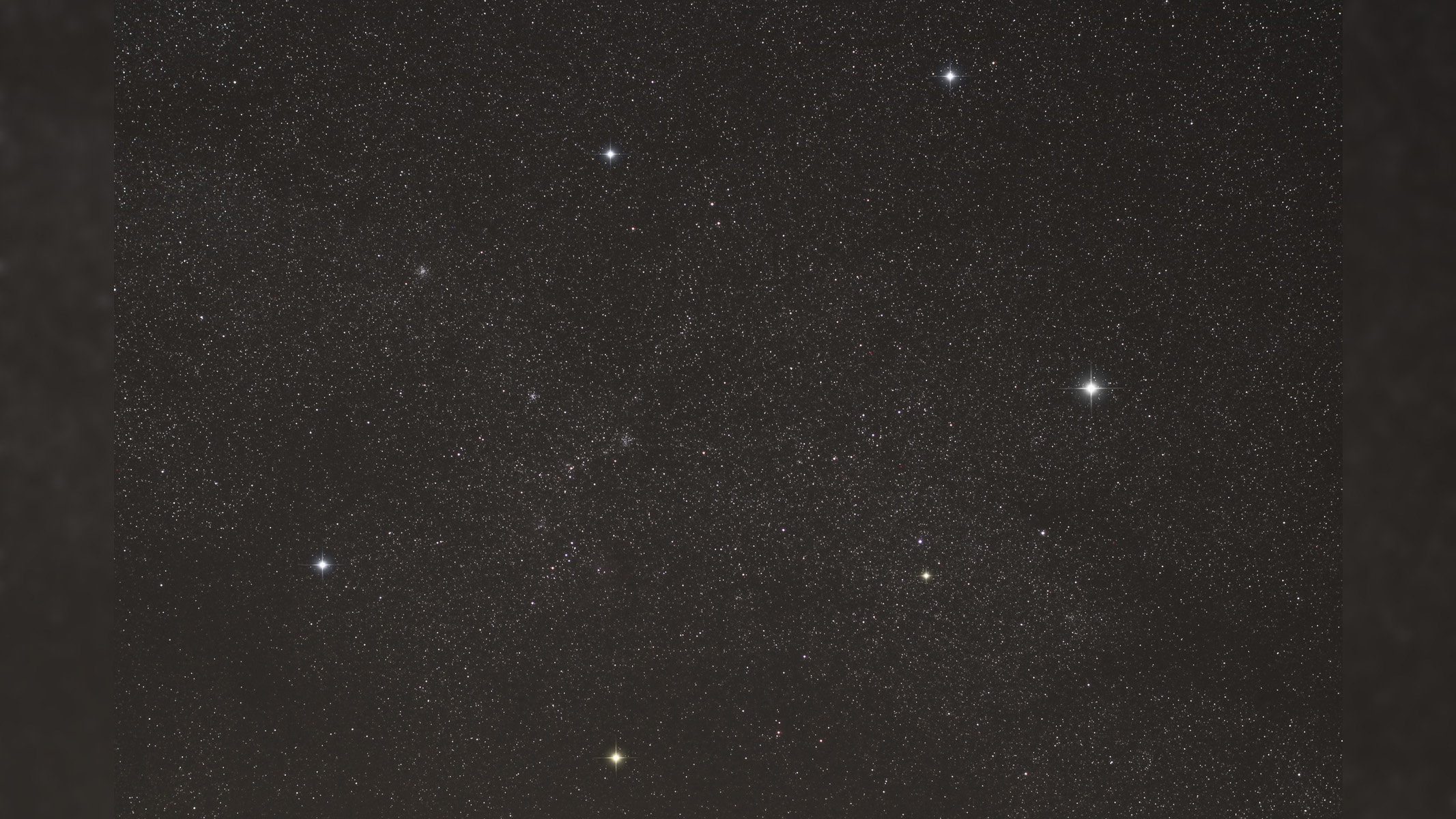
Auriga is a high, pentagon-shaped constellation between Taurus and Gemini. It contains several star clusters that are suitable for winter observing.
M36, the Pinwheel Cluster, contains about 60–100 stars and lies north of El Nath. M38, the Starfish Cluster, contains more than 100 stars; its brightest stars form an X-shaped pattern. M37, the Salt and Pepper Cluster, is the brightest and richest of Auriga’s clusters and contains more than 500 stars.
Gemini, the Twins
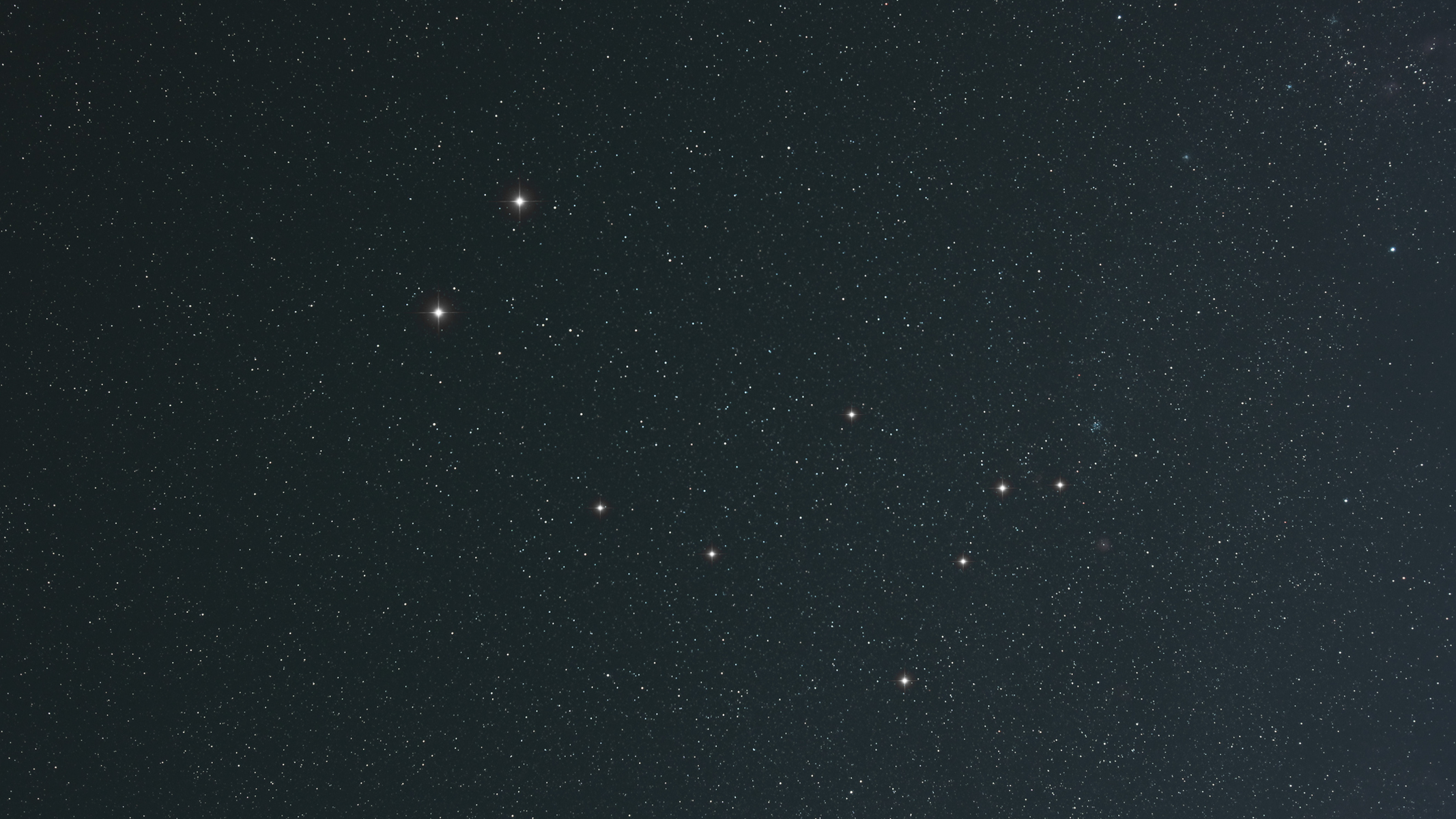
Gemini is the radiant point of the Geminid meteor shower. Its two most prominent stars, Pollux and Castor, are also easy winter targets. Pollux is an orange giant and the constellation’s brightest star, while Castor appears blue.
Although Castor looks like a single star to the naked eye, it is a complex multiple-star system made up of three distinct binary pairs: Castor A, Castor B and Castor C. A small telescope can split Castor into its two main pairs, Castor Aa and Castor Ba.
Gemini also contains M35, a large open cluster known as the Shoe Buckle Cluster, which is easily visible through binoculars.
Winter Hexagon
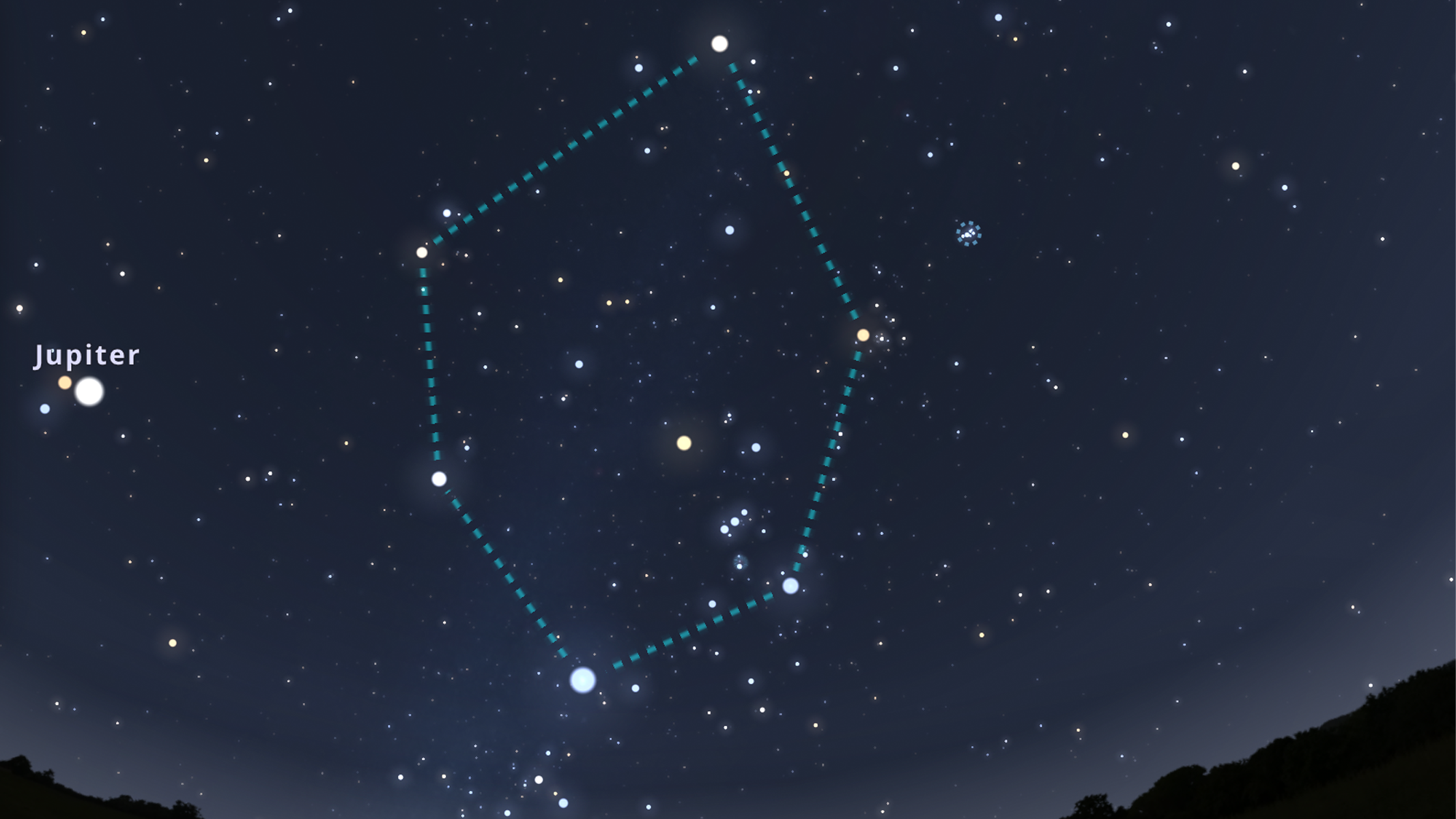
The Winter Hexagon, also called the Winter Circle, is not an official constellation. It is an asterism formed by six bright stars: Rigel in Orion, Aldebaran in Taurus, Capella in Auriga, Pollux in Gemini, Procyon in Canis Minor and Sirius in Canis Major.
Once these stars are identified, the Winter Hexagon provides a useful guide for navigating the surrounding sky with binoculars or a telescope.
Deep-sky nebulae and galaxies
Orion Nebula (M42)
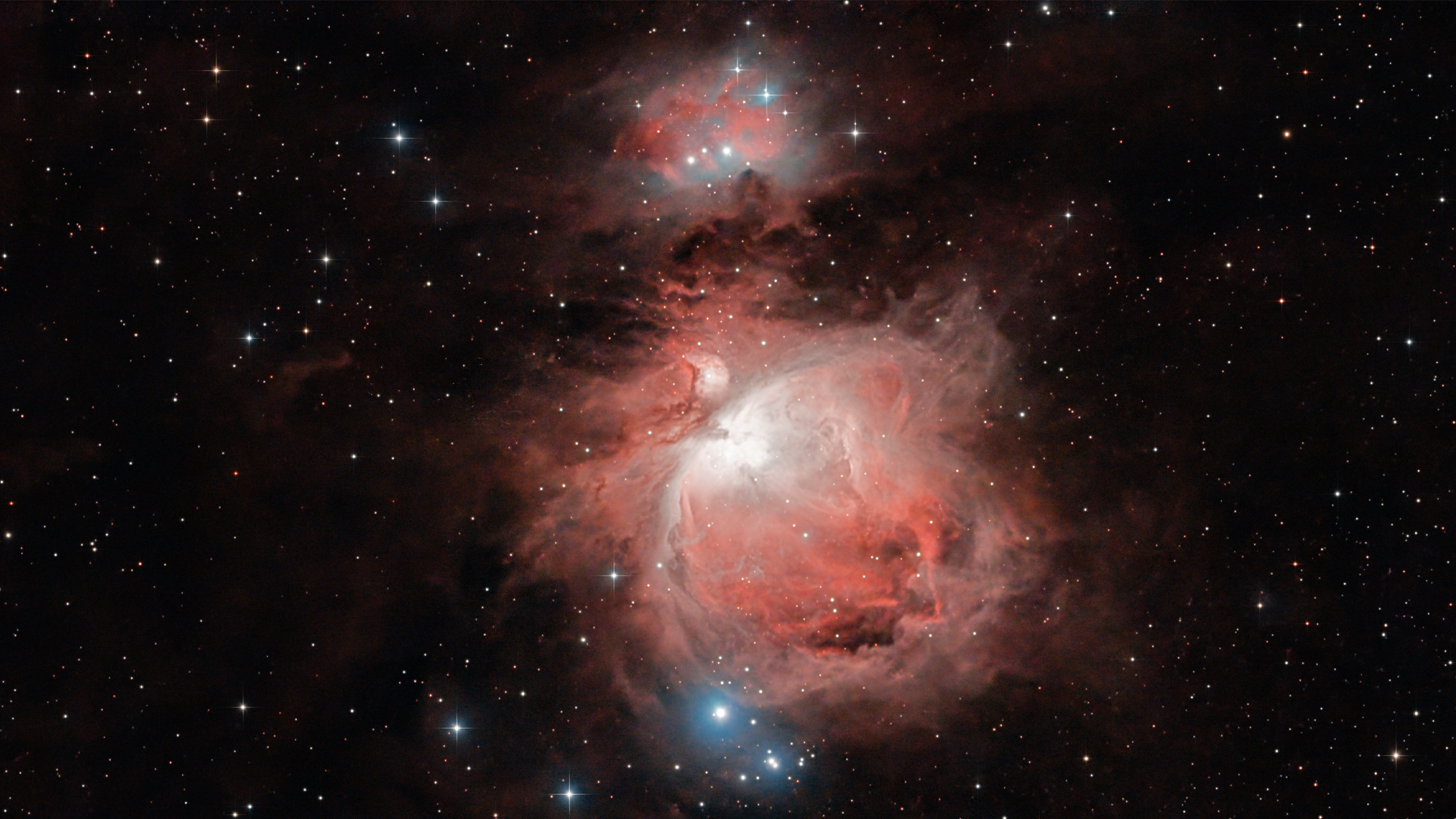
The Orion Nebula is one of the easiest and most popular nebulae to find. It lies in Orion’s Sword, just below the belt. Under dark conditions it can be seen with the naked eye and identified in smartphone images. Binoculars show a faint smudge, while a telescope reveals more of its bright, glowing gas. It is also a strong target for smart telescopes with a wide field of view.
Nearby is the Running Man Nebula, a bright reflection-nebula complex that can fit in the same photographic frame. Orion also contains the Casper the Friendly Ghost Nebula (M78), the Monkey Head Nebula (NGC 2174) and the Witch Head Nebula (IC 2118). Many of these objects are faint and require long integration times to capture well.
Horsehead (IC 434) and Flame Nebula (NGC 2024)
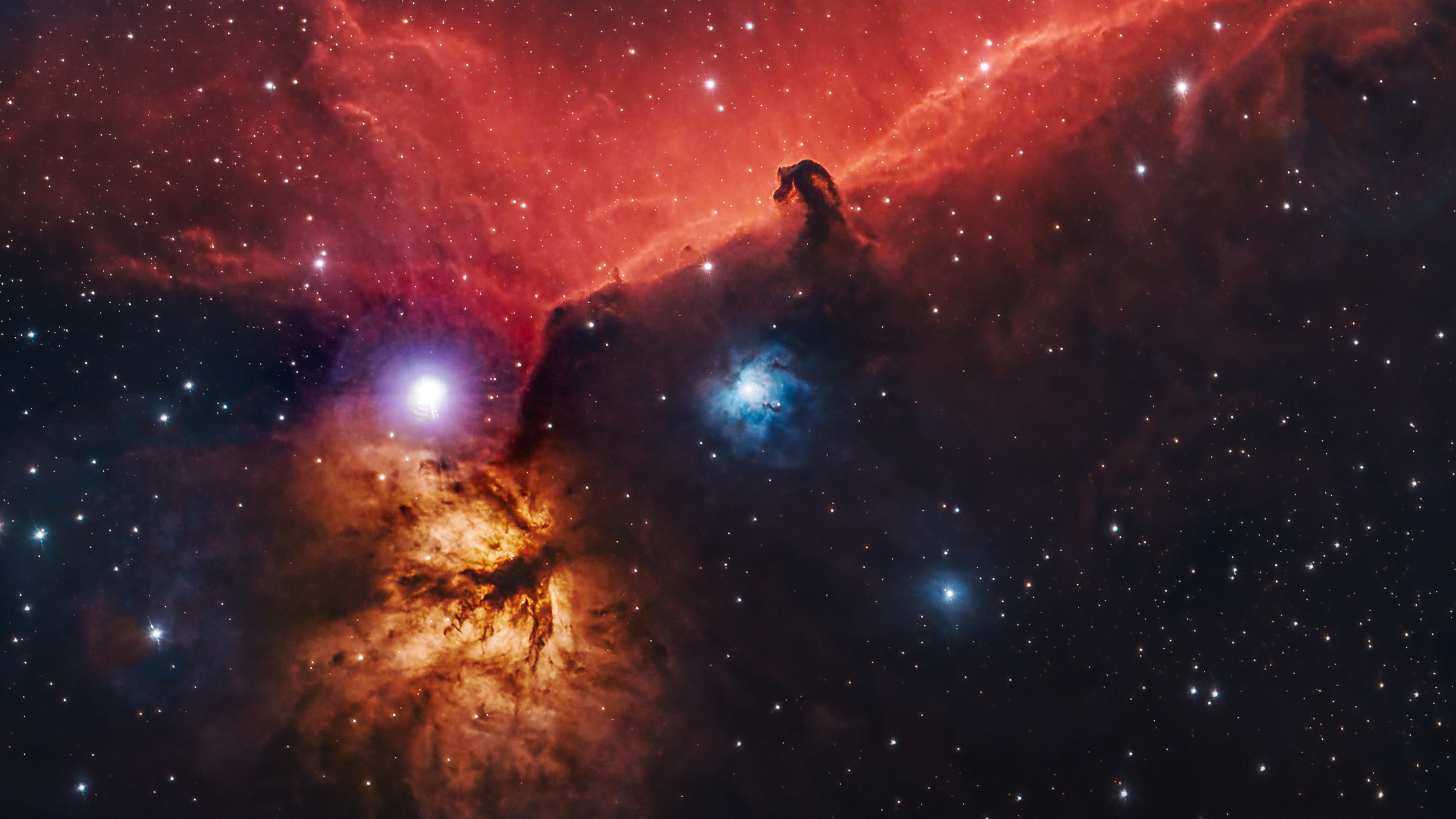
The Horsehead and Flame Nebulae in Orion are popular smart-telescope targets. They occupy a large portion of the frame and can produce a useful image without an especially long integration time, although longer exposures generally reveal more detail.
The two are separate objects but are often photographed together because they appear close together. The Flame Nebula is a bright emission nebula whose dark dust lanes create a fiery pattern. The Horsehead Nebula is a dark nebula: a dense cloud of molecular dust and gas that blocks light from the emission nebula and nearby stars. Its silhouette resembles a horse’s head and neck.
Rosette Nebula (NGC 2237)
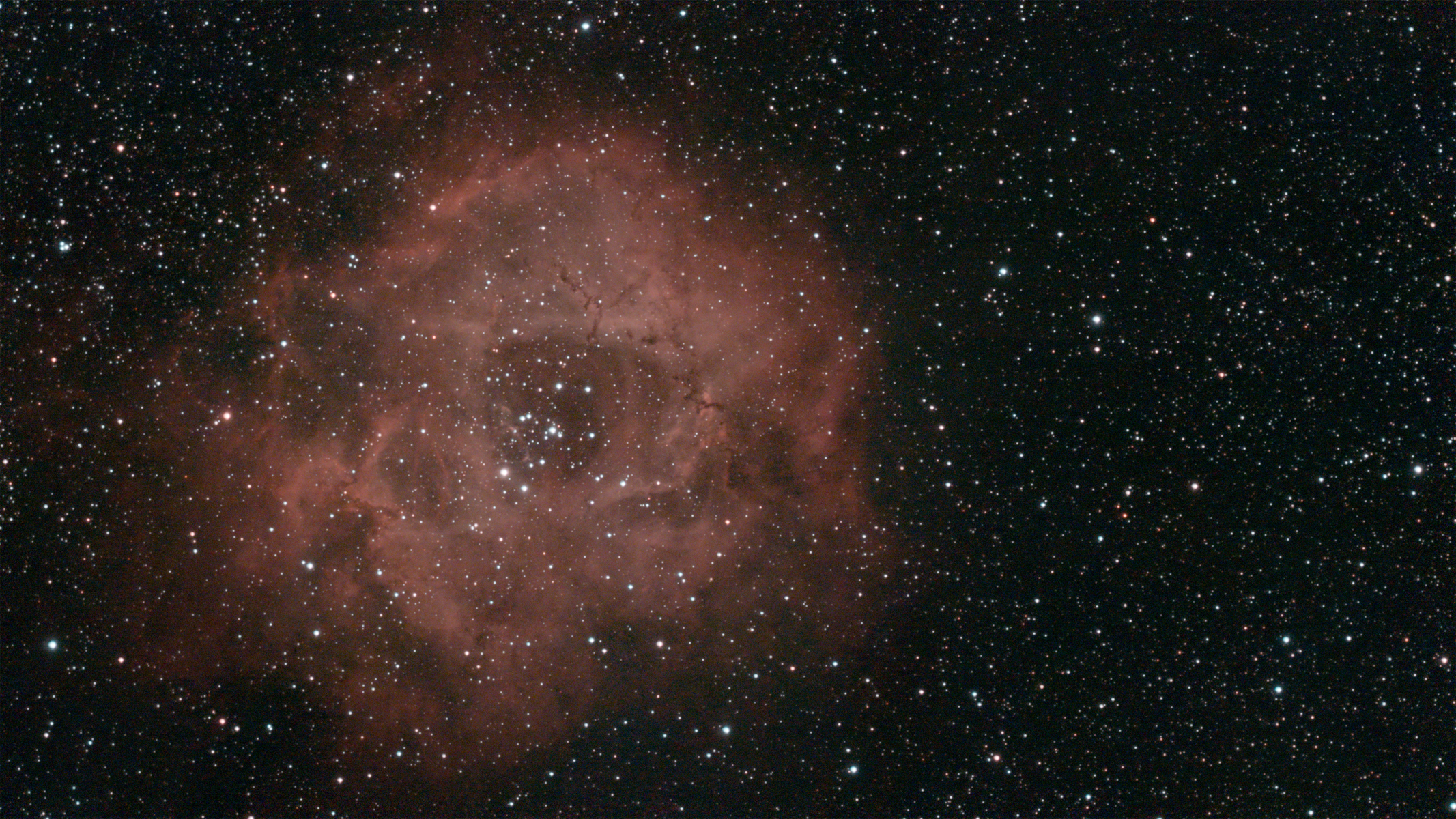
The Rosette Nebula is a vast, star-forming region in Monoceros and a strong astrophotography target. Its flower-like shape is produced by stellar winds and radiation from a central cluster of young stars. Monoceros rises higher in the evening from January onward, making the Rosette Nebula easier to view and photograph.
California Nebula (NGC 1499)
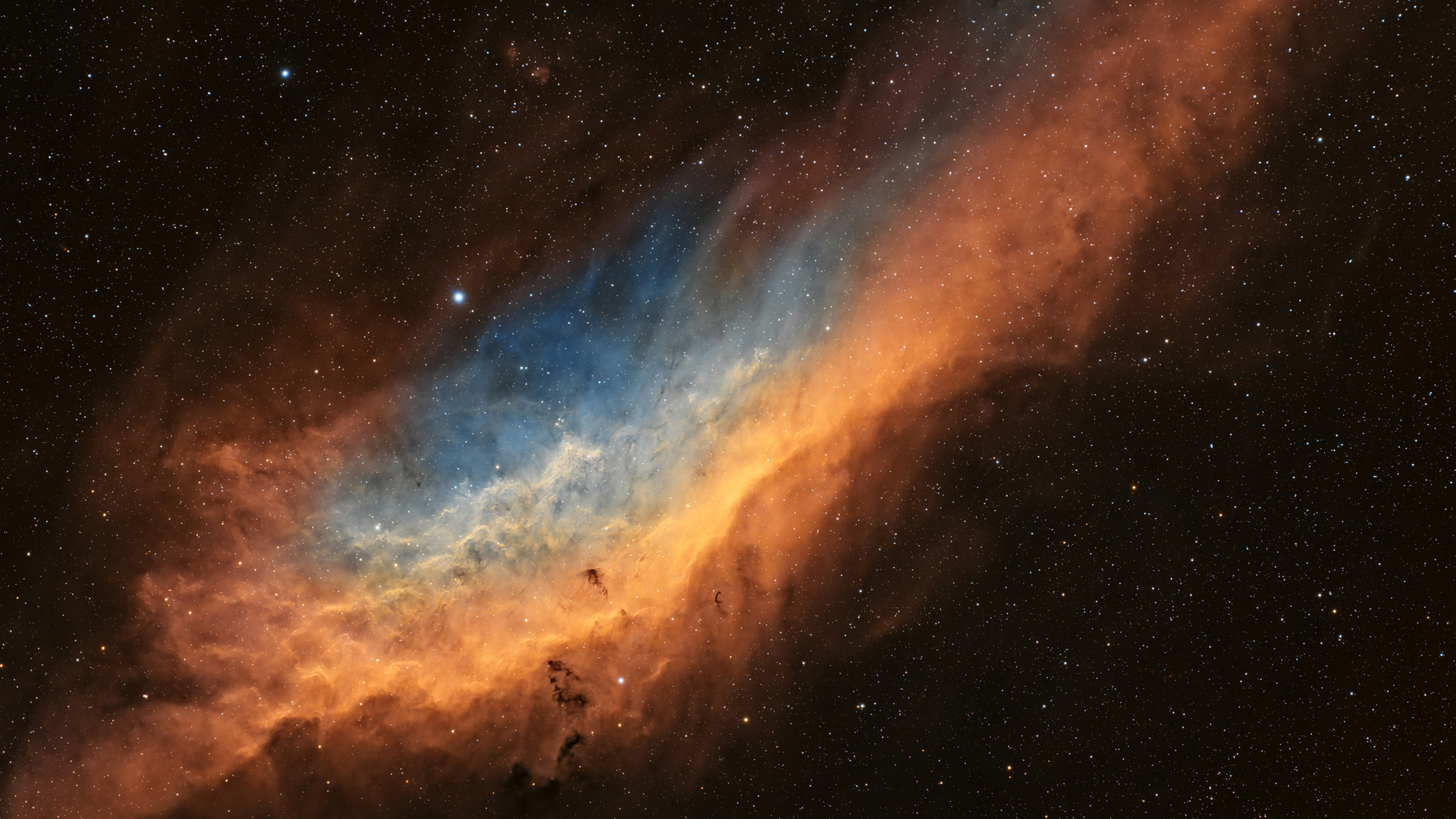
The California Nebula lies in Perseus and is named for its resemblance to the U.S. state. This emission nebula consists of ionized gas from the nearby star Xi Persei, which gives it a red and pink appearance.
It spans about 2.5 degrees in apparent size, making it well suited to astrophotography and smart telescopes with a wide field of view. Its peak visibility extends from the present season through February.
Tadpole Nebula (IC 410)
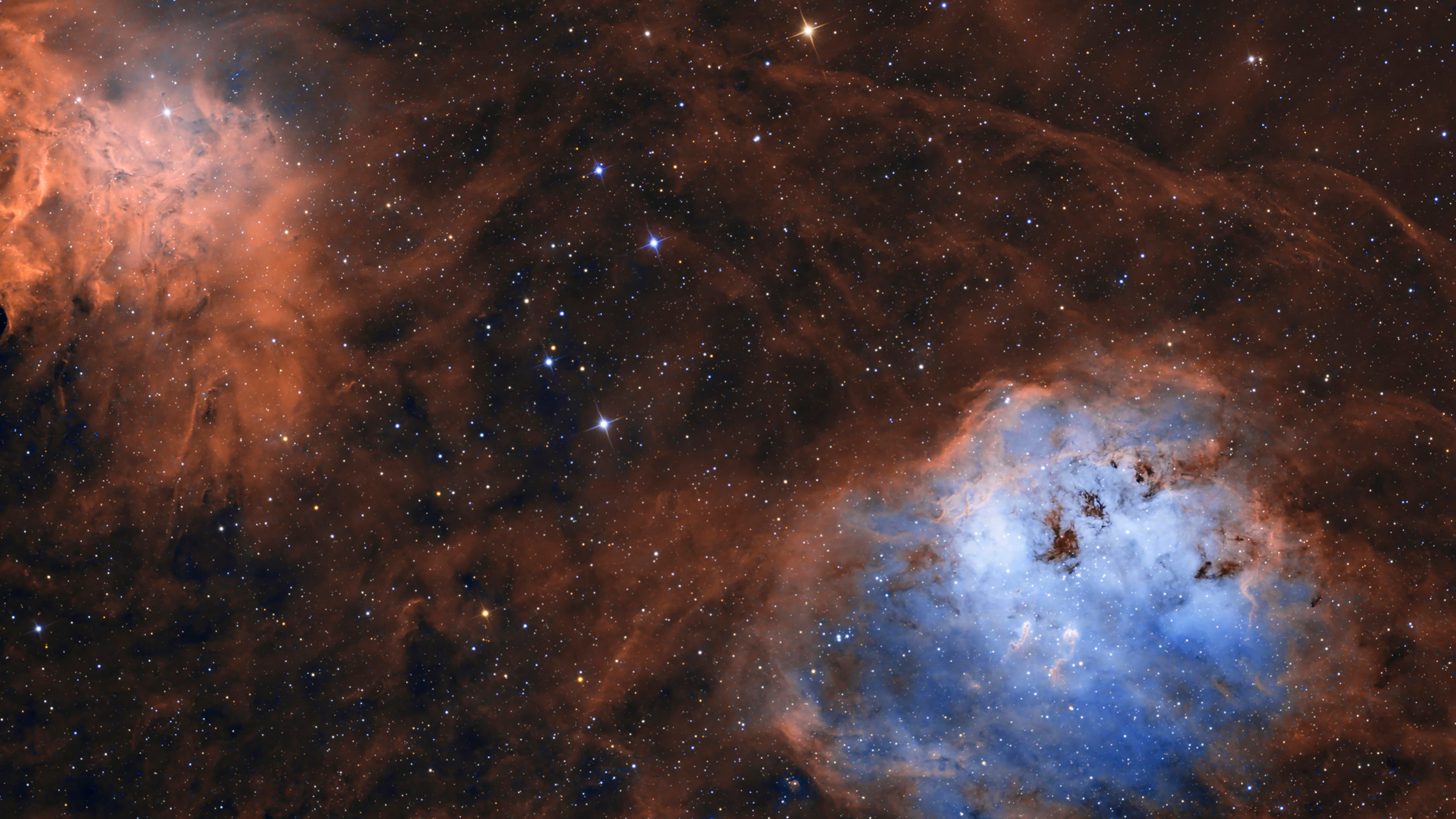
The Tadpole Nebula is an emission nebula and active stellar nursery about 12,000 light-years away in Auriga. It spans roughly 100 light-years and is a striking target for a smart telescope.
Prominent pillars of gas and dust give the object its name, resembling tadpoles swimming through space. Each of these cosmic tadpoles is about 10 light-years long. A smart telescope or astrophotography camera will typically need an integration time of two to three hours to reveal more structure, with longer sessions producing better results.
Flaming Star Nebula (IC 405)
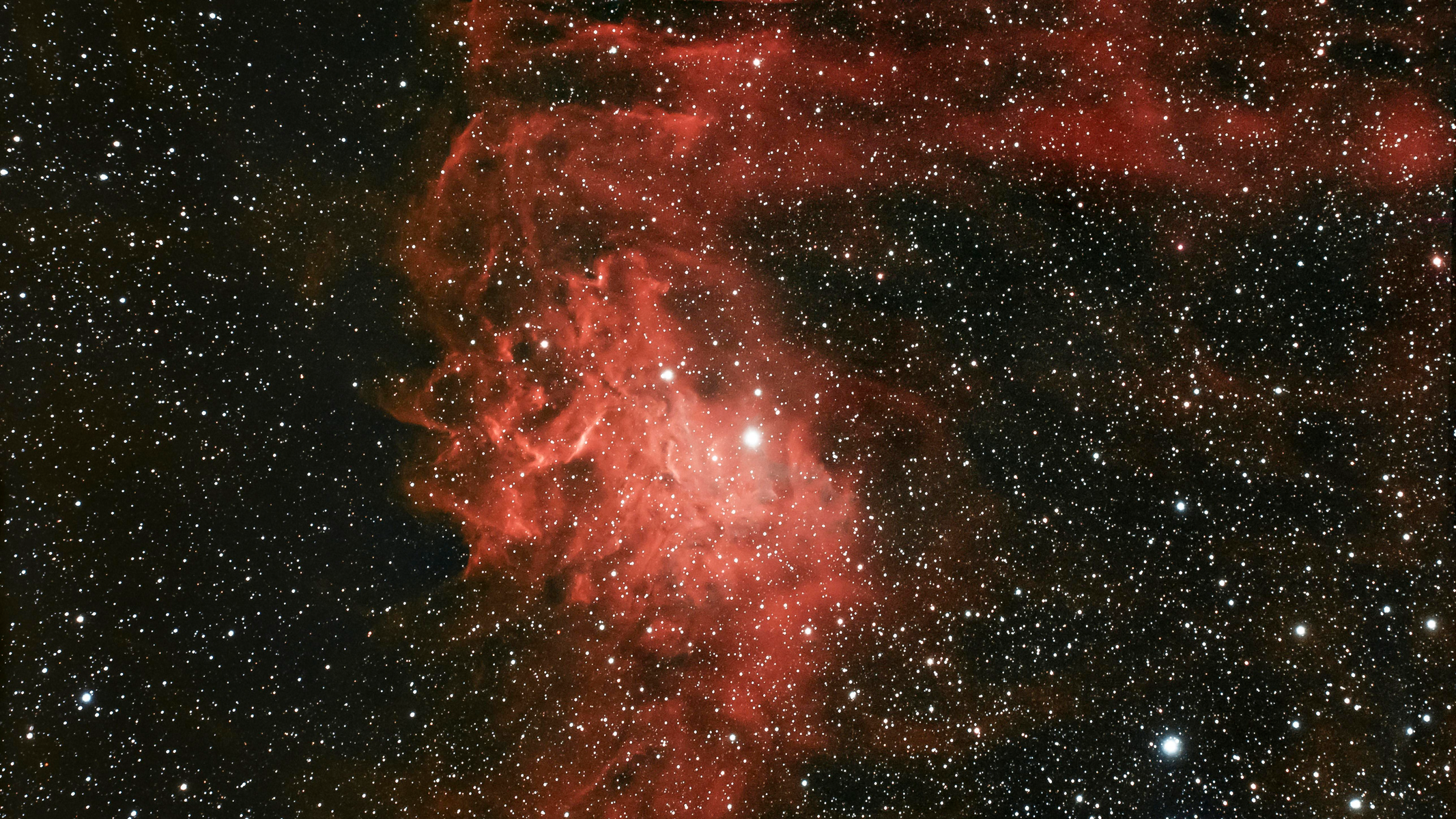
The Flaming Star Nebula is also in Auriga, but at about 1,500 light-years away it is much closer than the Tadpole Nebula. It spans roughly 5 light-years. Although it is smaller in physical size, its relative proximity makes it appear large in a smart-telescope frame. It is best observed from late autumn through winter as Auriga climbs higher in the sky.
The object is both an emission and a reflection nebula, and the two forms of nebulosity respond to different filters. Astrophotographers can combine separate data sets in stacking software to bring out additional detail and color. Broadband exposures capture visible light, including blue light reflected by dust and the natural colors of stars. Narrowband or dual-band filters isolate emission wavelengths such as hydrogen-alpha (Ha) and oxygen-III (OIII). Combining the data can reveal the emission nebula’s red glow alongside the blue tones of the reflective dust.
Source: www.livescience.com