



The BADBOX malware botnet has re-emerged as BADBOX 3.0, generating a record 40 billion fraudulent advertising bid requests per day from infected Android-based devices. HUMAN researcher Satori, which identified and disrupted the latest variant, says the operation has become the largest documented ad fraud campaign measured by daily bid-request volume.
BADBOX was first identified on a T95 Android TV box purchased from Amazon in early 2023. In December 2024, German cybersecurity authorities warned that the botnet had infected tens of thousands of devices.
In March 2025, HUMAN and Shadowserver blocked more than 500,000 BADBOX 2.0 devices from connecting to their command-and-control servers. Google also removed 24 apps from Google Play that were distributing the malware.
Google later sued the botnet’s operators, alleging that BADBOX 2.0 had infected more than 10 million Android-based devices by April 2025.
BADBOX returns with record ad fraud volume
The earlier disruption did not prevent the BADBOX operators from rebuilding their infrastructure. The new BADBOX 3.0 campaign subsequently set a record for the volume of fraudulent advertising bid requests it generated.
“At its peak, BADBOX 3.0 accounted for approximately 40 billion bid requests per day and more than 4% of all CTV traffic observed by the Human Defense Platform,” HUMAN reported.
“The volume of BADBOX 3.0 is more than three times that of the previous record holder, VASTFLUX, and represents a larger peak than the Satori studies published over the past five years combined.”
Source: HUMAN
Infected Android devices used for ad fraud and proxies
BADBOX 3.0 uses the same basic strategy as earlier versions: infecting inexpensive phones, tablets and streaming TV boxes that run the Android Open Source Project (AOSP). The malware uses these devices for advertising fraud and traffic proxy services.
For its advertising fraud activity, the malware impersonates a legitimate streaming application. This makes its requests appear authentic while it plays video advertisements in a hidden window.
HUMAN also observed fraudulent server-side ad insertion (SSAI) requests. These requests made advertisers believe that their ads were being played on a streaming device, even when no real device or video advertisement was involved.
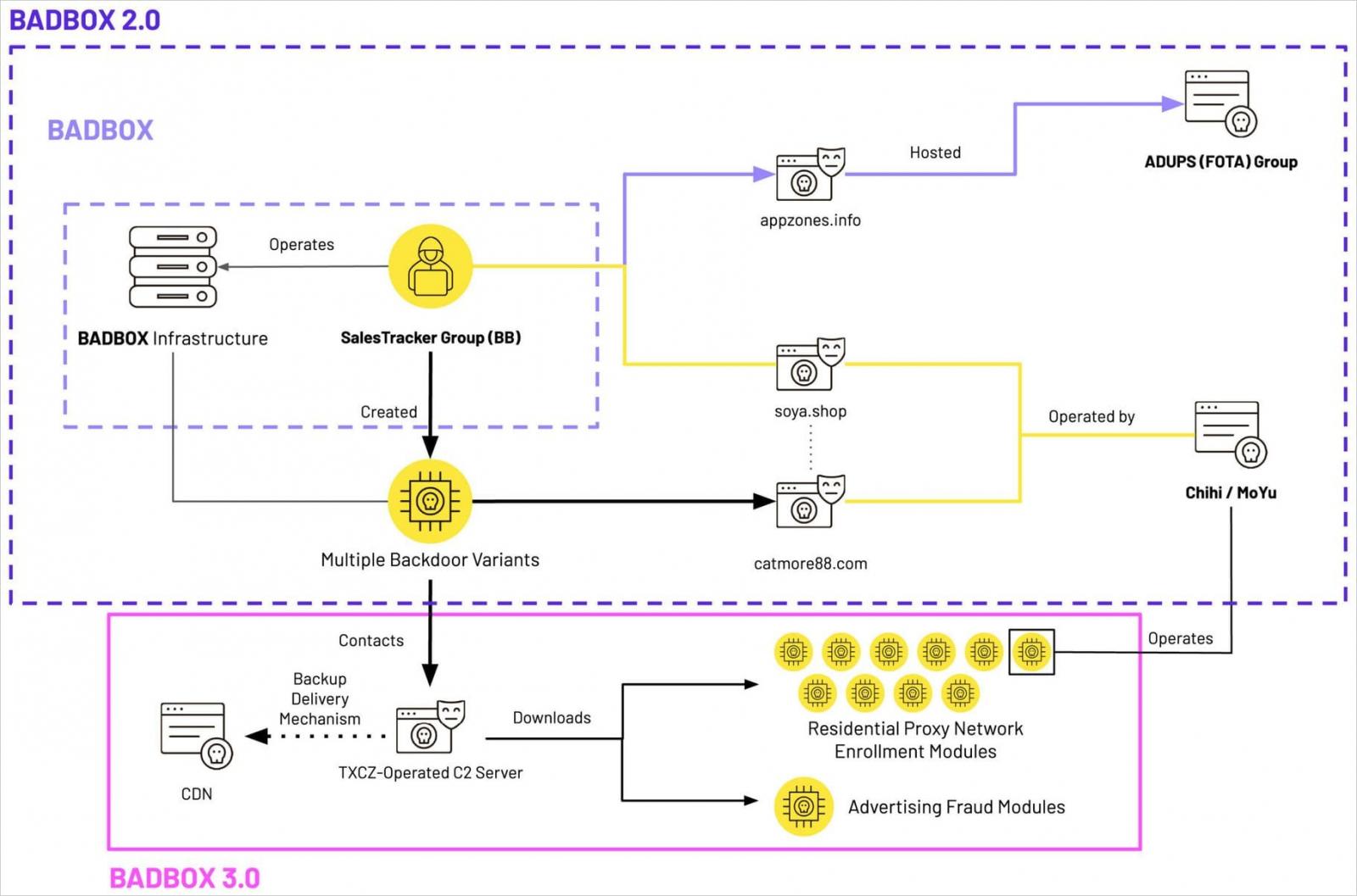
The malware’s proxy module secretly enrolled infected devices in one of 11 residential proxy networks without the owners’ knowledge or consent.
One of those networks, PXYEDGE, was identified as the rebranded successor to IpMoYu, a residential proxy service previously linked to BADBOX 2.0. The researchers said PXYEDGE advertises about 200,000 proxy nodes, while their monitoring recorded a peak of approximately 340,000 unique connections.
According to HUMAN, some of the fraudulent advertising traffic was routed through these residential proxies to make it appear legitimate and evade anti-fraud controls.
Source: HUMAN
Researchers trace malware to device manufacturers
Researchers linked the malware to specific Chinese electronics manufacturers based on domain registrations, device-specific checks in the code, factory-installed TV launchers and repository administrators.
Infected devices download malware modules from public code repositories. The same payload is also mirrored across multiple hosting platforms, providing redundancy and helping the operators withstand takedown attempts.
HUMAN said it participated in Google’s disruption of related XCPE malware operations, including the takedown of multiple command-and-control domains used by BADBOX 3.0 earlier this month.
Although one of the malware repositories has been removed, HUMAN said its systems are continuing to filter malicious advertising traffic associated with BADBOX 3.0.
HUMAN warned that the botnet operators are likely to adapt to the latest disruption, as they have done after previous interventions.
To reduce the risk of infection, users should purchase certified Android devices from reputable manufacturers and ensure that Google Play Protect is available and enabled.
Source: www.bleepingcomputer.com