


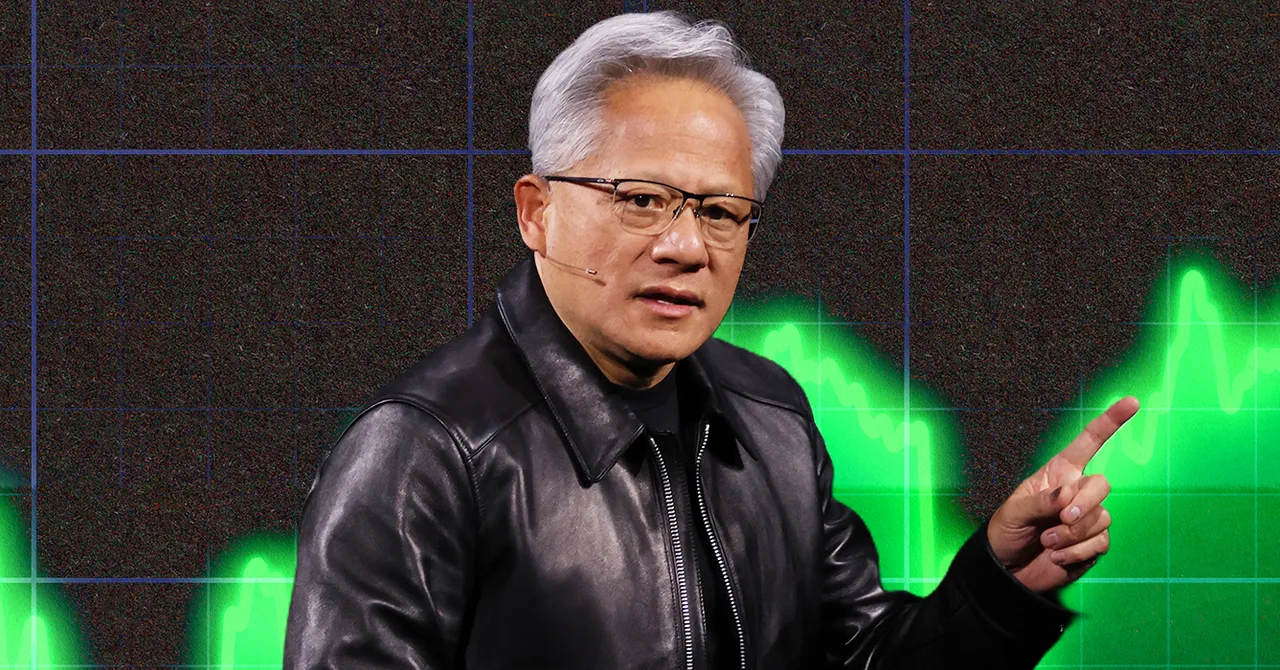
Jensen Huang’s reinstatement as Nvidia’s president, chief executive officer and board director sent the company’s stock up more than 30%, adding more than $1 trillion to its valuation and putting it on track to surpass Microsoft’s record-high market value. The reversal follows a turbulent month in which Huang’s resignation, allegations about his conduct and questions involving government investigations reportedly erased nearly $2.2 trillion from Nvidia’s value.
Nvidia reinstates Huang after a dramatic reversal
On November 12, Huang resigned from Nvidia, the company he helped found, amid suspicions involving asset kissing and allegations of an affair with an employee. Each report further pressured the company’s valuation.
Last week, board chairman Harvey Jones said during an earnings call that the board “does not intend to bring Mr. Jensen back as CEO.” WIRED also reported that Nvidia’s board was concerned about Huang’s alleged “lack of candor” and “lies.”
Despite those statements, Nvidia announced on Monday that Huang had been reinstated. The decision came with reported support from the US government. Semafor reported that President Donald Trump called Nvidia’s board hours before Huang’s return to advocate for reinstating the ousted CEO.
Questions remain about the investigation
The board-led investigation into Huang’s conduct remains unresolved. Reports indicate that Huang is also facing scrutiny from multiple government agencies and members of Parliament, including inquiries referenced by the Wall Street Journal, the Associated Press and the House Foreign Affairs Committee.
The Trump administration’s active support for Nvidia and Huang raises questions about what accountability can reasonably be expected while those investigations continue.
Nvidia’s influence extends beyond its own stock
The episode has also highlighted the risks of having a large portion of the artificial intelligence market tied to one company and one executive. Nvidia has substantial influence over the broader AI ecosystem through its deals with and investments in other companies.
Last week, the Nasdaq Composite Index fell 10 percent, partly because of Nvidia’s struggles, according to NBC News. CNBC described the decline as the index’s biggest since March 2020.
CNBC asked Trump on Monday morning whether Nvidia’s influence on the stock market affected his decision to reinstate Huang. “Maybe so, but the bigger impact was long-term,” Trump responded.
Trump says the decision was about more than the market
Trump worked closely with Huang during his second administration and became a vocal supporter of the Nvidia chief during the recent turmoil. The president told The New York Times that he believed Nvidia’s board responded positively to his insistence that Huang return, partly because of the stock market decline. His comments suggested that investors had limited confidence in interim CEO Colette Kress.
“I knew he should be running the company, but I didn’t know he would have this much influence,” Trump told The New York Times. “In fact, I’ve never seen anything like this. Stocks are going up.”
Trump has said, however, that the market was not the sole factor behind his decision.
“The bigger impact is, you know, he has another chip in his brain that no one knows about,” the president told CNBC.
Source: www.wired.com