


Close Menu
HitechubHitechub
    What's Hot
    Science

    U.S. Ocean Program Budget Cuts Impact El Niño and AMOC Monitoring Efforts

    Technology

    The most powerful X-ray laser in the world has been activated

    Science

    Atlantic’s Mysterious Cold Mass: Implications for AMOC Weakening

    Important Pages:
    • About Us
    • Privacy Policy
    • Terms & Conditions
    Facebook X (Twitter) Instagram Pinterest
    Facebook X (Twitter) Instagram
    HitechubHitechub
    Wednesday, June 10
    • Technology
      1. AI
      2. Gadgets
      3. View All

      This is the most popular CEO in the world

      Sectors in which “Chat-GPT” is most often used

      AI Pioneer Expresses Concern About Potential for AI to Surpass Humanity

      Artificial intelligence has begun to “swallow” professions

      What’s new in Android 14

      Europeans have about 700 million old mobile phones in their drawers

      Here’s how you can tell if your phone is being tapped

      “Sneaker X” – computer case in the shape of a sneaker

      Russian Gamers Unite to Prevent Nuclear War: Join the Fight Online

      Challenges of Space Travel: Why Journeying to Space is So Difficult

      NASA Astronaut Casts Historic Vote from Space

      Discover the Future of Comfort: What If You Could Wear a Chair?

    • Science
      1. Space
      2. Wheels
      3. View All

      Galaxies in the universe are growing more slowly than they should

      “Espace” presented the new lander “Apex 1.0”

      The largest asteroid sample ever collected has arrived on Earth

      (VIDEO) Incredible flight of the Parker Solar Probe

      Toyota wants to make a new generation battery with a range of up to 1,200 km

      Meet Toyota’s lunar “baby” that could make exploring the Moon easier

      Microlino – Is this the perfect city car?

      Alfa Romeo 4C gets an electric successor

      Rare Camera Trap Footage Reveals Wolves Hunting European Bison

      Uncovering Surprising Foods That Cause Weight Gain: What You Didn’t Expect

      Moon Meteorite Holds Key Evidence of Massive Asteroid Impact

      Discover How Millions of Planets Could Form Around Supermassive Black Holes

    HitechubHitechub
    Home » Scientists Debate Risks of Lab-Engineered Bacteria: A Look into Mirror Life
    Science

    Scientists Debate Risks of Lab-Engineered Bacteria: A Look into Mirror Life

    Share Facebook Twitter Pinterest WhatsApp
    Share
    Facebook Twitter LinkedIn Pinterest WhatsApp
    Microbes and mirror molecules

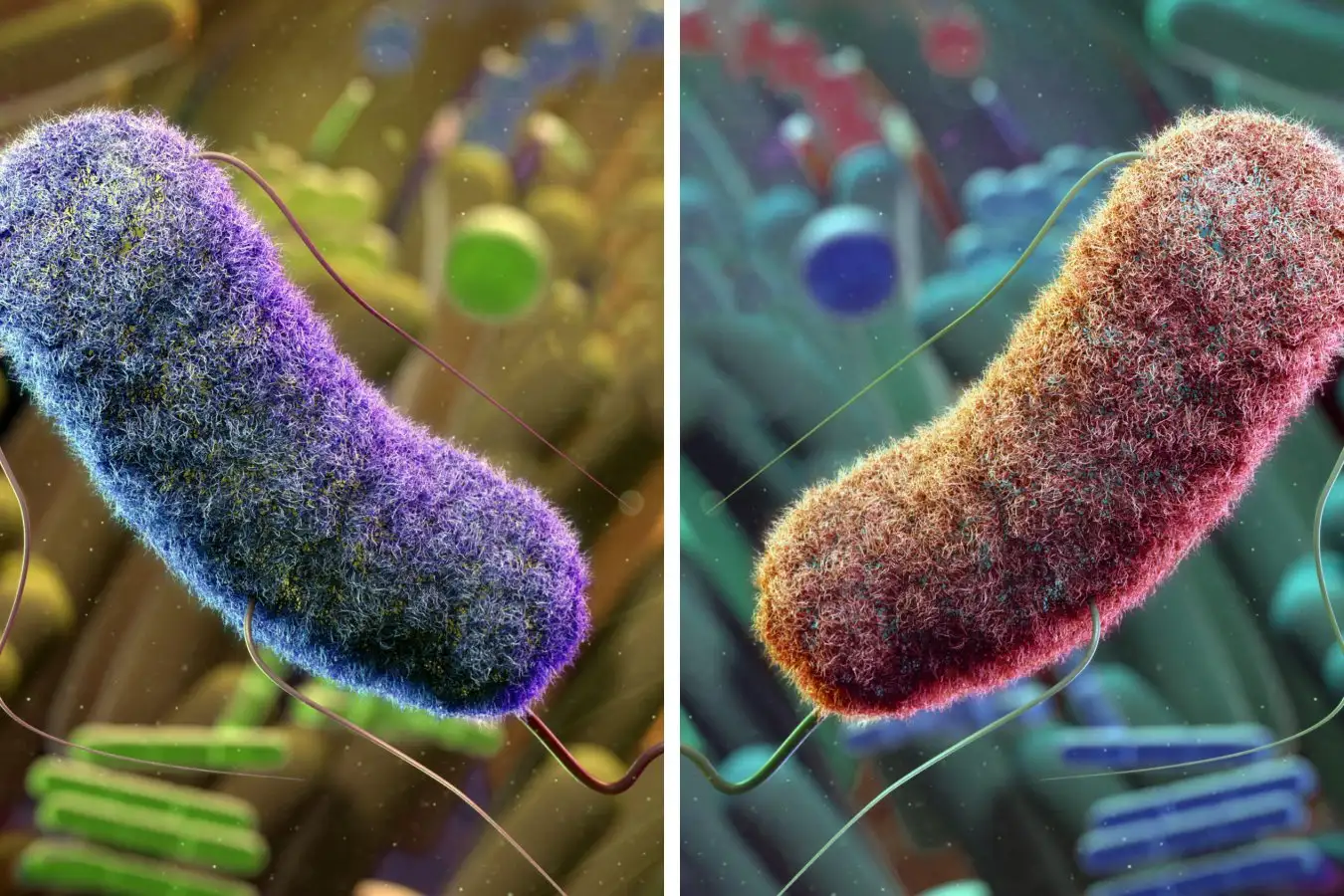
    Microbes Created in the Lab Could Utilize Mirror Images of Natural Molecules

    THOM LEACH/Science Photo Library/Alamy

    Recent modeling studies indicate that microorganisms based on mirror images of natural molecules may struggle to survive outside laboratory settings. This raises the possibility of “mirror feeding” or new feeding methods.

    However, this research has prompted criticisms from experts cautioning against underestimating the risks associated with these so-called mirror organisms.

    Many essential biomolecules, including DNA and proteins, exhibit chirality, allowing them to exist in left-handed or right-handed forms. Similar to how left and right hands are unique mirror images, all known life on Earth relies on right-handed DNA and left-handed proteins which facilitate cellular processes.

    While still not technically feasible, producing organisms with reversed chirality may become possible. In a 2024 publication, 38 scientists highlighted the urgent need to halt research on mirror life due to potential hazards, such as the immune system’s inability to recognize mirror bacteria.

    In a groundbreaking study, Ricard Sole and his team at the Santa Fe Institute explored the implications of integrating mirror organisms into Earth’s biosphere, using computational models to examine how these entities would fare in various ecological scenarios.

    Sole emphasizes that for mirror life to pose a significant threat, it needs to sustain itself independently. A primary challenge for mirror organisms is their reliance on food composed of molecules mirroring their own chirality.

    “The concept of engineering specialized ‘mirror food’ to support these creatures only shifts the challenge instead of resolving it,” explains Sole. “Establishing a viable mirror biosphere would necessitate a continuous industrial supply of mirror chiral biomolecules, including sugars, amino acids, and lipids, alongside isolated nutrients.”

    The focus of the researchers’ model was on whether these mirror organisms could autonomously colonize real ecological environments, as opposed to merely surviving temporarily under laboratory conditions with artificial feeding systems.

    “We believe that mirror life will likely encounter significant obstacles across diverse ecological contexts, making a successful establishment improbable,” says Sole. “However, vital questions remain, including long-term evolutionary dynamics and how the immune system interacts with these organisms.”

    This study is currently hosted on a preprint server prior to peer review. However, several scientists engaged in mirror life research have called for revisions of the paper based on its conclusions.

    Bone Cooper, a co-author from the University of Pittsburgh, stated to New Scientist that mirror microorganisms may initially experience slower growth than their native counterparts due to nutrient limitations. Nevertheless, numerous non-chiral nutrients could still facilitate the development of mirror microorganisms. “Moreover, the mirror cell population could quickly evolve and adapt to new environments, leading to a second tree of life,” adds Cooper.

    The analysis also suggests that Earth’s existing biodiversity may serve as a protective “firewall” against potential invasions, as native organisms are more adept at adapting to their environments and thus can outcompete mirror organisms. When it comes to mirror bacteria, Sole and colleagues highlight that the immune system might still recognize them as foreign entities.

    However, Cooper expresses skepticism: “There are numerous instances in invasion biology that reveal the susceptibility of diverse ecosystems to invaders lacking natural predators,” he notes.

    Kate Adamala, another author from the University of Minnesota, acknowledges that while Sole’s team is correct in recognizing the challenge posed by the availability of identical chiral molecules, it is possible for these organisms to employ photosynthesis to produce their own nutrients and leverage naturally occurring chiral molecules. “Creating such an organism would be incredibly difficult, yet not entirely implausible,” says Adamala. “At present, the rationale for the broader scientific community’s consensus labeling it as ‘very unlikely’ remains unclear.”

    Sole and his team have considered that mirror organisms might utilize non-chiral nutrients or photosynthesis, but persist in asserting that these organisms would still face significant ecological challenges.

    “The crucial question isn’t merely whether some nutrients are accessible, but whether there’s enough to support sustained growth while contending with the established biosphere,” he notes. “Even if mirror organisms could exist on limited achiral compounds, they would encounter significant ecological challenges, including limited resource quality, dilution, competition, and their inability to efficiently utilize the majority of naturally occurring chiral biomolecules.”

    Philippa Lentzos, a professor at King’s College London, argues that while mirror life poses a plausible future concern, immediate biological risks should take precedence. “The goal should not be to panic or dismiss these concerns but to implement careful governance, outlining hazardous work, and establishing a research agenda that prioritizes pressing biosafety and biosecurity issues,” she emphasizes.

    “The argument made for ecological constraints does not negate the necessity for governance. Instead, it illustrates the need for evidence-based and adaptable governance. We must comprehend the assumptions associated with the risks, the uncertainties involved, and the types of research that could significantly alter the situation,” Lentzos concludes.

    Topics:

    Source: www.newscientist.com

    Share. Facebook Twitter Pinterest LinkedIn WhatsApp
    Previous ArticleIron Age Britons: The Practice of Removing Brains from the Deceased
    Next Article Scientists Warn of ‘Unprecedented’ Changes in Earth’s Rotation

    Related Posts

    Science

    Rare Camera Trap Footage Reveals Wolves Hunting European Bison

    Science

    Uncovering Surprising Foods That Cause Weight Gain: What You Didn’t Expect

    Science

    Moon Meteorite Holds Key Evidence of Massive Asteroid Impact

    Science

    Discover How Millions of Planets Could Form Around Supermassive Black Holes

    Science

    Unlocking Sloth’s Slow Lifestyle: The Ancient ‘Jumping Gene’ Explained

    Science

    Rapid Melting of Glaciers on the Roof of the World: Causes and Impacts

    Science

    Near Miss with Waymo: Why I’m Still Optimistic About Self-Driving Cars

    Science

    NASA’s Stunning New Image Reveals the Incredible Power of a Supermassive Black Hole

    Add A Comment
    Leave A Reply Cancel Reply

    Stay In Touch
    • Facebook
    • Twitter
    • Instagram
    • Pinterest
    Top Picks
    Science

    Top New Science Fiction Novels to Read in June 2026: Featuring Adrian Tchaikovsky and M. John Harrison

    In Joseph Eckhart’s novel, a father mysteriously travels back in time. TravelerMikhail Rudenko / Alamy…

    Understanding Quantum Physics: Why It Matters to Us Personally

    Jellyfish that have no brain, but remember what happened in the past

    Sectors in which “Chat-GPT” is most often used

    Scientists Debate Risks of Lab-Engineered Bacteria: A Look into Mirror Life

    Most Popular
    Science

    NASA Unveils Three Unmanned Moon Exploration Missions in 2023 to Support Lunar Base Construction

    Science

    Is the Arctic Ocean Mitigating or Intensifying Global Warming? Insights from Cyworthy

    Categories
    • AI (13)
    • Gadgets (10)
    • Science (175)
    • Space (9)
    • Technology (37)
    • Wheels (9)
    Our Picks
    Technology

    Challenges of Space Travel: Why Journeying to Space is So Difficult

    Science

    Rapid Melting of Glaciers on the Roof of the World: Causes and Impacts

    © 2026 Hitechub.
    • Home
    • About Us
    • Privacy Policy
    • Terms & Conditions

    Type above and press Enter to search. Press Esc to cancel.

    We are using cookies to give you the best experience on our website.

    You can find out more about which cookies we are using or switch them off in .

    Ad Blocker Enabled!
    Ad Blocker Enabled!
    Our website is made possible by displaying online advertisements to our visitors. Please support us by disabling your Ad Blocker.
    Go to mobile version
    Hitechub
    Powered by  GDPR Cookie Compliance
    Privacy Overview

    This website uses cookies so that we can provide you with the best user experience possible. Cookie information is stored in your browser and performs functions such as recognising you when you return to our website and helping our team to understand which sections of the website you find most interesting and useful.

    Strictly Necessary Cookies

    Strictly Necessary Cookie should be enabled at all times so that we can save your preferences for cookie settings.