


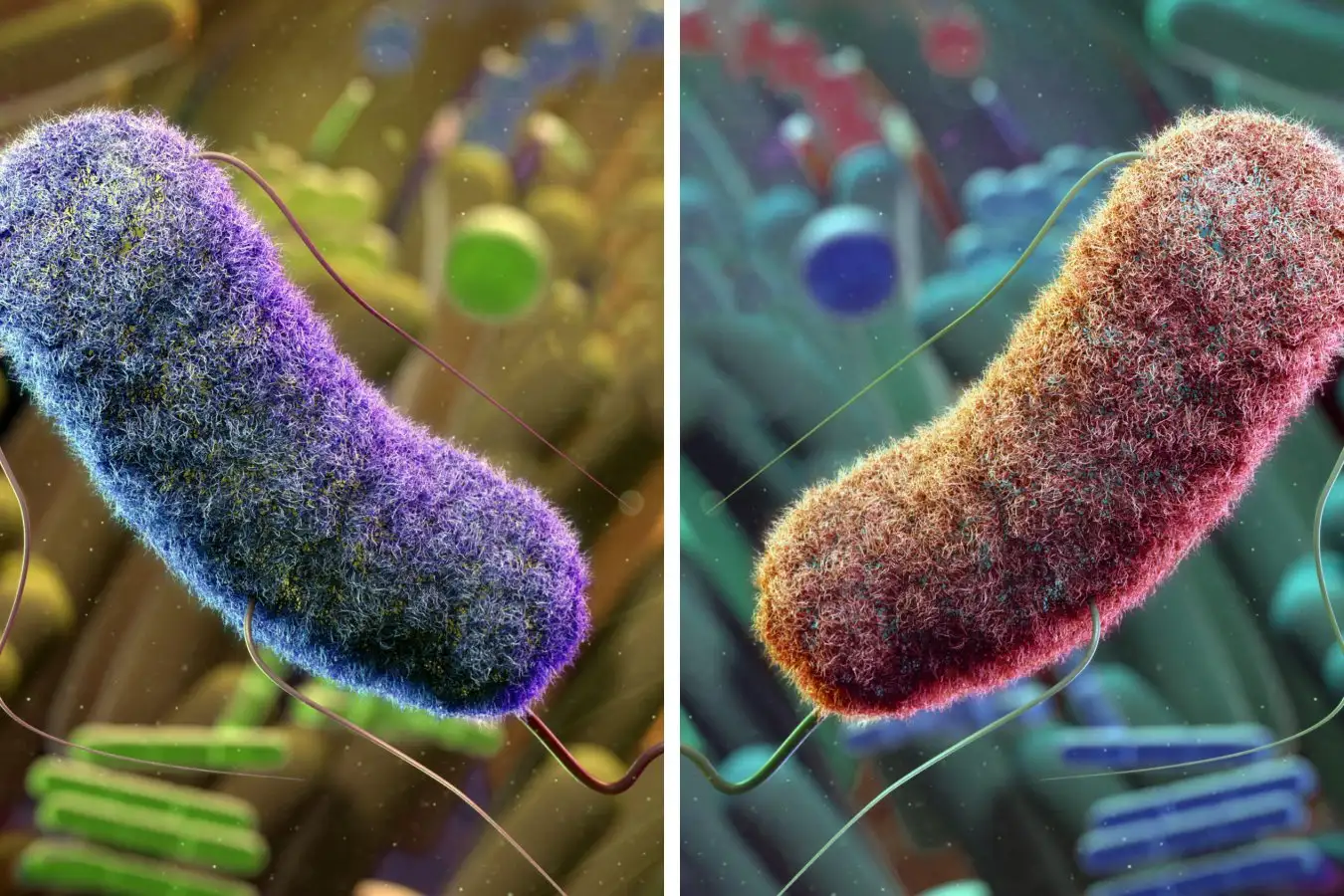

Microbes Created in the Lab Could Utilize Mirror Images of Natural Molecules
THOM LEACH/Science Photo Library/Alamy
Recent modeling studies indicate that microorganisms based on mirror images of natural molecules may struggle to survive outside laboratory settings. This raises the possibility of “mirror feeding” or new feeding methods.
However, this research has prompted criticisms from experts cautioning against underestimating the risks associated with these so-called mirror organisms.
Many essential biomolecules, including DNA and proteins, exhibit chirality, allowing them to exist in left-handed or right-handed forms. Similar to how left and right hands are unique mirror images, all known life on Earth relies on right-handed DNA and left-handed proteins which facilitate cellular processes.
While still not technically feasible, producing organisms with reversed chirality may become possible. In a 2024 publication, 38 scientists highlighted the urgent need to halt research on mirror life due to potential hazards, such as the immune system’s inability to recognize mirror bacteria.
In a groundbreaking study, Ricard Sole and his team at the Santa Fe Institute explored the implications of integrating mirror organisms into Earth’s biosphere, using computational models to examine how these entities would fare in various ecological scenarios.
Sole emphasizes that for mirror life to pose a significant threat, it needs to sustain itself independently. A primary challenge for mirror organisms is their reliance on food composed of molecules mirroring their own chirality.
“The concept of engineering specialized ‘mirror food’ to support these creatures only shifts the challenge instead of resolving it,” explains Sole. “Establishing a viable mirror biosphere would necessitate a continuous industrial supply of mirror chiral biomolecules, including sugars, amino acids, and lipids, alongside isolated nutrients.”
The focus of the researchers’ model was on whether these mirror organisms could autonomously colonize real ecological environments, as opposed to merely surviving temporarily under laboratory conditions with artificial feeding systems.
“We believe that mirror life will likely encounter significant obstacles across diverse ecological contexts, making a successful establishment improbable,” says Sole. “However, vital questions remain, including long-term evolutionary dynamics and how the immune system interacts with these organisms.”
This study is currently hosted on a preprint server prior to peer review. However, several scientists engaged in mirror life research have called for revisions of the paper based on its conclusions.
Bone Cooper, a co-author from the University of Pittsburgh, stated to New Scientist that mirror microorganisms may initially experience slower growth than their native counterparts due to nutrient limitations. Nevertheless, numerous non-chiral nutrients could still facilitate the development of mirror microorganisms. “Moreover, the mirror cell population could quickly evolve and adapt to new environments, leading to a second tree of life,” adds Cooper.
The analysis also suggests that Earth’s existing biodiversity may serve as a protective “firewall” against potential invasions, as native organisms are more adept at adapting to their environments and thus can outcompete mirror organisms. When it comes to mirror bacteria, Sole and colleagues highlight that the immune system might still recognize them as foreign entities.
However, Cooper expresses skepticism: “There are numerous instances in invasion biology that reveal the susceptibility of diverse ecosystems to invaders lacking natural predators,” he notes.
Kate Adamala, another author from the University of Minnesota, acknowledges that while Sole’s team is correct in recognizing the challenge posed by the availability of identical chiral molecules, it is possible for these organisms to employ photosynthesis to produce their own nutrients and leverage naturally occurring chiral molecules. “Creating such an organism would be incredibly difficult, yet not entirely implausible,” says Adamala. “At present, the rationale for the broader scientific community’s consensus labeling it as ‘very unlikely’ remains unclear.”
Sole and his team have considered that mirror organisms might utilize non-chiral nutrients or photosynthesis, but persist in asserting that these organisms would still face significant ecological challenges.
“The crucial question isn’t merely whether some nutrients are accessible, but whether there’s enough to support sustained growth while contending with the established biosphere,” he notes. “Even if mirror organisms could exist on limited achiral compounds, they would encounter significant ecological challenges, including limited resource quality, dilution, competition, and their inability to efficiently utilize the majority of naturally occurring chiral biomolecules.”
Philippa Lentzos, a professor at King’s College London, argues that while mirror life poses a plausible future concern, immediate biological risks should take precedence. “The goal should not be to panic or dismiss these concerns but to implement careful governance, outlining hazardous work, and establishing a research agenda that prioritizes pressing biosafety and biosecurity issues,” she emphasizes.
“The argument made for ecological constraints does not negate the necessity for governance. Instead, it illustrates the need for evidence-based and adaptable governance. We must comprehend the assumptions associated with the risks, the uncertainties involved, and the types of research that could significantly alter the situation,” Lentzos concludes.
Topics:
Source: www.newscientist.com