


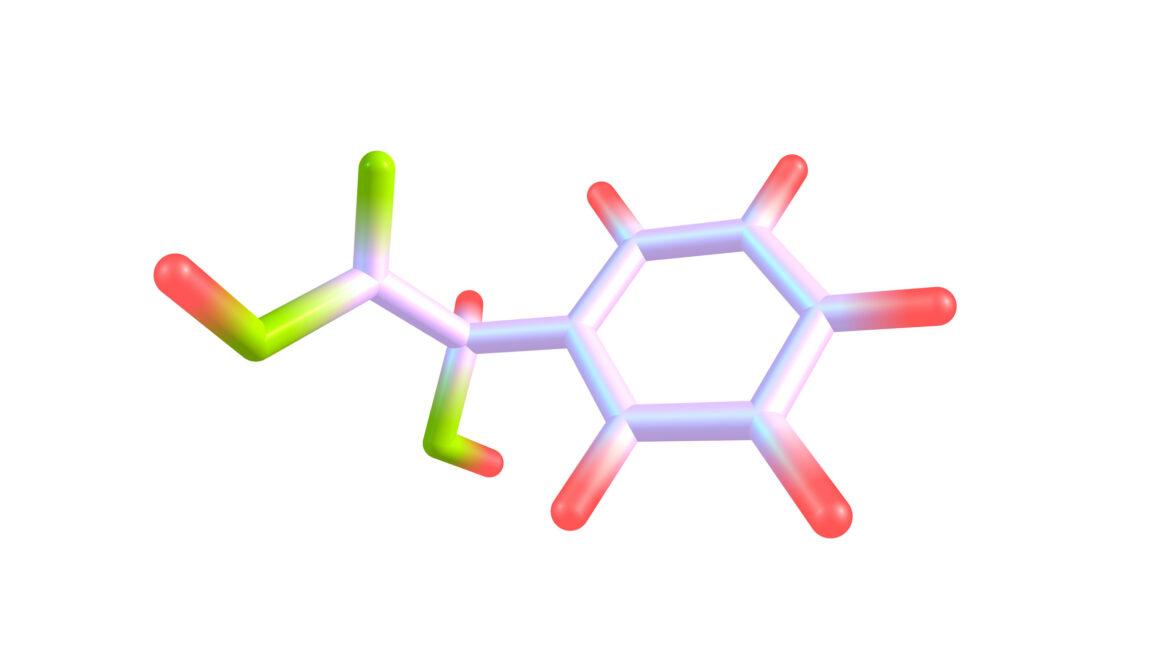
How Molecular “Handedness” May Explain Life’s Chemical Selectivity
Life is remarkably selective. Living organisms depend on many molecules with a property called chirality: Although these molecules are chemically identical, they exist as mirror-image versions of one another.
Most chemical reactions produce an approximately 50:50 mixture of these left-handed and right-handed forms. Life, however, generally uses only one of them. Because mirror-image molecules can behave differently, many of the enzymes essential to living organisms stop functioning when exposed to the opposite-handed chemicals.
This creates a major challenge for research into the origin of life. Scientists must explain how a chemical world that may initially have contained equal amounts of left- and right-handed molecules eventually gave rise to organisms that use only one form.
Today’s Nobel Prize in Chemistry goes to Henry Kagan and Kenso Soai, who discovered that chemical reactions can be biased toward one molecular form and produce a large excess of one of two mirror-image chemicals.
What is molecular chirality?
The technical term for molecular handedness is chirality. Scientists commonly describe the two forms as right-handed (D) and left-handed (L).
A pair of hands provides a useful analogy. Both hands contain the same components—fingers and a thumb—arranged in the same general way. But when the thumb points upward, the fingers curve in opposite directions. Each hand is therefore a mirror image of the other.
Many molecules have a similar three-dimensional arrangement. They contain the same chemical components, but their bonds point in slightly different directions in space. These mirror-image forms can have very different effects in biological systems.
Why opposite-handed molecules can disrupt life
Enzymes are highly dependent on molecular shape. Their structures allow them to interact with particular molecules, much like a key fitting into a lock. A mirror-image chemical may contain the same atoms and bonds but fail to fit the enzyme in the right way.
As a result, many major enzymes used by living organisms cease to function when given the opposite-handed form of a chemical.
How chemical reactions can favor one form
For the origin of life, one of the most important questions is how a mixture containing equal amounts of both molecular forms could become dominated by just one. The work recognized by this year’s Nobel Prize in Chemistry shows that chemical reactions are not always perfectly balanced.
Henry Kagan and Kenso Soai discovered that some reactions can favor one form over the other, producing a substantial excess of a single chiral molecule. Such chemical biases help address how life’s remarkable preference for one molecular “hand” may have emerged.
The chemistry behind molecular handedness
For a more technical view, a carbon atom has four potential sites where chemical bonds can form. These sites are spread across the surface of the atom. When each site is connected to a different chemical group, swapping the groups at two sites can change the molecule’s three-dimensional arrangement.
That change can create a mirror-image form with the same components but a different spatial structure—one of the fundamental features of chirality.
Source: arstechnica.com