


Close Menu
HitechubHitechub
    What's Hot
    Science

    Fanless Laptops Replace Noisy Fans and Heatsinks With Tiny Cooling Chips for Thinner, Lighter Designs

    Science

    Super El Niño Could Push Stressed Climate Ecosystems Past a Critical Threshold, Researcher Warns

    Science

    Magnetic Bacteria Extend Nematode Lifespan by 43% in Scientists’ Study

    Important Pages:
    • About Us
    • Privacy Policy
    • Terms & Conditions
    Facebook X (Twitter) Instagram Pinterest
    Facebook X (Twitter) Instagram
    HitechubHitechub
    Friday, November 27
    • Shop
      • Fashion
        • Mens
        • Womens
        • Accessories
          • Handbags
          • Keychain
          • Masks
          • Money clicps
          • Neck Pillow
          • Rings
          • Towels
          • Wallets
        • Jewelry
        • Watches
        • T-shirts
        • Hawaiian shirts
        • Vests
        • Swim trunks
        • Swimsuits
      • Fun
        • Magic cubes
        • Magnifiers
        • Misc
        • Photo books
        • Puzzles
        • Toys
      • Home
        • Cleaning/Care
        • Mailbox covers
        • Mugs
        • Pot Holders
        • Spoon
      • Office and Electronics
        • Chairs
        • Office Supplies
        • IPad cases
        • Laptop stickers
        • Mouse pads
        • Notebooks
        • Pencil bags
        • Pens
        • Phone cases
      • Personalized
      • Pets
      • Sports
        • Cycling
          • Balaclava Mask
          • Bike Bell
          • Bike Computer
          • Bike Fender
          • Bike Grips
          • Bike Kickstand
          • Bike Light
          • Bike Locks
          • Bike Mitts
          • Bike Pumps
          • Bike Repair Stand
          • Bike Seat
          • Bike Trainer
          • Bike Wheels
          • BIKES
            • Folding Bikes
            • Road Bikes
          • Carbon Fiber Bike Products
          • Cycling Mask
          • Kid’ Bike Helmets
          • Inner Tube
          • Motorcycle Bag
          • Nylon Pedals
          • Adult Helmets
          • Photochromic Sunglasses
          • Soft Coolers
          • Suction Cup Bike Rack
          • Tool accessories
          • Winter Cloth
          • Heart Rate Monitor
        • Outdoors/Camping
          • Outdoor Bags
        • Sweatband
    • Technology
      1. AI
      2. Gadgets
      3. View All

      This is the most popular CEO in the world

      Sectors in which “Chat-GPT” is most often used

      Artificial intelligence has begun to “swallow” professions

      The unusual robot conductor of a concert in Seoul

      Here’s how you can tell if your phone is being tapped

      PlayStation 5 becomes a completely silent console and gets more space

      This is the first phone that can be used to park a car

      Best Gaming Laptops 2023: Powerful Portables for PC Games

      SAP Confirms Security Incident Following Suspicious GitHub Activity

      Iranian Hacker Group Discovers New Tactics to Launch Widespread Cyberattacks

      Volvo’s Big Battery Powers the New 2028 Plug-In Hybrid

      Nvidia Scandal: How Jensen Huang and Asia’s Big AI Bet Exposed Major Risks

    • Science
      1. Space
      2. Wheels
      3. View All

      Space Perspective: A Journey to the Edge of Space

      5 Fascinating Facts About Space

      Space Exploration: Unveiling the Wonders of the Universe

      Toyota wants to make a new generation battery with a range of up to 1,200 km

      Meet Toyota’s lunar “baby” that could make exploring the Moon easier

      What does a night drive look like with one of the most beautiful cars in the world: the Rolls-Royce Ghost

      Natural Floating Island Installed in Glasgow Park as a Lasting Games Legacy Project

      Extremophile Transgene Enhances Drought Resistance and Yield in Cereal Crops

      Black Friday 2026 Telescope Deals: Smart Telescopes and Binoculars

      NASA Science: Imbued with Sivrich

    HitechubHitechub
    Home » Unlocking Erwin Schrödinger’s 1944 Classic: Why ‘What is Life?’ Remains Timely and Relevant Today
    Science

    Unlocking Erwin Schrödinger’s 1944 Classic: Why ‘What is Life?’ Remains Timely and Relevant Today

    Share Facebook Twitter Pinterest WhatsApp
    Share
    Facebook Twitter LinkedIn Pinterest WhatsApp

    What Is Life? Is It Still Impactful?

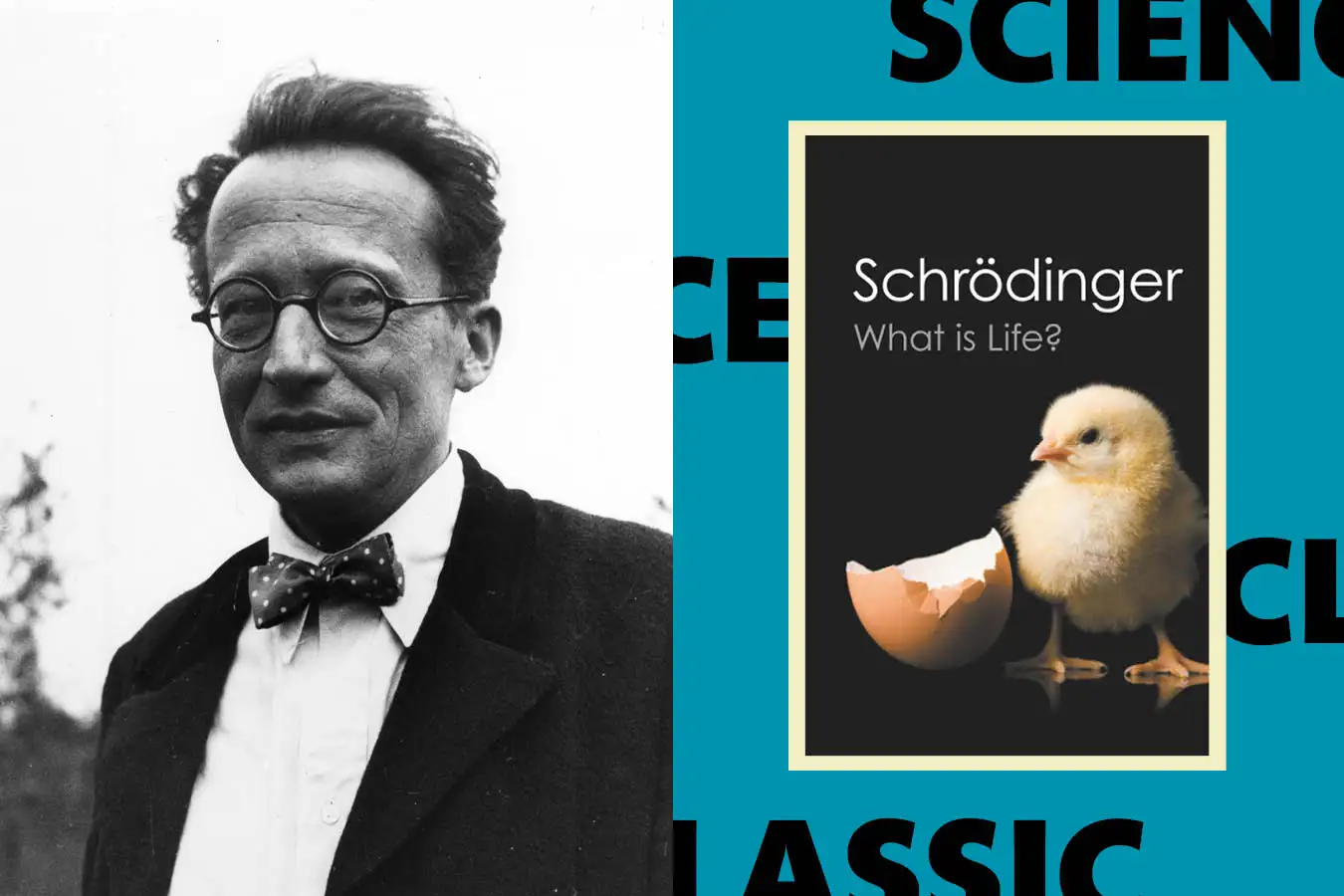
    In his seminal 1944 work, What Is Life?, Erwin Schrödinger, a pivotal figure in quantum science, argued that scientists have a responsibility to engage deeply with their areas of expertise. He challenges readers to explore the essence of life, transitioning from the world of inanimate matter to the vibrant realm of living organisms. This book spans 90 influential pages, positioning Schrödinger among the notable figures in popular science literature of the twentieth century.

    Originally based on lectures given in Dublin in 1943, What Is Life? is conversational yet rooted firmly in the language of physics. Schrödinger poses a critical question: “How can the phenomena occurring within living organisms be explained through the lens of physics and chemistry?”

    His investigation unfolds through a physicist’s lens. The text, subtitled Physical Aspects of Living Cells, begins by examining the microscopic building blocks of life, such as atoms, and their compliance with statistical physics. He adeptly explains how physicists can only offer average insights about a large collection of particles, rather than precise details about individual components.

    The principles of physics indicate that systems tend toward increasing disorder, yet living organisms are remarkably organized. Schrödinger likens them to intricate clock mechanisms, marveling at how minimal genetic material enables reproduction and trait inheritance—a concept that puzzled him.

    Written before the comprehensive understanding of DNA, Schrödinger speculated about the nature of genetic material while incorporating his research on radiation-induced mutations. He theorized about the solidity of this material and how quantum theory could clarify its stability. His significant hypothesis was that living beings require “negative entropy” to resist eventual disorder, continuously sourcing order from their environment. He posits that fully understanding this phenomenon might necessitate new laws of physics.

    Since its publication in 1944, What Is Life? has significantly influenced scientific dialogue, inspiring numerous physicists to delve into biology. The book frequently appears on bestseller lists, evidencing its enduring popularity among general readers, although many chemists and biologists have critiqued its insights.

    Nobel Prize laureate Max Perutz highlighted Schrödinger’s exploration of contemporary biological work, pondering how a deeper understanding of enzymatic functions could have clarified his queries about genetic material stability during cell division. Perutz also took issue with the notion of negative entropy.

    Writers like Philip Ball have suggested that Schrödinger might have comprehended the entropy-information connection better if he had explored concepts like Leo Szilard’s 1929 solution to Maxwell’s Demon paradox, illustrating how disorder’s rise seems paradoxically impeded.

    Despite valid critiques, I believe What Is Life? resonates well with those familiar with biology. Time and again, discussions with biophysicists echo Schrödinger’s queries. In a recent interview, one researcher expressed long-term aspirations for identifying new physical laws applicable to living entities, while another cautioned, according to physicist Philip Pincus from UC Santa Barbara, “If you’re at equilibrium, you’re dead,” reflecting Schrödinger’s 1940s mindset.

    In 2021, biophysicist Rob Phillips from Caltech noted that What Is Life? serves as a “manifesto on the frontiers of physics,” suggesting that new phenomena require innovative concepts and may usher in new physical laws. I concur; although Schrödinger’s grasp of biology and chemistry was limited, his physicist’s intuition remains remarkably relevant.

    Are physicists the right individuals to uncover the precise mechanisms distinguishing life from mere collections of atoms? This philosophical query remains open, yet future research could yield answers, evoking a mix of excitement and frustration that Schrödinger identified over eight decades ago.

    Topic:

    Source: www.newscientist.com

    Share. Facebook Twitter Pinterest LinkedIn WhatsApp
    Previous ArticleHow Histamine Affects Allergies and Enhances Memory Function
    Next Article Why Some Moisturizers May Contribute to Hair Loss: Insights from Scientists

    Related Posts

    Science

    Natural Floating Island Installed in Glasgow Park as a Lasting Games Legacy Project

    Science

    Extremophile Transgene Enhances Drought Resistance and Yield in Cereal Crops

    Science

    Black Friday 2026 Telescope Deals: Smart Telescopes and Binoculars

    Science

    NASA Science: Imbued with Sivrich

    Science

    Why Certainty Can Be a Failure in Science

    Science

    Chromosomal Glue May Improve Fertility by Stabilizing Aging Eggs

    Science

    Thanksgiving Storm Brings Flooding and Flight Delays Across the U.S.

    Science

    Iowans Face Thanksgiving Horror After Chemical Plant Explosion

    Add A Comment
    Leave A Reply Cancel Reply

    Stay In Touch
    • Facebook
    • Twitter
    • Instagram
    • Pinterest
    Top Picks
    Science

    Rock Plunges 90 Kilometers Beneath Earth’s Surface, Revealing an Unexpected Discovery

    Ancient Papua New Guinea Rock Reveals Unexpected Heat Patterns Deep Beneath Earth’s Surface Remarkable rocks…

    NASA Launches Nancy Grace Roman Space Telescope: Fastest Space Scans in History Await

    Pentagon Stops Using Humanity Tools After Companies Were Blacklisted, BBC Reports

    Millions of Facial Photos Exposed in Reverse Image Lookup Service Data Leak

    How Countries Can Achieve Sustainable Economic Growth Without Harming Future Generations

    Most Popular
    Science

    Advanced Robotically Assembled Electromagnetic Metamaterials: Transforming Technology and Innovation

    Science

    How Menopause Alters Ovarian Identity and Its Role in Inflammation

    Categories
    • AI (9)
    • Gadgets (6)
    • Science (3,611)
    • Space (3)
    • Technology (3,042)
    • Wheels (3)
    Our Picks
    Science

    Discover the Key Factor That Most Influences Lifespan, According to Scientists

    Science

    4.5-Billion-Year-Old Secret May Be Leaking From Earth’s Core

    © 2026 Hitechub.
    • Home
    • About Us
    • Privacy Policy
    • Terms & Conditions

    Type above and press Enter to search. Press Esc to cancel.

    GDPR Cookie Banner

    We are using cookies to give you the best experience on our website.

    You can find out more about which cookies we are using or switch them off in .

    Ad Blocker Enabled!
    Ad Blocker Enabled!
    Our website is made possible by displaying online advertisements to our visitors. Please support us by disabling your Ad Blocker.