


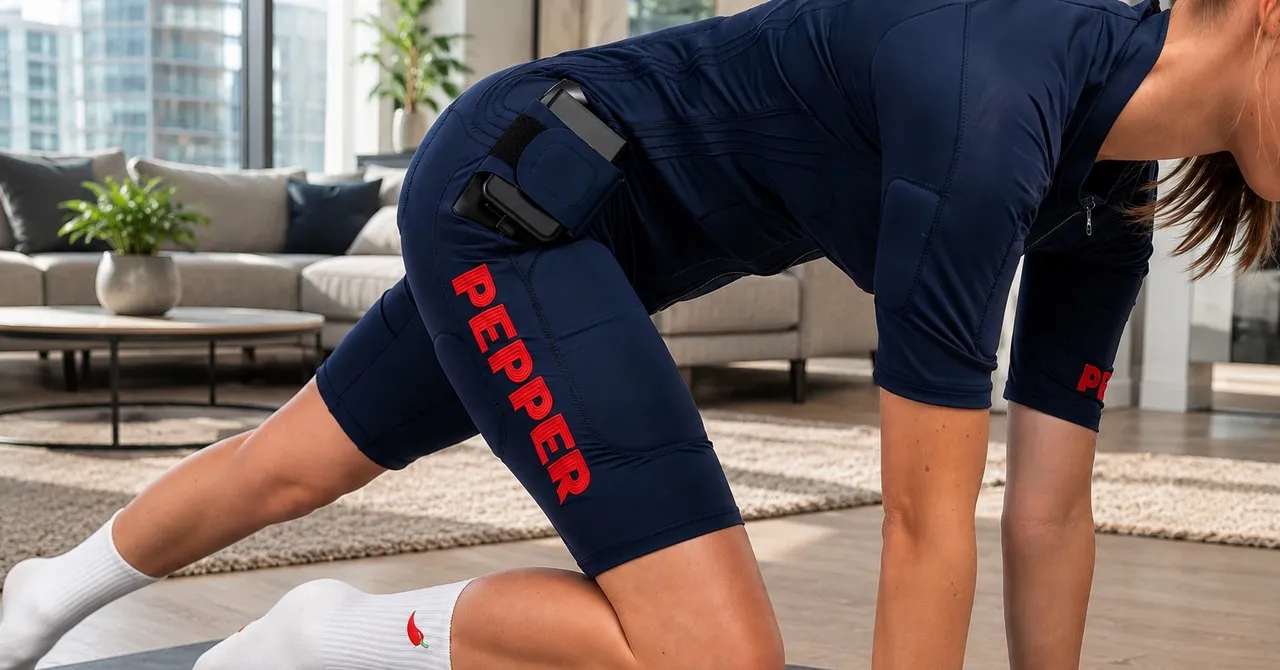
Pepper’s EMS suit resembles a spring wetsuit, with sleeves that end at the elbows and legs that stop at the knees. Like a wetsuit, it can take some effort to put on. The suit contains 20 electrodes positioned across key muscle groups, including the abs, chest, glutes, thighs, biceps, and back. These dry electrodes do not need to be moistened before use, unlike those on some older electrical muscle stimulation systems. However, perspiration can improve electrical conductivity during a workout. For safety reasons, you should not use an EMS suit if you are pregnant or have a pacemaker.
Pepper offers the suit in sizes XXXS through XXXL. Each size is designed to fit extremely snugly, helping keep the electrodes securely positioned during movement. The suit is intended to be worn without clothing underneath, and its close-fitting design may make a cover-up layer necessary outside the home.
The suit’s only removable component is a compact control box attached at the waist. This unit powers the EMS system and controls the electrical stimulation programs. It charges via USB-C and provides enough battery life for at least 10 training sessions.
The Pepper app organizes its EMS workouts into three categories: strength, cardio, and relaxation. Each category uses a different pattern of electrical stimulation. Some workouts were unexpectedly available only in German, but I tested programs from all three categories. Since my primary goal was muscle development, I spent most of my time with the strength workouts. These sessions send electrical pulses through the suit for four seconds, followed by four seconds of rest, for up to 24 minutes.
Pepper EMS workout screenshotPhoto: Christopher Null
Pepper includes dozens of guided workouts, although I rarely repeated the same session. The exercises are performed in sync with the electrical pulses, activating muscles while the stimulation is on and allowing them to rest during the pauses. Pepper’s approach is based on combining EMS technology with active muscle engagement, so many workouts include full-body flexes, stretches, and crunches performed in four-second intervals.
What Does the Pepper EMS Suit Feel Like?
I had previously tried a smaller EMS device for a lower-back injury, so I had a general idea of what electrical muscle stimulation felt like. However, using the Pepper suit on the entire body was a much more intense experience. The system eases you in with a gentle heartbeat-like sensation that is barely noticeable. Each of the Pepper suit’s 10 training zones can be adjusted independently, with intensity levels ranging from 1 to 100. My first video trainer suggested I would begin noticing the pulses around level 25, so I gradually increased the output until most areas were set to approximately 20.
At lower intensity levels, the electrical pulses are uncomfortable rather than painful, but they are easy to feel. The rapid, powerful vibrations can create an internal shaking sensation and may occasionally produce a mild burning feeling on the skin. As I increased the intensity, I found that the difference between tolerable and painful was surprisingly narrow—sometimes only one or two points on Pepper’s 100-point scale. The vibrations eventually became sharp, jolting sensations that could feel almost numbing, so I spent the remainder of my first 12-minute workout reducing the output levels.
Source: www.wired.com