


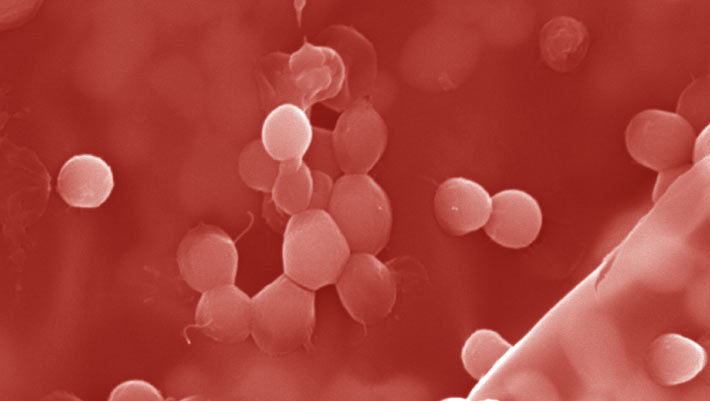
The salt-loving archaeon Haloferax volcanii grew during a 160-day laboratory experiment designed to simulate salty underground water pockets that could theoretically exist beneath the Martian surface. The finding shows that some Earth microbes can remain metabolically active under selected Mars-like conditions, but the researchers emphasize that it is not evidence that life exists on Mars.
A simulated underground environment
“The current surface of Mars is generally considered inhospitable due to low atmospheric pressure, intense surface radiation, global aridity, and oxidative chemistry that has increased since the late Noachian,” said Dr. Adam Robinson of the University of Florida and his colleagues.
“However, shallow underground regions on Mars, where mineralogy indicates groundwater movement, may contain local hypersaline environments that can hold liquid water and support microbial metabolism.”
The researchers focused on Haloferax volcanii, an archaeon known as an extremophile because it can withstand conditions that are harsh for most life on Earth.
They cultivated the microbes in a vacuum chamber filled with carbon dioxide and stripped of oxygen. The pressure was maintained at 24 millibars, approximately 2% of the pressure at Earth’s sea level, while the temperature remained at 21 degrees Celsius, or about 70 degrees Fahrenheit.
The cultures grew in very salty liquid media containing either nitrate or perchlorate. Both chemicals are found on Mars and can serve as alternatives to oxygen in some forms of microbial metabolism.
A pressure of 24 millibars could occur inside sealed pockets of saline minerals roughly 20 centimeters, or 8 inches, beneath the Martian surface.
“The environment we are mimicking in this experiment has not been observed on Mars, but is theorized to exist,” Robinson said.
Evidence of growth and metabolism
All of the low-pressure treatments containing nitrate or perchlorate showed growth, based on increases in optical density, a measure of how cloudy or turbid the cultures became.
The researchers also recorded reductions in nitrate and perchlorate that did not occur in cell-free control samples. This suggests that the microbes were metabolizing the chemicals. Under the Mars-like pressure, nitrate levels fell by approximately 15% to 29%, while perchlorate levels declined by about 16% to 29%.
Liquid loss remained below 4% in all treatments over the 160-day experiment. That result was important because water normally evaporates quickly at such low pressures, making long-term experiments difficult.
Electron microscopy revealed dense, biofilm-like structures in the actively growing low-pressure cultures. The structures were not observed in the soil-pressure controls or in low-pressure cultures that did not grow.
The chemical signature of carotenoid pigments also remained detectable, although it was weaker than in the oxygenated control. These pigments can be identified using Raman spectroscopy and have been proposed as potential biosignatures.
Limits of the experiment
Growth at 24 millibars was significantly lower than growth in the same cultures under soil pressure. The experiment also did not reproduce Mars’ freeze-thaw cycles, radiation environment or full chemical composition. Its nutrient-rich growth medium was not representative of the organic matter thought to be available on Mars.
The cultures were measured only at the beginning and end of the experiment because opening the chamber would have allowed oxygen to enter.
The researchers stress that the simulated environment has not been detected on Mars and that the results do not demonstrate the presence of Martian life.
“There is growing evidence to suggest that we should consider the possibility of life on Mars today,” Robinson concluded.
The study was published online in Applied and Environmental Microbiology on November 5, 2026. doi:10.1128/aem.01749-26
Source: www.sci.news