


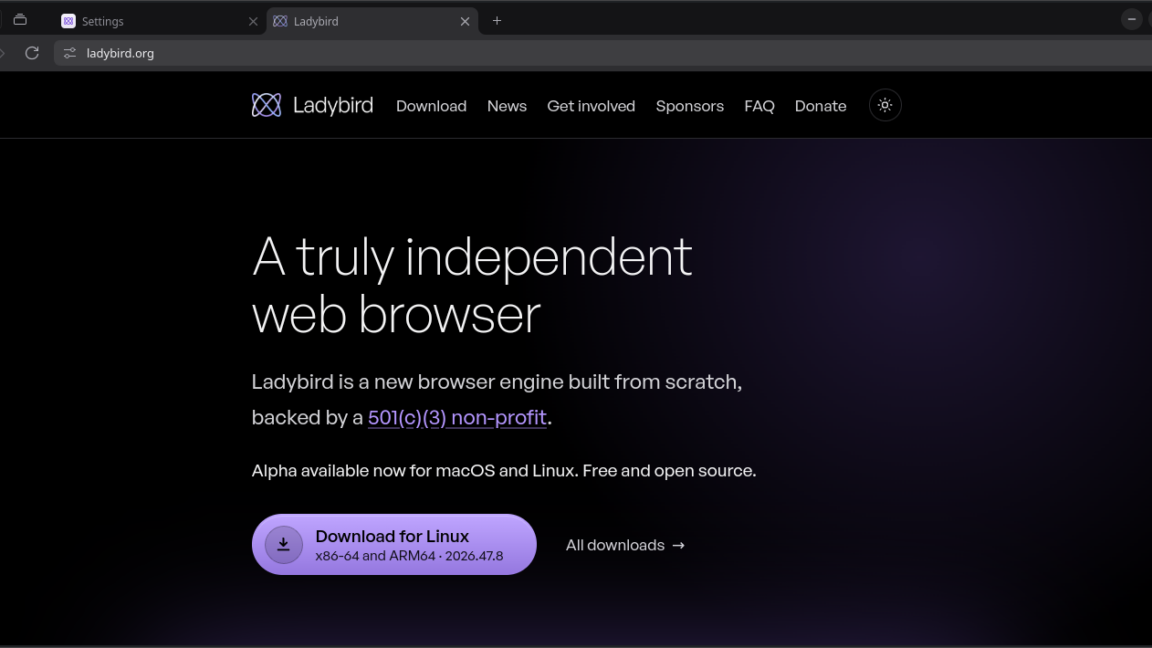
After four years of development, the Ladybird Browser Initiative has released the first downloadable alpha version of its browser. Available from November 23 for macOS and Linux, the pre-built packages include automatic updates, removing the need for users to compile the browser from source.
Ladybird is notable because it is building a new browser and rendering engine independently rather than forking an existing project. Chrome, Edge, Brave, and Opera use Google’s Blink engine, while Firefox uses Mozilla’s Gecko engine. Ladybird’s LibJS JavaScript engine was also written from scratch.
“The engine is not a fork, it’s our own and we built it from scratch,” project leader Andreas Kling said in a statement Monday. “The browser around it is modest but functional.”
A fourth browser engine
Most of today’s web depends on three major browser engines: WebKit, used by Safari; Gecko, used by Firefox; and Blink, used by Chromium and the many browsers based on it.
This limited selection means that web developers often prioritize Chromium, particularly when it accounts for most of a site’s traffic. As a result, web platforms can increasingly reflect the features and behavior supported by the dominant engines rather than the published web standards.
Independent browser engines can provide valuable competition and expose websites that depend on Chromium-specific behavior. Ladybird is unlikely to alter the browser market in the near term, but each additional standards implementation gives developers another way to test whether sites conform to specifications. Over time, that could help reveal Chromium-specific assumptions and move the web closer to the standards.
How the project began
Ladybird grew out of Andreas Kling’s work on SerenityOS, an effort to create an independent operating system from scratch. The browser was later split off into a separate project.
Kling founded the Ladybird Browser Initiative as a 501(c)(3) nonprofit organization funded by sponsorships and donations. The project’s website says it does not rely on sponsored search-engine deals, as many popular browsers do, and that sponsoring companies have no say in its roadmap.
At the time of writing, the author was unaware of criticism directed at Ladybird author Andreas Kling’s public statements. Readers seeking additional context can consult accounts from Kelson Biver and Drew DeVault.
Source: arstechnica.com