


Scientists Discover the Human Brain Develops from Two Separate Nervous Systems
A new study challenges the long-standing view that the brain develops from one continuous pool of primitive cells. Researchers at Stanford University found that the brain’s front and back regions arise from two genetically distinct populations of progenitor cells that evolved separately and came together over hundreds of millions of years.
The discovery could explain why scientists have struggled for decades to grow certain hindbrain cells in the laboratory. It may also provide new tools for studying diseases that affect the brainstem and hindbrain, including spinal muscular atrophy (SMA) and amyotrophic lateral sclerosis (ALS), also known as Lou Gehrig’s disease.
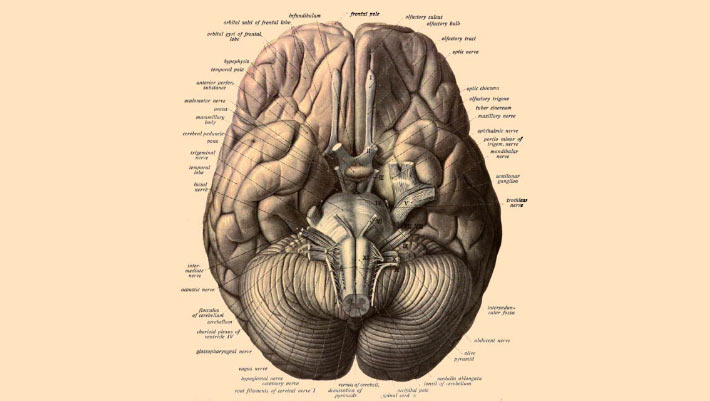
Anatomical drawings from Johannes Sobotta’s Human Anatomy (1908).
Two distinct cell populations form the brain
Using mouse embryos, the researchers identified two genetically distinct populations of cells that never overlap. These populations were marked by the genes OTx2 and GBx2.
The findings indicate that the forebrain and midbrain—which are involved in language, reasoning and consciousness—originate from different progenitor cells than the hindbrain.
The hindbrain controls essential functions including breathing, heartbeat, sleep and hunger. It also helps control the muscles used for speaking and swallowing.
Cells also differ in their chromatin composition, the molecular packaging that determines which genes are accessible and can be activated.
“We show for the first time that the front part of the brain arises from a completely different set of progenitors than the back part of the brain,” the researchers said.
The study was published in Nature Neuroscience.
Why growing hindbrain neurons has been so difficult
The researchers said the findings make it possible to grow hindbrain neurons in a Petri dish and study how they function.
They also successfully induced human pluripotent stem cells to develop into functional hindbrain motor neurons in the laboratory.
The lab-created neurons displayed characteristics of real hindbrain cells. They produced waves of electrical activity called action potentials and generated proteins associated with hindbrain regions that control facial and swallowing muscles.
Previous efforts to create hindbrain neurons may have tried to redirect forebrain and midbrain progenitor cells into hindbrain cells. However, the new study suggests that this approach cannot work because the two cell types are fundamentally different from the earliest stages of embryonic development.
“In stem cell biology, people are always obsessed with creating the ultimate cell type, like neurons,” the researchers said. “But it’s important to start early in embryonic development.”
By examining this early developmental stage, the team identified what it described as a fundamental split in brain development.
Potential implications for SMA and ALS research
The discovery could support research into spinal muscular atrophy, ALS and other conditions that affect the brainstem and hindbrain.
Having lab-grown hindbrain neurons could give scientists a model for studying how these diseases damage nerve cells and for exploring potential regenerative therapies.
“We now have a model to better understand these devastating diseases and work toward regenerative therapies for them,” the researchers said.
An ancient evolutionary division
The researchers found the same two-origin pattern in chickens, zebrafish and acorn worms.
The results suggest that evolution may have combined two pre-existing nervous systems and positioned them alongside one another.
Although a single-origin brain might appear more efficient, humans may still rely on this ancient developmental process in which the brain forms as two separate parts.
“The word ‘brain’ probably suggests a continuous organ with a single origin,” the researchers said. “But even 500 million years ago, we had these separate nervous systems, and now they almost function as one.”
_____
R.T. Jokai et al. “Two parallel neuroectodermal progenitor cells contribute to brain development.” Nature Neuroscience, published online September 18, 2026. DOI: 10.1038/s41593-026-02433-7
Source: www.sci.news