


“We recommend replacing the battery with a new one after approximately three years,” says Hutton. “Batteries naturally wear out, but the Fairphone itself can continue working for much longer.” This replaceable-battery design is a key advantage for anyone seeking a sustainable, long-lasting smartphone.
The Fairphone 6+ is built for easy repair and maintenance. Unlike the metal construction found on many Google Pixel and Apple iPhone models, the phone uses a predominantly plastic exterior. However, its internal metal frame provides a solid feel, while Fairphone’s testing ensures the device remains durable even after repeated disassembly and reassembly.
“During the product development cycle, we introduce tests specifically for disassembly and reassembly,” Hutton explains. “That allows us to evaluate the phone’s long-term robustness.”
Fairphone also considers the unpredictable nature of real-world repairs. While automated assembly lines follow precise procedures, users may apply too much force during maintenance. One test examines what happens when a screw is overtightened, including whether the casing becomes distorted or nearby components are damaged.
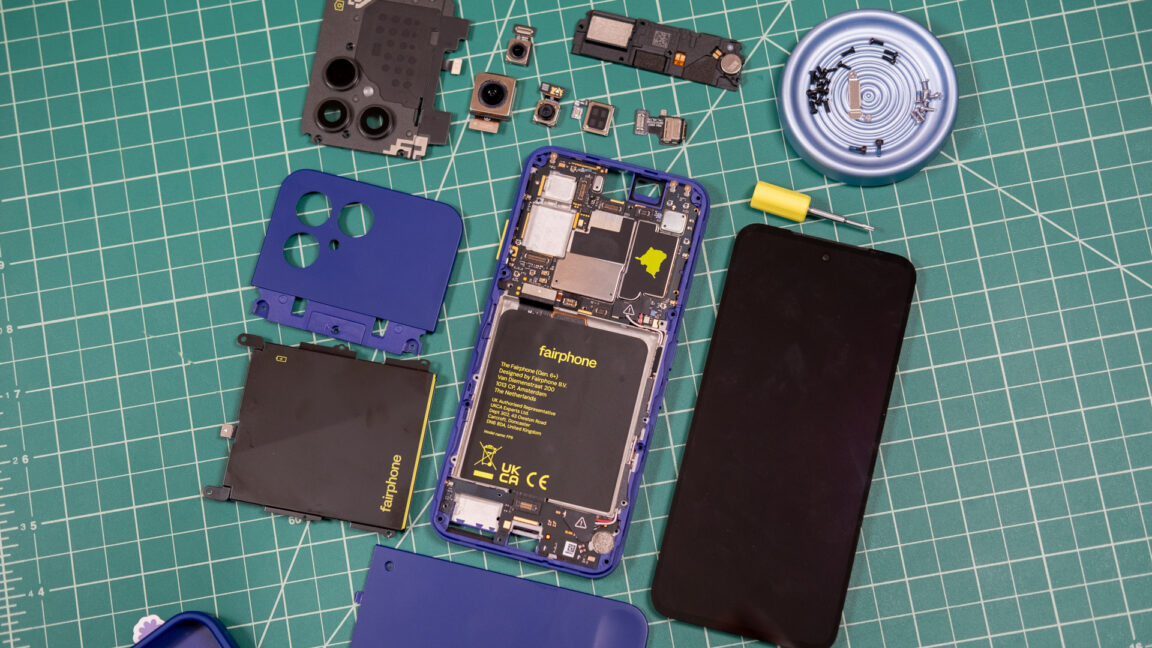
Hutton says an experienced technician can fully disassemble a Fairphone 6 or newer model in about 15 minutes. Beginners may need a little longer, but the process remains straightforward. After spending a few minutes reviewing the Fairphone repair manual, I was able to disassemble the phone in approximately 20 minutes and remove all of its user-replaceable components. Reassembly was just as simple, and the phone continued to work perfectly without new gaps, looseness, or wobbling.
The Fairphone 6+ repair process is highly intuitive. Most components are connected using flat board-to-board cable connectors that can be released with a spudger or even a fingernail. Once disconnected, the parts lift out easily. Several screws must be removed to reach the metal frame and display, but they all use the same T5 Torx bit, making Fairphone 6+ repairs easier and more accessible than on many conventional smartphones.
Source: arstechnica.com