


Undersea Geothermal Power Plant Produced Net-Positive Power for the First Time
Adélie generated more power than it consumed
To get the Adélie power plant running, the team relocated it to a nearby natural hydrothermal vent, where hot fluids were already flowing at approximately 538°F (281°C). They conducted the test on September 27.
Over nearly 30 minutes, Adélie’s turbines reached approximately 26,000 revolutions per minute. The generator produced 60 watt-hours of electricity during the test.
The undersea power plant also generated more electricity than it consumed for approximately 8.7 seconds, producing a net gain. The median net power output was about 2 kilowatts, while the maximum reached 16.5 kilowatts.
“Here’s the proof,” Redd told Ars. “Net positive is the key threshold. The power plant has produced more electricity than is needed to run on its own on the ocean floor, and no one has done it before.”
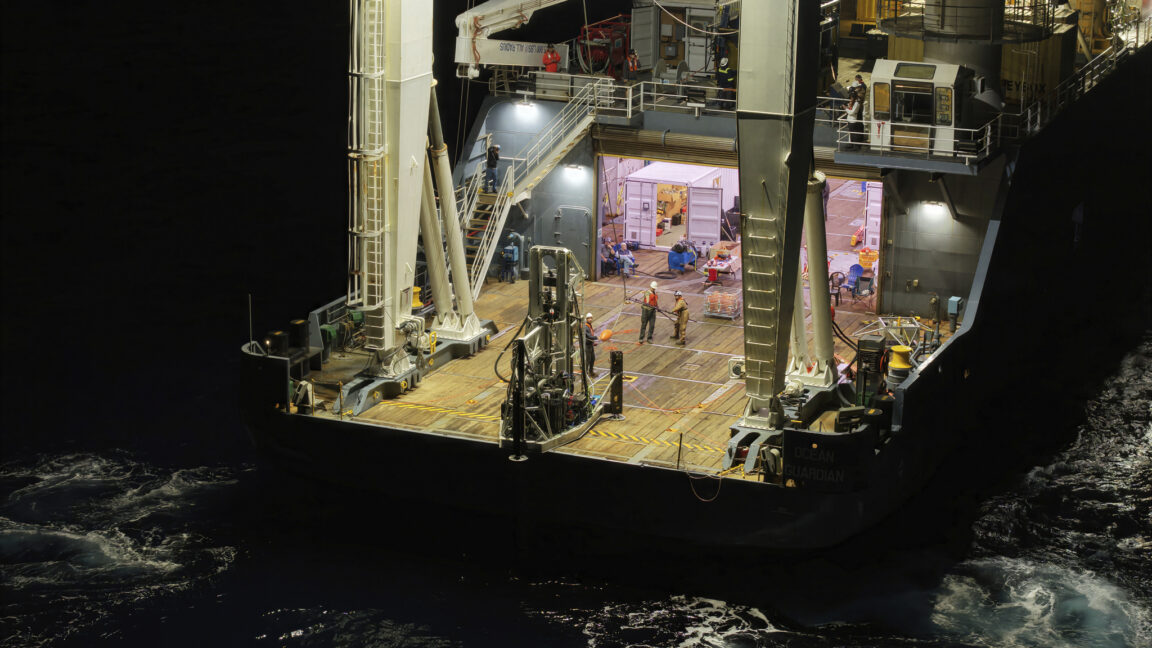
Adélie is a 100-kilowatt power plant designed to harness geothermal energy from the ocean floor.
Credit: Endurance Energy
A software issue shut down the test
The power eventually went out because of a software issue. Before the generators take over, Adélie relies on batteries to run its pumps, thrusters, and controls while also turning the turbines to increase their speed, Redd explained. The battery module recorded a brief current spike during the spin-up process and then stopped reporting.
Because the software continued relying on the battery module’s old readings, it automatically shut down the power plant as a safety measure.
While the team was restarting Adélie, the power cable supplying the refrigerant pumps also failed. An imperfection in the cable casing allowed seawater to enter and short-circuit the two electrical conductors.
Although commissioning has concluded, Endurance Energy plans to use the experience to improve how it builds and tests undersea power cables.
What comes next for undersea geothermal power
Redd said installing a geothermal power plant over a natural hydrothermal vent was a one-time test intended solely for research and demonstration. For future expansion, the company also plans to rely on drilled wells.
Source: arstechnica.com