


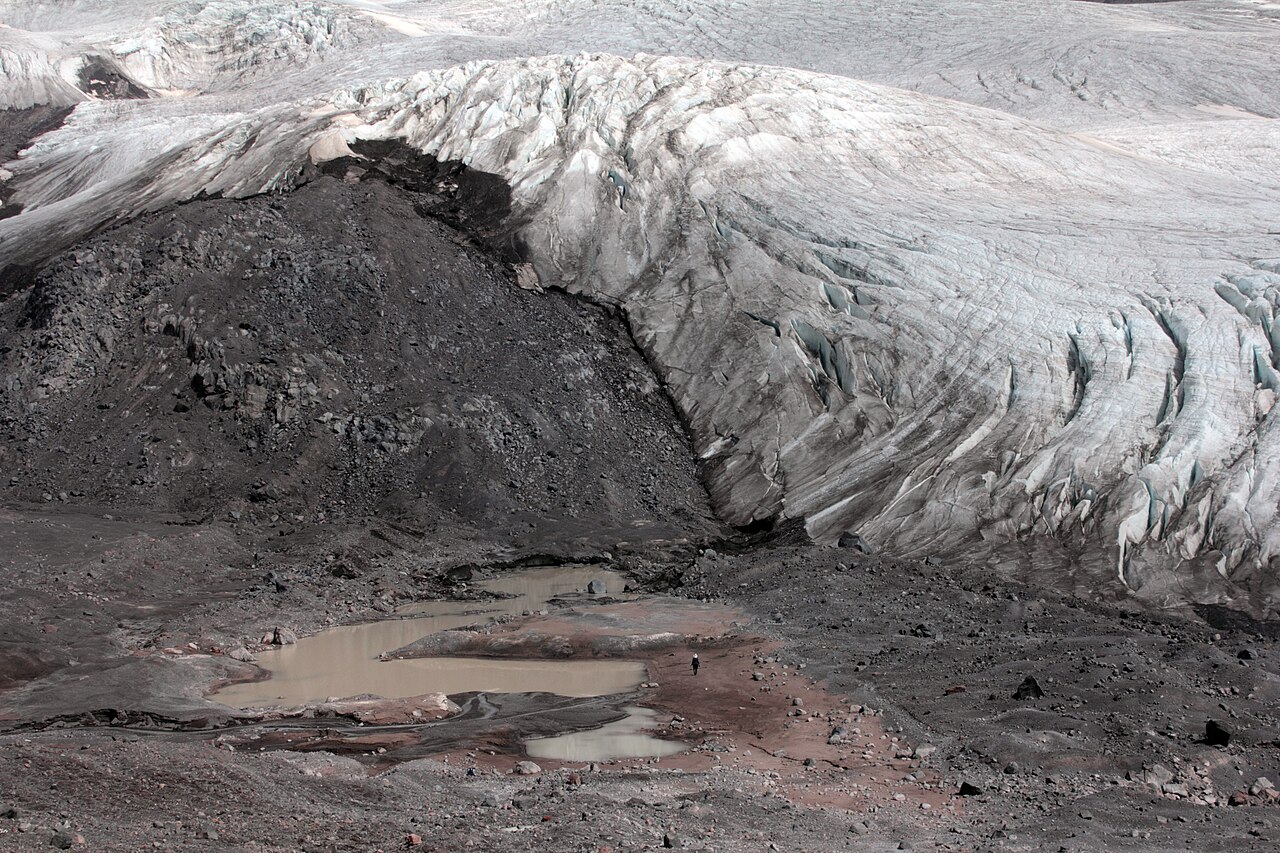
As climate change continues to alter our planet, glaciers are retreating, unveiling new bare lands. In the coming decades and centuries, this rocky terrain will develop into a unique ecosystem, gradually covered with lichens and shrubs—a phenomenon known as “new forest.” Ecological inheritance.
Ecologists meticulously chart the stages of ecological succession in plant communities, noting the initial species that colonize the land and their establishment patterns. Pioneer species play a crucial role in promoting secondary growth. However, before plants can root in the soil, a vibrant community of single-celled microorganisms prepares the soil for further habitation. Researchers study the development of these microbial communities to gain insights into how healthy ecosystems emerge.
Newly exposed land typically has low nutrient levels and experiences significant temperature fluctuations, posing challenges for first settlers. Pioneering plant species are termed habitat generalists, meaning they thrive in varied environmental conditions. While all plants convert sunlight and water into carbon and energy, microorganisms exhibit metabolic flexibility, often harboring genes for multiple energy pathways. This led scientists to explore whether pioneer microorganisms could also be characterized by metabolic flexibility.
A research team from Australia’s Monash University explored this hypothesis by examining land left behind after the retreat of two glaciers—one on an island near Antarctica and the other in the Swiss Alps. They took soil samples exposed to air for varying durations along the glacier’s retreat path, allowing them to analyze the microbial communities during the ecological transition following glacier retreat.
The researchers extracted DNA from the soil and utilized two sequencing techniques. First, they sequenced a gene known as 16S rRNA, a unique identifier for microbial species. This method helped assess community diversity, species overlap, and identify habitat generalists that flourish under different soil conditions.
To delve into the metabolic capabilities of these microorganisms, the team applied a second method called metagenomics, which sequences all DNA in a sample, providing a comprehensive view of the microbial genomes present in the soil. Insights gained from this research included the potential metabolic activities of these microorganisms. They also measured soil chemicals like ammonium and sulfide, along with atmospheric gases such as methane and carbon monoxide, to evaluate microbial growth conditions.
Findings revealed that even the most recently exposed soils are populated by microbes, illustrating how quickly life can establish in new environments. Microbial abundance increased nearly eight-fold in older soils, with an uptick in species diversity, indicating that complex communities can endure through time. The study revealed striking similarities in the metabolic capabilities of microorganisms from glacial soils in both Antarctica and Switzerland, suggesting that similar selective pressures influence ecosystem development.
Surprisingly, the most predominant microorganisms found in young soils were habitat specialists that were relatively rare in older soils. These pioneering microbes, while adaptable, efficiently utilized limited energy sources such as trace atmospheric gases like hydrogen, methane, and carbon monoxide. Many may also derive energy from chemicals leached from rocks, like inorganic sulfur compounds. Researchers propose that these pioneer microbes quickly exploit newly formed ecological niches, such as soil exposed by glacier retreat, due to their efficiency at utilizing scarce resources.
In contrast, habitat generalists tend to prevail in older soils. This outcome suggests that in ecological competitions, habitat specialists may ultimately be outpaced by the slower-growing, steadily flourishing habitat generalists.
The research team concluded that employing diverse growth strategies enables microorganisms to adapt to new environments effectively. Nonetheless, they recognized that ecological transitions may differ across various landscapes, such as after volcanic eruptions, meteor impacts, and wildfires. They recommend future research to uncover how microbial communities drive these dynamics across various ecosystems.
Post Views: 73
Source: sciworthy.com