


Steve Winter on Big Cats, P-22 and the Conservation Stories Behind His Photography
For decades, National Geographic photojournalist Steve Winter has traveled the world photographing big cats. Yet he did not begin photographing animals professionally until he was 34.
“If anybody had said, ‘You’re going to work with big cats for 25 years of your career,’ I would have said, ‘No, I don’t know anything about big cats,’” Winter told Live Science. He learned from scientists and local people—an experience he says changed his life.
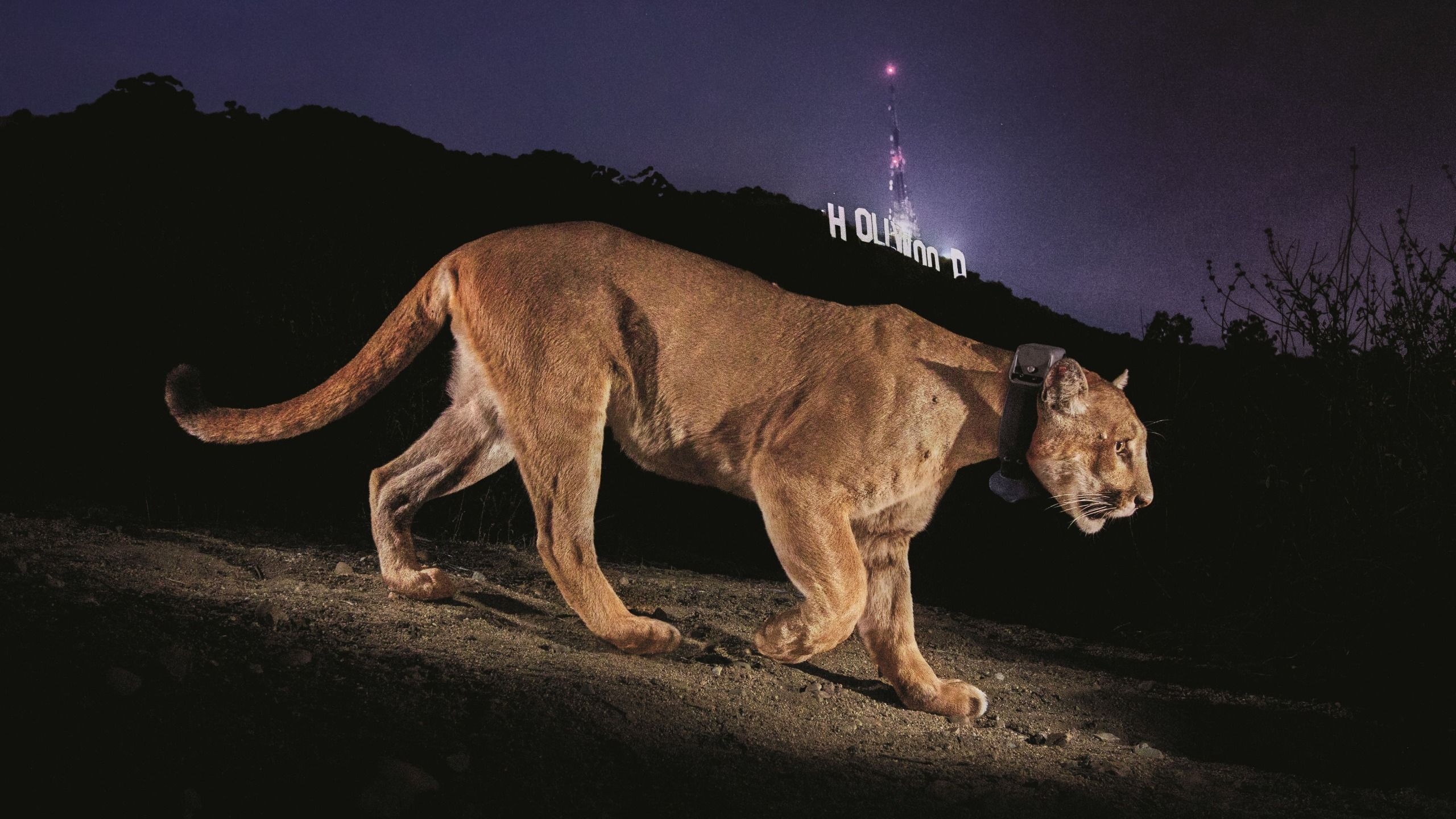
Alongside his wife, author and environmental journalist Sharon Guynup, Winter has helped change U.S. laws involving big cats, exposed abuses at Thailand’s Tiger Temple and captured the iconic image of cougar P-22 beneath the Hollywood sign. That photograph helped inspire the creation of the world’s largest highway wildlife corridor over California’s Highway 101.
In their new book, Big Cats (National Geographic Books, 2026), Winter and Guynup look back at their careers, the fragility of wild predators, conservation successes and the threats big cats continue to face.
Why Steve Winter’s favorite photograph is P-22 beneath the Hollywood sign
Hannah Osborne: You’ve traveled all over the world and seen so many things. Is there one photograph that really sticks out for you?
Steve Winter: I always look at the images that have had an impact at the time. That makes a huge difference to me because, in the end, I know that in taking the photograph, not only did I succeed beyond my wildest expectations, but it’s making a difference in the world.
Right now, I have been putting remote cameras up on what will be the world’s largest wildlife overpass. That project was started by my Hollywood cougar picture of P-22, or Puma 22, beneath the Hollywood sign.
Editor’s note: Cougar, puma and mountain lion are common names for the same species, Puma concolor.
That changed so much in Los Angeles. I’ve never seen a city transformed by its love for the fact that it had a mountain lion living in a park. People began thinking, “Maybe we should connect these areas where these animals are living.”
P-22 became a celebrity in the land of celebrities. People loved him. There is a P-22 day, schools use urban wildlife in their curriculum and the Los Angeles Natural History Museum has a permanent exhibit featuring the Hollywood cougar photograph.
Editor’s note: The Wallis Annenberg Wildlife Crossing over the 10-lane Highway 101, inspired by P-22, is due to open Dec. 2.
How the P-22 photograph came about
Hannah Osborne: How did the P-22 photograph come about?
Steve Winter: As wildlife photographers, we often go to meetings where people are gathering to save elephants or protect other species. I went to meet the scientists working with these cats in the largest urban park in the United States.
I asked Jeff Sikich, a biologist for the National Park Service, whether there were trails in the park where mountain lions walked and where the lights of Los Angeles could be seen in the background. He kept saying no.
When you’re working with camera traps, it’s important to visualize the picture you want when you visit a location. I told Jeff, “What would really tell the story of urban wildlife is if we had a mountain lion under the Hollywood sign.” He looked at me as if I were crazy and said, “There are no mountain lions in Griffith Park.” I told him, “If anything changes, let me know.”
Eight months later, I received a text. Biologists had set up a trail camera to census bobcats, Lynx rufus, in the park—and there was P-22.
A surprise encounter with a black jaguar in Guatemala
Winter said camera traps became an important part of his work early in his career. While photographing the quetzal, a sacred bird of the Maya and Aztecs, he spent five weeks alone in a cloud forest in Guatemala. The bird has a tail about a meter long, and quetzal feathers were once used as currency.
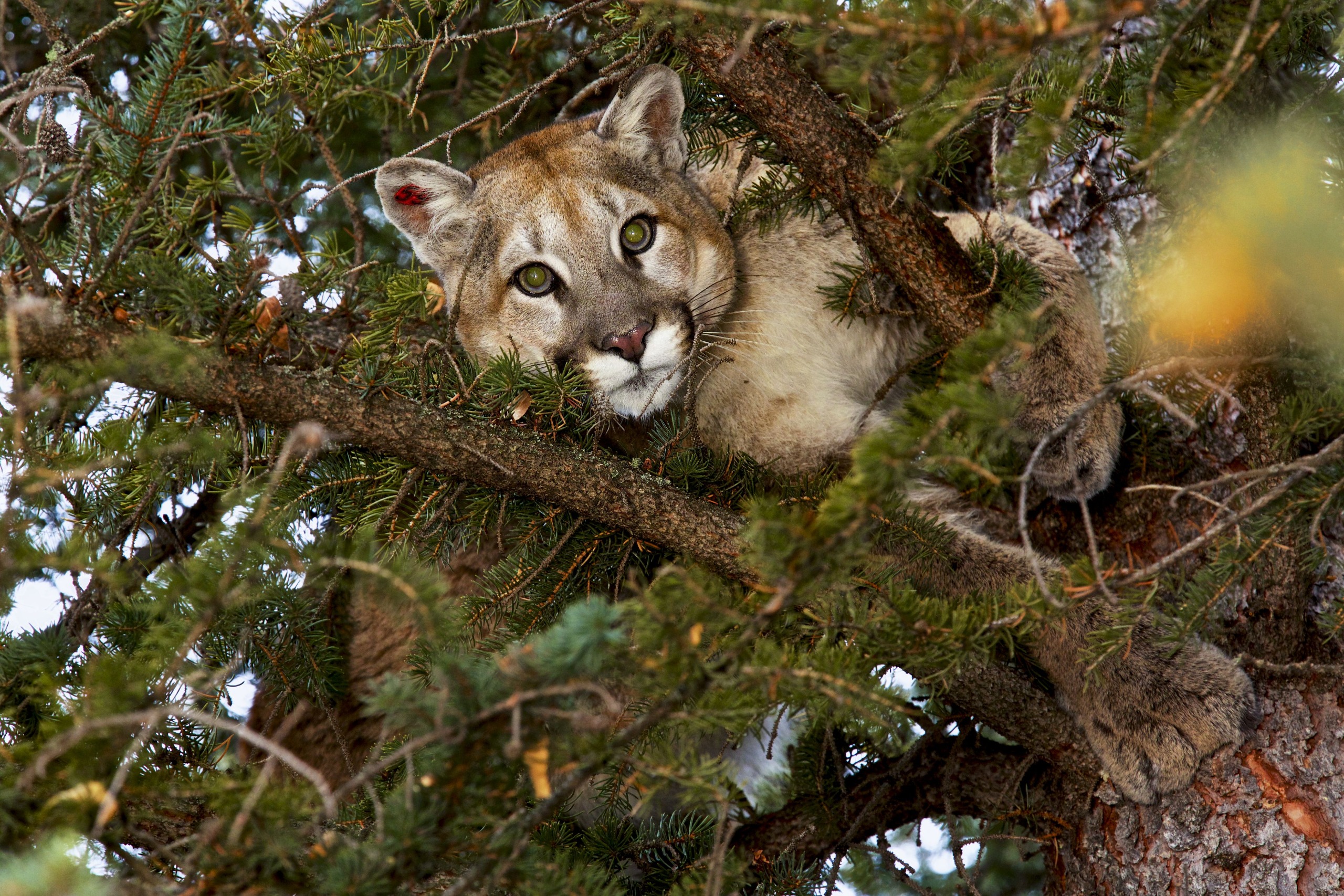
Each morning, Winter placed a camera near a quetzal nest and retrieved it at the end of the day. At night, while staying in a one-room shack, he heard the stairs creak, followed by floorboards, scratching and sniffing outside his door.
He called Juan Carlos, the naturalist who helped him find quetzal nests, and asked in Spanish what was outside.
“Oh, Steve, don’t worry; it’s just a black panther,” Juan Carlos replied.
Winter had been there for five weeks and asked why nobody had told him there was a black jaguar nearby. Juan Carlos answered, “We didn’t want to worry you.”
How the Tiger Temple investigation exposed wildlife abuse
Hannah Osborne: Your book examines poaching, captive tigers at Thailand’s Tiger Temple and the way big cats are kept for entertainment in the United States. How do you cope with seeing that side of their lives?
Steve Winter: When I first worked on tigers, I wanted to work in Thailand and Sumatra because experts said those two subspecies might go extinct. In Thailand, I worked with scientists trying to save the Indochinese tiger, Panthera tigris corbetti.
Nearby was the Thai Tiger Temple. The scientists warned Winter not to go, saying the operators were bad people who might be involved in the black-market trade in tiger parts and live tigers to Laos and China.
The site displayed a large sign claiming “conservation.” It was a Buddhist monastery where the abbot had received a tiger cub about 10 years earlier. The operation grew into a tiger tourism business that brought in at least $3 million a year.
Visitors could pet tiger cubs for Instagram selfies or bottle-feed them 365 days a year. Winter said the facility claimed to have 150 tigers, but the speed at which cubs were bred raised questions about what happened to the animals that were no longer useful for tourist encounters.
Female tigers were separated from their cubs immediately so they could produce another litter. Cubs could be used for tourist experiences for only about three months, after which they became too large to handle safely.
Winter and Guynup investigated the Tiger Temple in 2016. Guynup reported on the operation while Winter supplied photographs. Their video was broadcast by television stations in Bangkok, and Guynup wrote four additional stories. After public pressure mounted, the Thai government sent in the army and police.
Officials found tigers hanging on meat hooks in a freezer and cubs preserved in jars. The Tiger Temple was shut down.
The Big Cat Public Safety Act and captive tigers in the U.S.
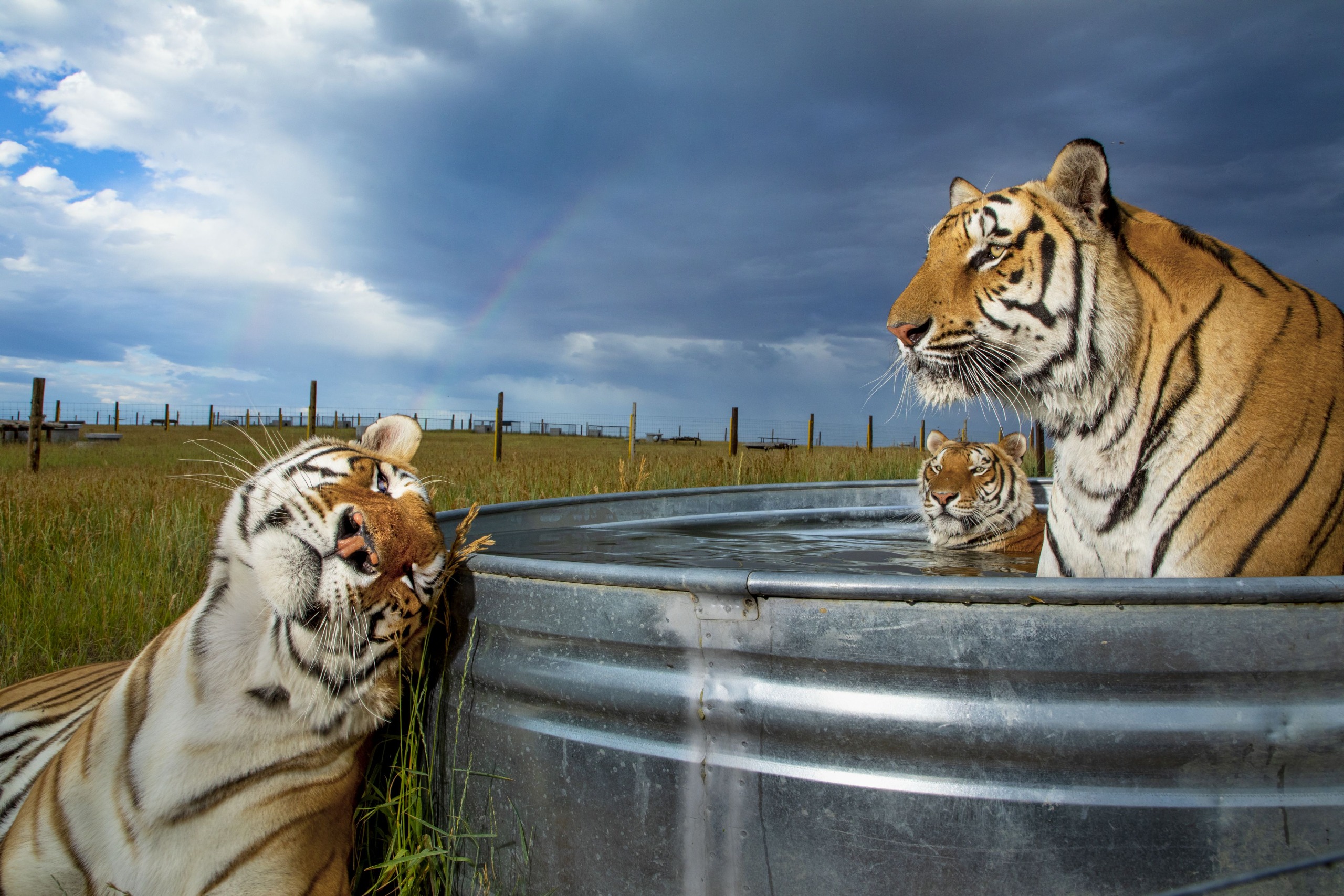
Winter and Guynup later investigated captive tigers in the United States. They found speed-breeding operations at roadside zoos, including Doc Antle’s Myrtle Beach Safari, where visitors paid $500 a day, as well as smaller roadside facilities where people could pay $10 to see a tiger.
After the investigation was published, the National Geographic Society sent a copy of the 30-page story to every member of Congress. On Dec. 20, 2022, Winter and Guynup received a message that President Biden had signed the Big Cat Public Safety Act, outlawing the practices they had documented.
“We were part of getting this law passed, which was incredible,” Winter said.
Why wildlife corridors are essential for big cats
Hannah Osborne: What are some of the biggest changes in conservation you’ve seen over your career?
Steve Winter: Conservation changed significantly during the 1990s and 2000s. Zoologist Alan Rabinowitz gathered data from scientists working throughout Central and South America. When he mapped the locations of jaguars, the pattern revealed a natural corridor.
That work helped draw attention to connectivity and the way roads disrupt animal movements. Animals can seem as if they are in prison when they cannot cross large freeways or even smaller roads. By identifying where animals live and migrate, conservationists can build overpasses, underpasses and other safe crossings.
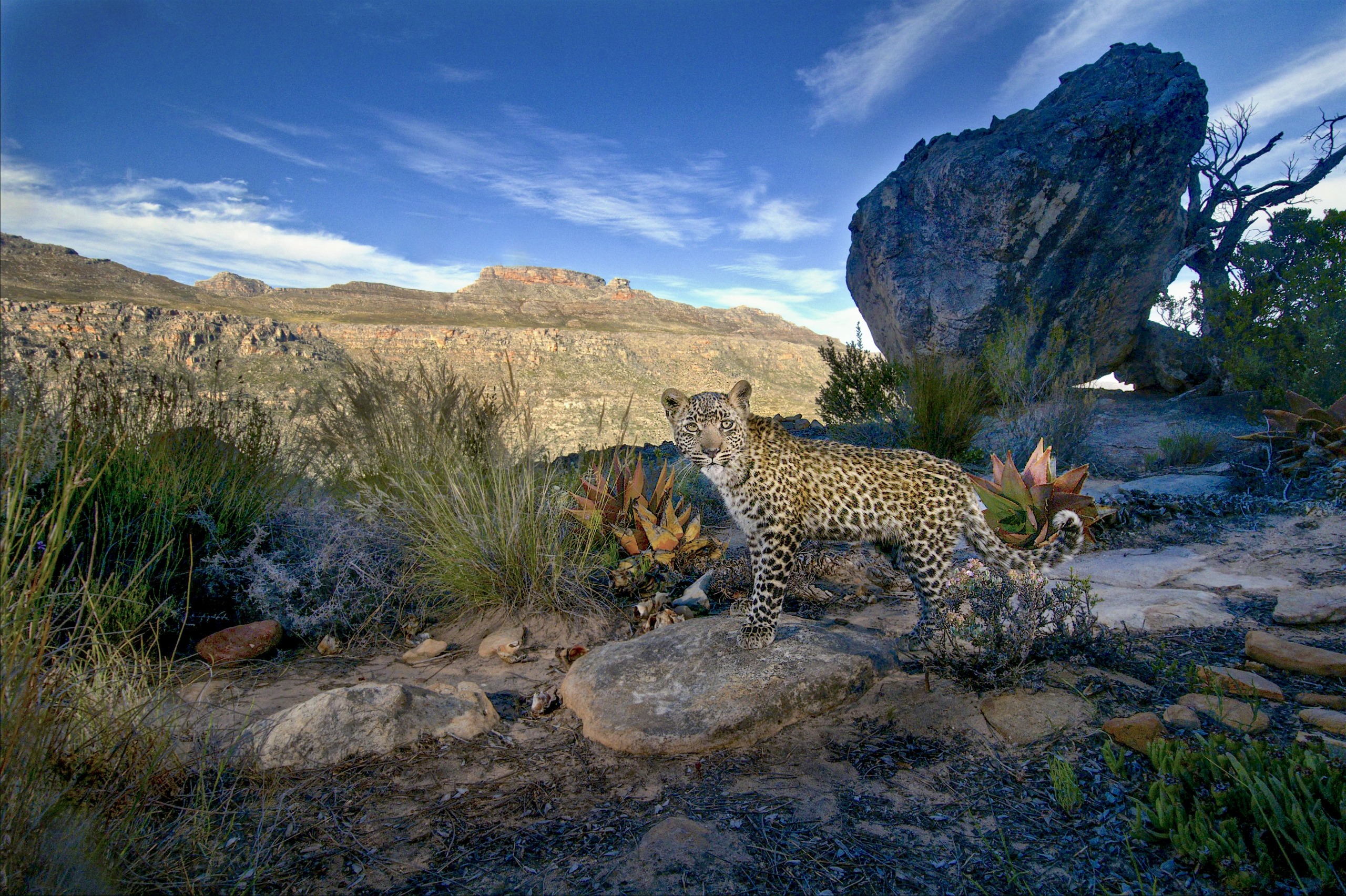
Winter said this new science and conservation work was spearheaded by George Schaller, a biologist and conservationist who later became a friend of Winter and Guynup. The couple continues to work on habitat connectivity.
Why Winter is hopeful for big cats in Los Angeles
Hannah Osborne: Are you hopeful for the big cats in Los Angeles?
Steve Winter: Definitely. Mountain lions living in the Santa Monica National Recreation Area will be able to cross Highway 101 and travel toward San Jose. They could then follow the top of a mountain range and get close to San Francisco.
Winter said that although the route passes through a huge metropolitan area, there is substantial land between the cities where mountain lions can move if they can cross roads safely.
Why big cats remain the focus of Winter’s photography
Hannah Osborne: What made you specialize in big cats, and what keeps bringing you back?
Steve Winter: Big cats are charismatic and mystical. They are also umbrella species, meaning that protecting the largest predator in a landscape often protects the other species and habitats beneath it.
Winter was drawn to the animals even though they can be extremely difficult to photograph. National Geographic had never done a jaguar story before, and he quickly learned why: jaguars are difficult to see and can avoid camera traps. They may walk around remote cameras to avoid the flash, sound, smell of meat or other unfamiliar elements.
The only big cat on Winter’s list that he has not photographed is the Amur tiger, also known as the Siberian tiger, Panthera tigris altaica. When he was ready to photograph the species with scientists who had monitored it for more than a decade, canine distemper killed about 60% of the tigers in the population.
However, the population recovered after additional protection. Although all of the study tigers wearing GPS collars died, the broader population bounced back and grew larger than it had been before.
Winter said he will not get to photograph Amur tigers, but local people are doing an incredible job protecting them. The impact of his stories and the conservation changes they helped inspire are what make him proud.
This interview has been condensed and lightly edited for clarity.
Source: www.livescience.com