


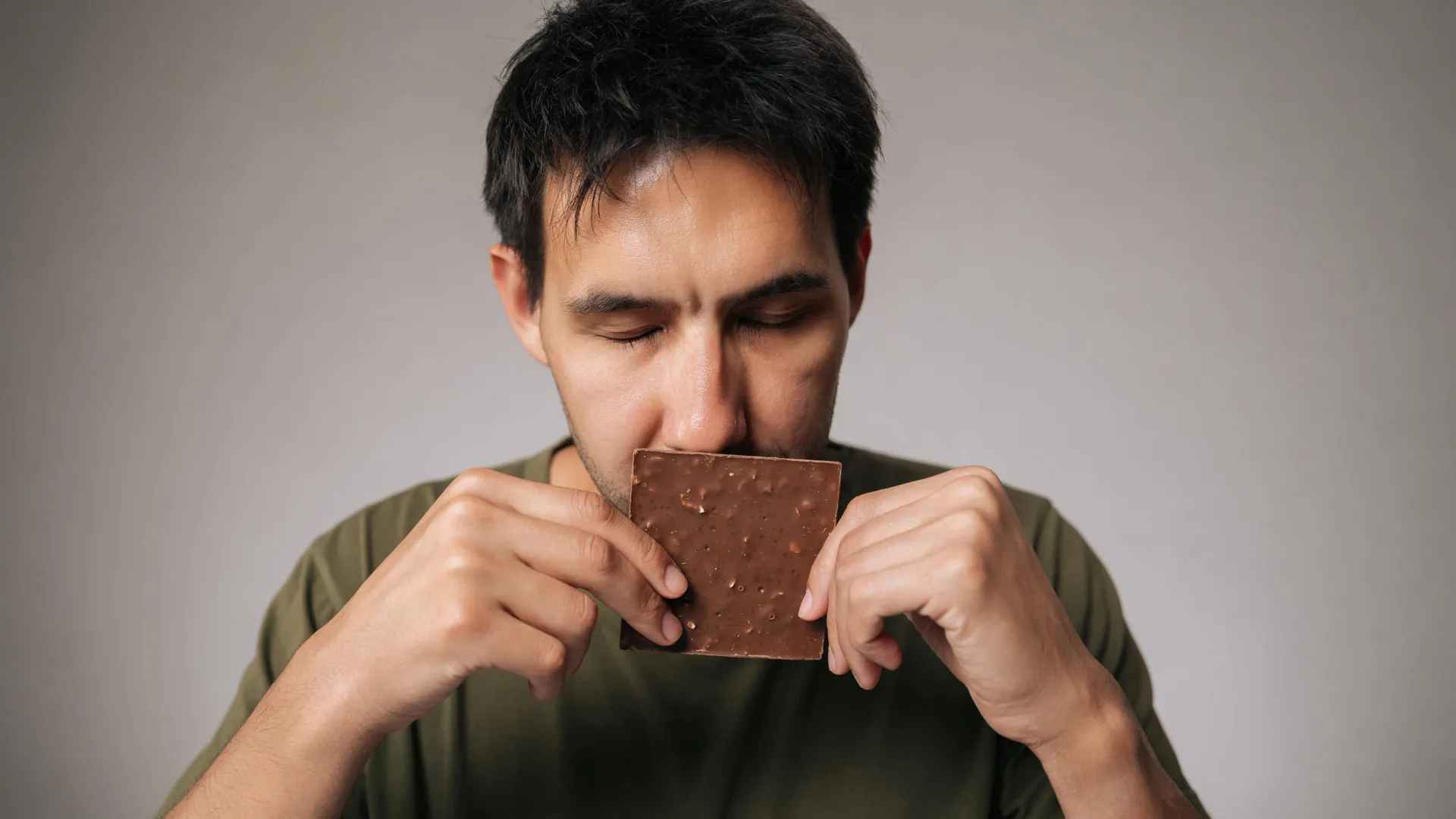
Can the Smell of Chocolate Boost Exercise Performance? Study Finds More Leg-Extension Reps
When your legs feel tired, the scent of chocolate may provide an unexpectedly simple boost. According to a new study published in Frontiers in Physiology, smelling chocolate before and during resistance exercise helped participants complete more repetitions without making the workout feel more difficult.
“Exposing moderately trained men to the smell of chocolate immediately before and between sets of resistance exercise significantly increased their overall training volume without increasing their perceived effort,” said lead author Dr. Mohamed Nashruddin bin Naharuddin, assistant professor in the School of Sport and Exercise Science at the University of Malaya.
“It’s an interesting psychobiological result that athletes can significantly increase their reps without feeling like they’re working any harder.”
How the chocolate-scent exercise study worked
The study included 23 healthy men in their early to mid-20s who had moderate resistance-training experience. Researchers divided the participants into three groups and exposed each group to one of three samples: liquid dark chocolate containing 90% cocoa, liquid milk chocolate containing 60% cocoa, or water as a control.
“We know that the sense of smell is strongly connected to the brain’s appetitive and emotional networks, but surprisingly no studies have systematically examined the three-way interaction between the sense of smell, appetite, and actual resistance motor performance,” said Naharuddin.
Participants fasted for at least 10 hours before exercising. They then performed leg extensions, an exercise in which a person sits and lifts a weight by straightening the lower legs against resistance.
Researchers measured leg-extension performance before and during the training sessions. Before exercising, participants also rated their hunger, satiety, desire to eat, and intention to eat in the near future. During the workout, researchers measured hunger and appetite after each 30-second exposure to one of the scent samples.
Dark and milk chocolate scents had different effects
The two chocolate aromas affected appetite in markedly different ways.
Compared with both the water control and the milk chocolate condition, the scent of dark chocolate consistently reduced hunger, lowered motivation and desire to eat, and increased feelings of satiety before exercise. These findings suggest that dark chocolate aroma may reduce appetite mainly by decreasing hunger and increasing perceived fullness.
Milk chocolate produced a different response. Participants rated its scent as more pleasant than the dark chocolate or water samples, but the aroma did not significantly change their hunger or appetite.
The effects were not limited to appetite. The smell of chocolate also appeared to influence how many repetitions participants completed.
“The 90% dark chocolate odor increased participants’ number of leg extensions by about 18, while the 60% milk chocolate odor increased the number of repetitions by about 9 compared to the water control,” said Naharuddin.
Why might chocolate aroma affect exercise performance?
The researchers believe learned associations with food may help explain the results. From an early age, people repeatedly experience certain smells alongside food. Over time, those aromas can signal the brain and body to anticipate what usually happens after eating.
These expectations may even shift a person’s perception from feeling hungry to feeling full before food is consumed.
“The scent of dark chocolate acts as a learned cue for rich, bitter, satiating foods, essentially tricking the system into expecting fullness,” said Naharuddin. “Conversely, the sweet milk chocolate scent acts like a hedonic reward cue, increasing training output by creating a highly pleasant sensory environment rather than altering basic metabolic hunger signals.”
The findings suggest that anticipating food may produce some responses similar to eating it. This possibility is particularly notable because participants were fasting when the effects were observed.
Food aromas can prime the digestive system for the next meal or trigger psychological and physiological changes as the body prepares to eat. Some of these reactions may resemble changes that normally occur after food ingestion.
Study limitations: What the research cannot prove
The researchers caution that the biological explanations remain speculative. Because the study did not measure hormones or neural activity in the blood, it cannot identify the specific biological pathways involved in changes to appetite or exercise performance.
The study had other limitations. The intensity of the dark chocolate and milk chocolate aromas may not have been exactly the same. In addition, because the control sample was odorless water, participants may have realized they were in the control group.
The research was also small and included only healthy, moderately trained young men. Larger studies involving more diverse participants will be needed to determine how broadly the findings apply.
Could other food smells improve exercise performance?
Another unanswered question is whether chocolate has a special effect or whether other familiar foods could produce similar responses.
“While chocolate is a food cue with incredibly powerful and globally recognized associations with reward, we do not believe that chocolate is completely unique,” Naharuddin concluded.
Other foods strongly associated with feeling satisfied after a meal may cause similar reactions, but researchers have not yet tested that possibility.
“To induce the psychological changes in appetite needed to improve performance, people likely need the odor to be familiar and appealing, or at least non-aversive.”
Source: www.sciencedaily.com