


NASA’s Perseverance Rover Sets Mars Driving Record at 45.22 Kilometers
Written by Vandi Verma, Chief Engineer for Robot Operations, NASA Jet Propulsion Laboratory
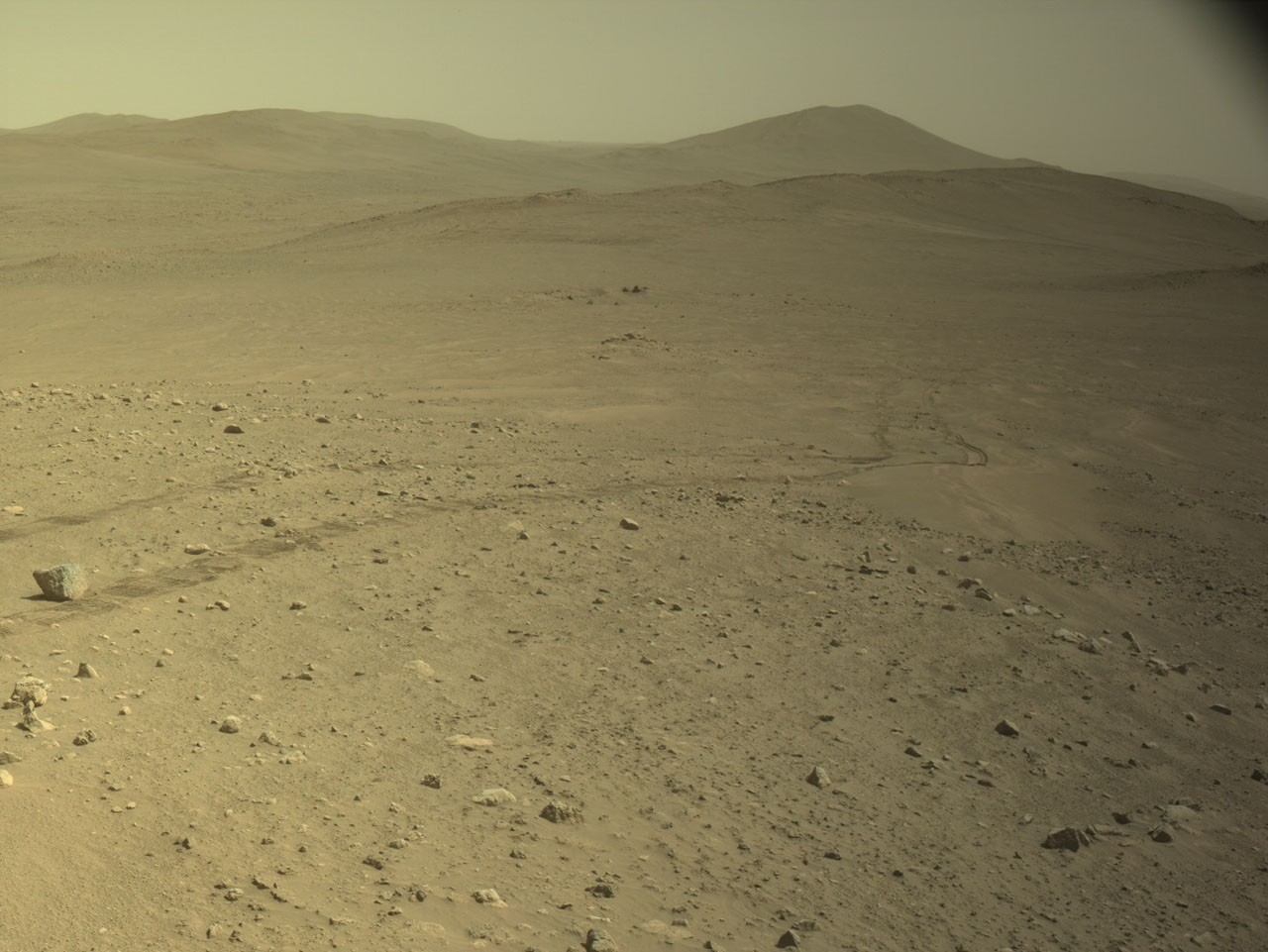
NASA’s Perseverance rover has achieved a major milestone on Mars. On Sol 2006, October 11, 2026, its odometer reached 45.22 kilometers (28.10 miles), setting a new record for the longest distance driven on another celestial body. The achievement was also celebrated with a Guinness World Records plaque presented to Perseverance’s engineering twin on Earth.
Perseverance crossed the record after a science stop
Two months earlier, on Sol 1947, Perseverance was about 200 meters from the milestone. The rover could have covered that distance in a single drive using autonomous navigation, or AutoNav. However, it had reached an area of significant scientific interest and paused to polish a rock and conduct close-up studies of an ancient outcrop.
When Perseverance was ready to leave and continue toward a new location, it quickly surpassed the previous record.
New driving techniques help the rover cross difficult terrain
On the way to the record, Perseverance pioneered new methods for driving across the Martian surface. The rover encountered dense rock formations and steep slopes, prompting engineers to reassess its driving guidelines and improve how it handles challenging terrain.
After thousands of simulations, the team increased Perseverance’s tilt limit to 24 degrees and reduced the required clearance beneath the rover to 20 centimeters, or about 7.9 inches. Engineers also:
- Updated the braking software to help avoid rock hazards.
- Nearly doubled the current limit for the steering motors.
- Added a “dynamic slip table” to the flight software to model expected wheel slippage.
- Used slope-traversing techniques to improve wheel traction on exposed rock.
Autonomous navigation helps Perseverance drive farther
One of the team’s most significant upgrades is a self-driving capability called global localization (GBLC). The system reuses commercial high-speed processors from the Ingenuity helicopter base station to compare surface and orbital images. It can then determine the rover’s global coordinates at the end of a drive, much as a navigation system would operate in a world without GPS.
This capability allows Perseverance to complete longer drives with less human intervention. Unlike the rover’s primary flight computer, the coprocessor is not hardened against the harsh radiation environment on the Martian surface. Mars has little natural shielding because of its thin atmosphere and lack of a global magnetosphere. Radiation can cause temporary bit flips in memory, so the team developed a software-based approach to help the system continue operating reliably.
As Perseverance undertakes longer drives and mission planners prepare more activities with fewer resources, the team is also using generative AI to efficiently propose routes that guide AutoNav across multiple legs of a strategic path.
The next era of autonomous Mars exploration
Researchers are applying lessons from Perseverance’s 45.22-kilometer (more than 28-mile) journey to develop new ways for rovers to navigate the Martian surface. The next stage of autonomous Mars exploration is beginning as Perseverance climbs higher along the rim of the crater.
Source: science.nasa.gov