


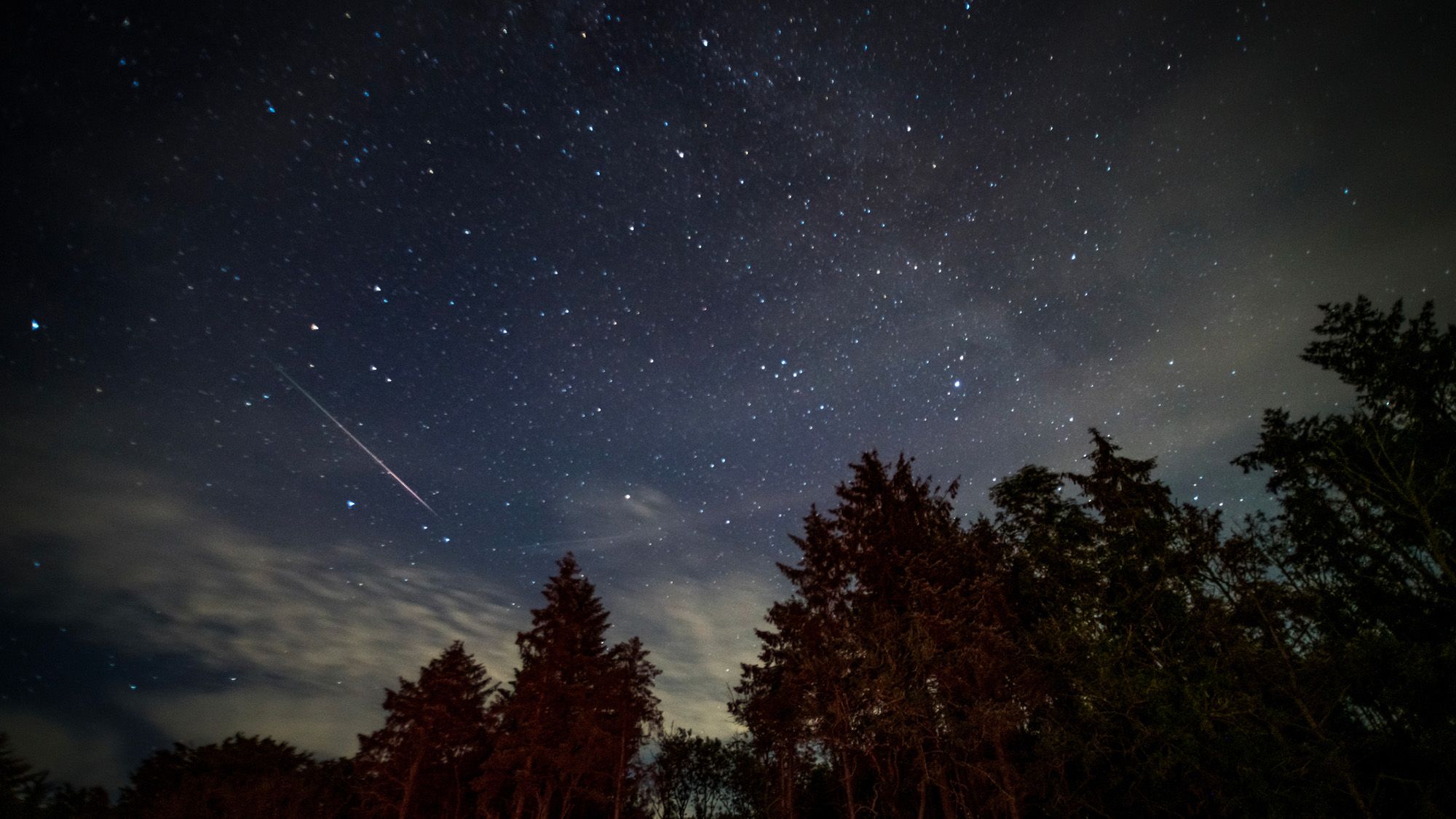
Draconid Meteor Shower 2026: How and When to Watch This Unpredictable Sky Show
The unpredictable Draconid meteor shower reaches its peak this week. Although only a few shooting stars are expected, the Draconids have a history of producing spectacular meteor storms with little warning.
When is the Draconid meteor shower peak?
The Draconid meteor shower occurs every year from October 6 to 10, peaking between October 8 and 9. Under ideal conditions, observers may see about 10 meteors per hour.
Unlike most meteor showers, which are usually easiest to see after midnight or before dawn, the Draconids are best viewed in the evening. The best time to watch this year is just after dark on Thursday, October 8. Time and Date lists the Draconids as one of the most convenient meteor showers to observe.
Why the Draconids are different
The Draconid meteor shower is unusual because its radiant—the point where the meteors appear to originate—is in the constellation Draco, one of the highest constellations in the evening sky.
Draco is also circumpolar across much of the Northern Hemisphere, meaning it never sinks below the horizon. However, meteors can appear anywhere in the sky, so you do not need to look directly at Draco to spot them.
Dark skies should make viewing easier
This year, the Draconid meteor shower will peak at an excellent time for dark-sky viewing. The new moon occurs on Saturday, October 10, so there should be little noticeable moonlight when the shower reaches peak activity.
Could the Draconids produce a meteor storm?
Most observers will probably see only a few Draconid meteors per hour, but the shower is notoriously unpredictable. On rare occasions, it has produced huge meteor storms.
During the 1933 Draconid meteor shower, observers in Europe reported seeing as many as 500 meteors per minute. At the shower’s peak in 1946, between 50 and 100 meteors per minute were seen in the United States, according to NASA.
What causes the Draconid meteor shower?
The source of the Draconids is comet 21P/Jacobini-Zinner, which was discovered in 1900 and orbits the Sun every 6.6 years. The comet was last seen in the inner Solar System in 2025 and is expected to return in 2031.
Each October, Earth passes through a stream of dust and debris left behind by the comet along its orbit. When these tiny particles enter Earth’s atmosphere, they heat up and evaporate, creating bright streaks of light across the night sky.
How to watch the Draconids
The best way to see the Draconid meteor shower is with the naked eye. Find a location with a clear view of the sky, move away from bright artificial lights and give your eyes time to adjust to the darkness.
Binoculars or a backyard telescope are not necessary because meteors move quickly and can appear across a wide area of the sky. Still, they can make a night of autumn skywatching more enjoyable.
Most viewers will see only a few meteors this year, but the Draconids’ unpredictable nature makes them worth watching. The best opportunity is just after dark during the shower’s peak on October 8.
Source: www.livescience.com