


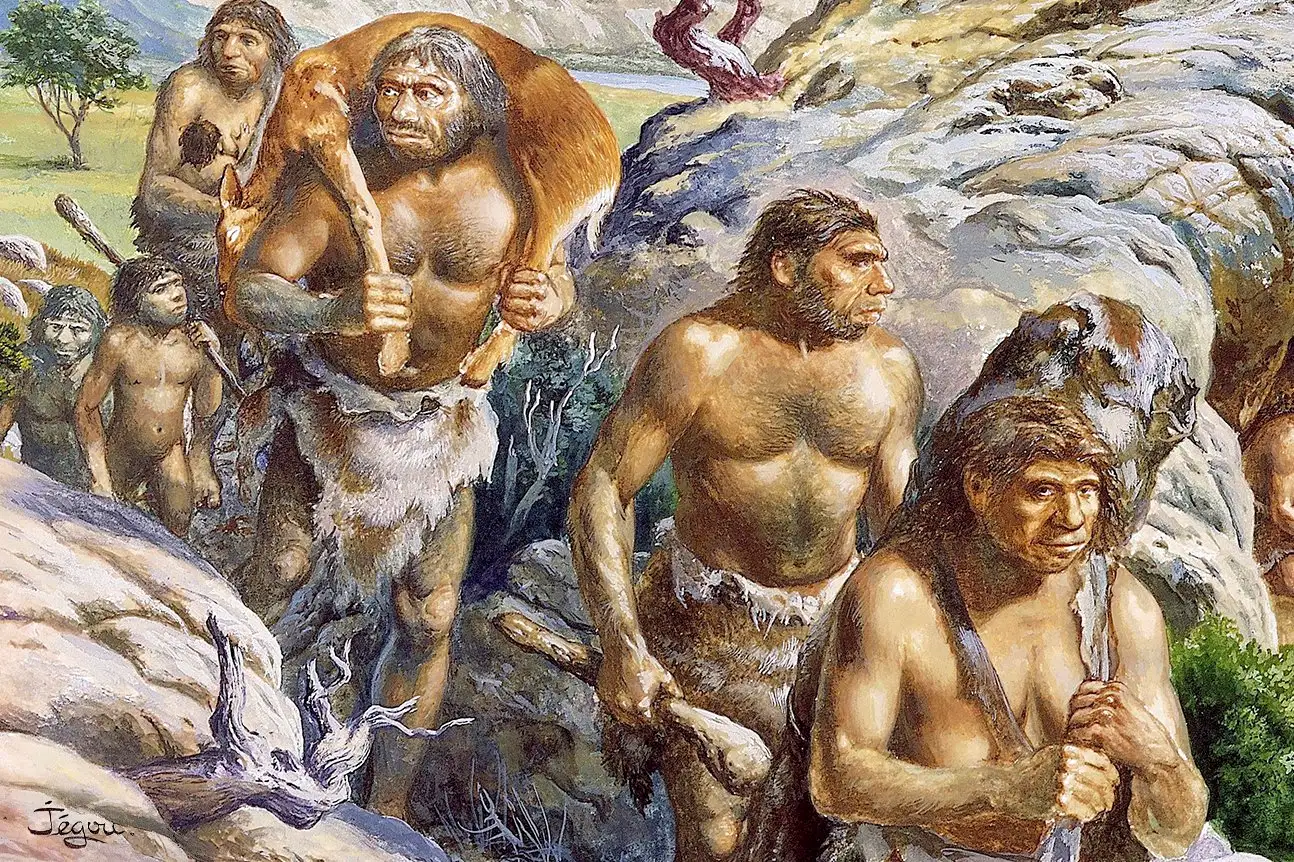
Migration from Africa: A Complex Narrative
Christian Jegou/Science Photo Library
Subscribe to “Our Human Story”, a monthly newsletter focused on archaeological advancements.
The Great Migration out of Africa stands as a pivotal chapter in human evolutionary history. Our species originated on the African continent, expanding globally and outcompeting other human species around 60,000 years ago.
Genetic studies affirm this narrative, revealing that African populations possess significantly greater genetic diversity compared to those from other regions. While Europeans, Native Americans, and Indigenous Australians exhibit distinct appearances, they share greater genetic resemblance than neighboring African groups. This diversity indicates that modern humans branched out from Africa, carrying only a fraction of the genetic variety found within the continent.
It’s crucial to emphasize two fundamental points: migration out of Africa did occur and it has profoundly influenced our species’ development.
However, the historical narrative may not align with our assumptions about these migrations.
Molecules and Artifacts
Recent years have raised questions about the details surrounding the mass migration from Africa, prompting archaeologist Hugh Gourcutt of The University of Malta to rigorously analyze this issue. On April 15, he published a study in Quaternary Science Review outlining discrepancies between archaeological findings and genetic data.
Gourcutt asserts that archaeological evidence does not support the successful dispersal narrative. He states, “While genomic data indicate successful migration into Asia, substantiating archaeological signals linking Africa to Eurasia remain elusive.” If many homo sapiens left Africa, traces of that migration should exist.
Gourcutt identifies additional complexities, particularly in precise dating of migration events and a conceptual fixation on prehistoric “revolutions” that masks the nuances of human history.
The dating of significant migration events shows considerable variability among studies, indicating uncertainty even for relatively recent occurrences. For instance, analyses suggest migration occurred anywhere from 50,000 to 75,000 years ago, reflecting challenges inherent in current methodologies.
Gourcutt argues scientists have often overly simplified genetic data interpretations due to bias. “We lack a comprehensive understanding of ancient population dynamics and interactions,” he notes.

Reconstructed Skull of an Early Denisovan
Gary Todd (CC0)
For instance, genetic models often presume random interbreeding, which we know is inaccurate. Human groups are structured into clusters, often mating within localities or shared interests. Stone Age populations in Africa fragmented, but the exact nature of these divisions remains largely unexplored. “Modeling these dynamics accurately is a challenge,” Gourcutt admits.
Additionally, many researchers treat intergroup divisions as singular events, leading to simplified family tree illustrations. I have previously mentioned Ancestor X, the last common ancestor of modern humans, Neanderthals, and Denisovans, and how its split is often perceived as a distinct occurrence.
While certain separations can be abrupt, populations sometimes divide gradually and merge over extended periods, which complicates our historical understanding.
Migrations from Africa may not have been singular events, but rather countless smaller movements spanning thousands of years without a coherent strategy. Each of these migrations contributed to a more complex narrative.
Thus, Gourcutt suggests a broader timeframe for understanding when migrations out of Africa occurred. It is misleading to claim it happened exactly 60,000 years ago; more accurately, it likely took place between 100,000 and 50,000 years ago.
This leads me to the second observation: the inclination to seek clearly-defined “events” or “revolutions” in prehistory.
Revolution Schmevolution

Hand Paintings in Sumpang Bita Cave, Indonesia
Nature Picture Library / Alamy
Researchers have often sought to pinpoint dramatic shifts in prehistoric timelines, labeling these periods as “revolutions” marked by rapid transformations, potentially localized before spreading.
For instance, the concept of “behavioral modernity” suggested that our species evolved complex behaviors around 50,000 years ago, including tool-making and artistic expression. This period was deemed the “Upper Paleolithic Revolution.”
However, contemporary archaeology suggests these advancements occurred gradually and possibly independently across diverse regions. Evidence indicates other hominins, particularly Neanderthals, also engaged in artistic production, pointing to deep-seated roots of these behaviors.
This notion of prehistoric revolutions, notably from early 20th-century archaeologist V. Gordon Childe, characterized agricultural emergence as the “Neolithic Revolution,” leading to subsequent narratives like the “urban revolution.” Yet, both concepts oversimplify the complexities of human development.
Despite this, the notion of revolutions persists, particularly influencing genetic data interpretation.
Gourcutt illustrates that discussions surrounding migration trends focus heavily on “events” outside Africa. The reality was likely a gradual dispersal of small groups across vast territories, occurring over millennia rather than representing a singularly impactful “event.” This complex interplay of human movement and interaction is crucial for understanding our evolutionary path.
Evidence suggests modern humans inhabited areas like Shuhur and Qafzeh in Israel as early as 130,000 years ago, with preliminary occupation statements from sites in Misriyah and Apidima. While genetic findings indicate that only more recent migrations contribute to the formation of contemporary non-African populations, earlier movements hold potential indirect significance through interbreeding with Neanderthals.
The persistence of the “revolution” narrative reveals intrinsic biases; storytelling often favors dramatic climaxes which linger longer in our memories. Just as in classic narratives, the subtleties and slow-moving plots that lead to climaxes are vital yet often overlooked.

Journey to the Cradle of Humanity: South Africa
Embark on an immersive experience exploring the Cradle of Humanity, featuring real fossil excavations, access to expert-led research, and visits to iconic paleoanthropological sites.
Topic:
This SEO-optimized version incorporates targeted keywords, maintains key information, and retains the original HTML structure while enhancing clarity and readability.
Source: www.newscientist.com