


Close Menu
HitechubHitechub
    What's Hot
    Technology

    Use Google like it’s 1998: This page takes you back to the beginning

    Science

    Revolutionary Nuclear Clock: A New Era in Accurate Timekeeping

    Science

    New Scientist Book Club Reviews ‘Luminous’ by Sylvia Park: An Insightful Exploration of Robotics

    Important Pages:
    • About Us
    • Privacy Policy
    • Terms & Conditions
    Facebook X (Twitter) Instagram Pinterest
    Facebook X (Twitter) Instagram
    HitechubHitechub
    Friday, June 12
    • Technology
      1. AI
      2. Gadgets
      3. View All

      This is the most popular CEO in the world

      Sectors in which “Chat-GPT” is most often used

      AI Pioneer Expresses Concern About Potential for AI to Surpass Humanity

      Artificial intelligence has begun to “swallow” professions

      What’s new in Android 14

      Europeans have about 700 million old mobile phones in their drawers

      Here’s how you can tell if your phone is being tapped

      “Sneaker X” – computer case in the shape of a sneaker

      Russian Gamers Unite to Prevent Nuclear War: Join the Fight Online

      Challenges of Space Travel: Why Journeying to Space is So Difficult

      NASA Astronaut Casts Historic Vote from Space

      Discover the Future of Comfort: What If You Could Wear a Chair?

    • Science
      1. Space
      2. Wheels
      3. View All

      Galaxies in the universe are growing more slowly than they should

      “Espace” presented the new lander “Apex 1.0”

      The largest asteroid sample ever collected has arrived on Earth

      (VIDEO) Incredible flight of the Parker Solar Probe

      Toyota wants to make a new generation battery with a range of up to 1,200 km

      Meet Toyota’s lunar “baby” that could make exploring the Moon easier

      Microlino – Is this the perfect city car?

      Alfa Romeo 4C gets an electric successor

      Mastering Beer Brewing Techniques: Insights from Beer Foam Analysis

      Discovery of Supernova Remnant Near Milky Way’s Central Black Hole: Astronomers Uncover New Cosmic Insights

      Discover the Hidden Intestinal Condition That Generates Alcohol in the Abdomen

      Link Between E-Cigarette Use After Quitting Smoking and Lung Cancer Risk

    HitechubHitechub
    Home » Unlock Faster Cryptocurrency Mining with Energy-Efficient Quantum Computers
    Science

    Unlock Faster Cryptocurrency Mining with Energy-Efficient Quantum Computers

    Share Facebook Twitter Pinterest WhatsApp
    Share
    Facebook Twitter LinkedIn Pinterest WhatsApp

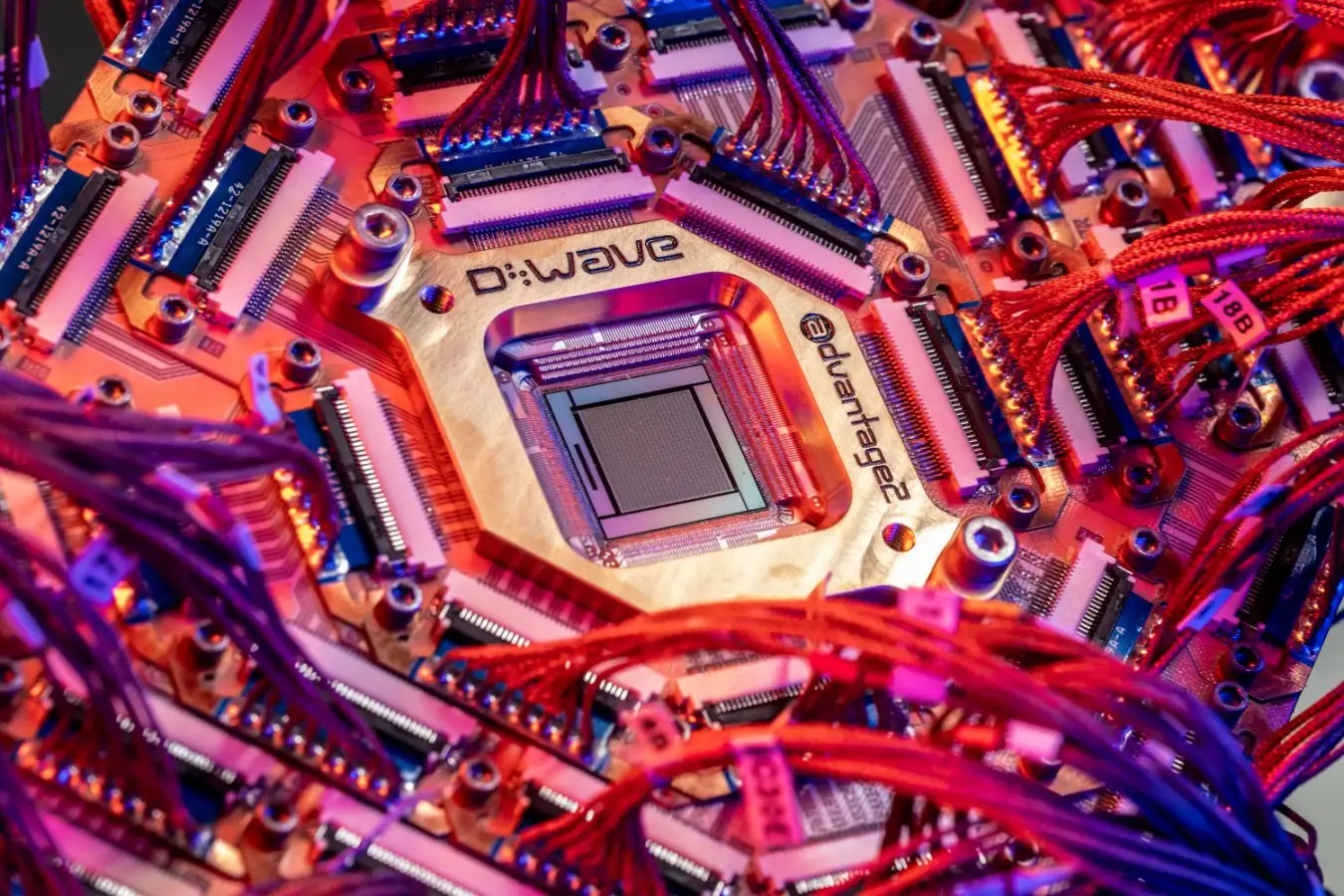
    Advantage2 Quantum Processing Unit

    D-Wave

    The emergence of quantum computers has made waves in the cryptocurrency mining industry, with researchers claiming a successful experiment showcasing how a quantum system can mine cryptocurrencies while utilizing significantly less energy.

    Quantum computing closely intersects with cryptocurrency in two key areas: Firstly, powerful quantum computers could potentially dismantle the encryption methods safeguarding cryptocurrencies from cyber threats. Secondly, studies have indicated that quantum technology might drastically lower cryptocurrency’s substantial energy consumption.

    In a groundbreaking move, Colton Dillion of Postquant Labs and his team established an experimental blockchain network called Quip in April. This blockchain technology operates as a public ledger, allowing users to add new records by competing to solve complex calculations known as “proof of work.” Typically, winning miners receive coins, solidifying transactions on the blockchain.

    Within Quip, proof-of-work calculations are transformed into task-specific optimization challenges, like scheduling food deliveries or assembling an ideal investment portfolio. While traditional computers dominate the Quip blockchain, D-Wave’s Advantage2 quantum computers also participate, demonstrating superior performance against standard machines.

    “The optimization problem is challenging enough to test classical devices, yet accessible enough for quantum technology, implying a significant impact opportunity,” explains Carlos Perez Delgado from the University of Kent, who is not directly associated with Quip.

    Historically, the efficacy of D-Wave’s quantum computers has sparked considerable debate. In 2024, D-Wave claimed that one of its quantum systems solved a problem unattainable by traditional supercomputers, only for another research team to replicate similar results using a standard laptop the following year.

    Dillion asserts that Quip’s decentralized structure mitigates such discrepancies: “Blockchain enables skeptics to join our network and validate results independently,” he states.

    During an investor presentation on June 1, Alan Baratz, CEO of D-Wave, revealed that the Advantage2 quantum computer is available on Quip for approximately five minutes each day. It competes for about a third of the blocks added to the network, achieving victories on 92% of them, indicating quantum superiority in addressing Quip’s proof-of-work challenges.

    Furthermore, Baratz highlighted that the Advantage2 consumes considerably less energy than rival computers, although detailed benchmark studies are yet to be published. “For me, quantum computing represents energy-efficient solutions for complex computational challenges,” Baratz states.

    Preliminary findings from Quip further substantiate these claims. According to Dillion, the Advantage2 requires around 100 times less power to win a block (12.5 watts compared to 1334 watts). He estimates that traditional computers would need 300 times more power to maintain a winning frequency comparable to Advantage2. Additionally, the network is strategically designed to withstand attacks from hostile quantum computers—a stark contrast to many extant blockchains that lack prior quantum security measures.

    Could a more secure and sustainable blockchain future emerge with networks like Quip? It’s a nuanced question, mentions Olivier Ezraty, associated with the quantum energy initiative. While quantum computing may lower energy costs per computation, the financial implications of developing, maintaining, and operating quantum hardware could obstruct convincing economic arguments for scaling these solutions. “They hold potential to reduce total energy expenses, yet demand substantial capital investments, including energy costs during D-Wave manufacturing,” Ezraty comments.

    Contrastingly, Perez Delgado expresses optimism: “With financial incentives driving faster and cleaner cryptocurrency mining, I firmly believe this technology will become increasingly common.” Notably, other companies are also exploring quantum proof-of-work initiatives, such as BTQ Technologies and Quandela, focusing on quantum systems utilizing light, as opposed to D-Wave’s superconducting circuits.

    Ultimately, the Quip team aims for a loftier objective. Dillion envisions a future where a global network of quantum computers connects users, allowing diverse quantum systems to compete on various problems, mirroring how Advantage2 currently operates against classical devices. This vision could democratize access to quantum computing, traditionally restricted to elite research facilities, he emphasizes. Upcoming developments include introducing additional proof-of-work challenges and integrating quantum computers beyond D-Wave’s offerings.

    Topics:

    Source: www.newscientist.com

    Share. Facebook Twitter Pinterest LinkedIn WhatsApp
    Previous ArticleRevolutionary Nuclear Clock: A New Era in Accurate Timekeeping
    Next Article How New World Cup Ball Design Changes Could Impact Close Games

    Related Posts

    Science

    Mastering Beer Brewing Techniques: Insights from Beer Foam Analysis

    Science

    Discovery of Supernova Remnant Near Milky Way’s Central Black Hole: Astronomers Uncover New Cosmic Insights

    Science

    Discover the Hidden Intestinal Condition That Generates Alcohol in the Abdomen

    Science

    Link Between E-Cigarette Use After Quitting Smoking and Lung Cancer Risk

    Science

    How New World Cup Ball Design Changes Could Impact Close Games

    Science

    Revolutionary Nuclear Clock: A New Era in Accurate Timekeeping

    Science

    Mastering Small Talk: Tips to Shine in Conversations with Strangers

    Science

    Exploring the Ship of Theseus Paradox: Key Insights from its Wiki Page

    Add A Comment
    Leave A Reply Cancel Reply

    Stay In Touch
    • Facebook
    • Twitter
    • Instagram
    • Pinterest
    Top Picks
    Science

    Flourishing Wildlife on Solar Farm Developed from Restored Peatland

    Meadow Pipit in Solar Park on Peatland in Northern Germany Watt Manufacturer Solar farms on…

    High-Stakes Starship Rocket Test Flight: What to Expect from SpaceX

    7 Reasons We Overtrust AI and the Hidden Costs We’re Facing

    NASA Unveils Three Unmanned Moon Exploration Missions in 2023 to Support Lunar Base Construction

    Rare Lyme Disease Bacteria Detected in Ticks Across New York

    Most Popular
    Science

    Exploring the Ship of Theseus Paradox: Key Insights from its Wiki Page

    Science

    Do You Have a Great Sense of Humor? Discover What Most People Think!

    Categories
    • AI (13)
    • Gadgets (10)
    • Science (214)
    • Space (9)
    • Technology (37)
    • Wheels (9)
    Our Picks
    Science

    Exploring the Health Benefits of Turmeric and Curcumin: Do They Really Deliver?

    Science

    Rare Camera Trap Footage Reveals Wolves Hunting European Bison

    © 2026 Hitechub.
    • Home
    • About Us
    • Privacy Policy
    • Terms & Conditions

    Type above and press Enter to search. Press Esc to cancel.

    We are using cookies to give you the best experience on our website.

    You can find out more about which cookies we are using or switch them off in .

    Ad Blocker Enabled!
    Ad Blocker Enabled!
    Our website is made possible by displaying online advertisements to our visitors. Please support us by disabling your Ad Blocker.
    Hitechub
    Powered by  GDPR Cookie Compliance
    Privacy Overview

    This website uses cookies so that we can provide you with the best user experience possible. Cookie information is stored in your browser and performs functions such as recognising you when you return to our website and helping our team to understand which sections of the website you find most interesting and useful.

    Strictly Necessary Cookies

    Strictly Necessary Cookie should be enabled at all times so that we can save your preferences for cookie settings.