


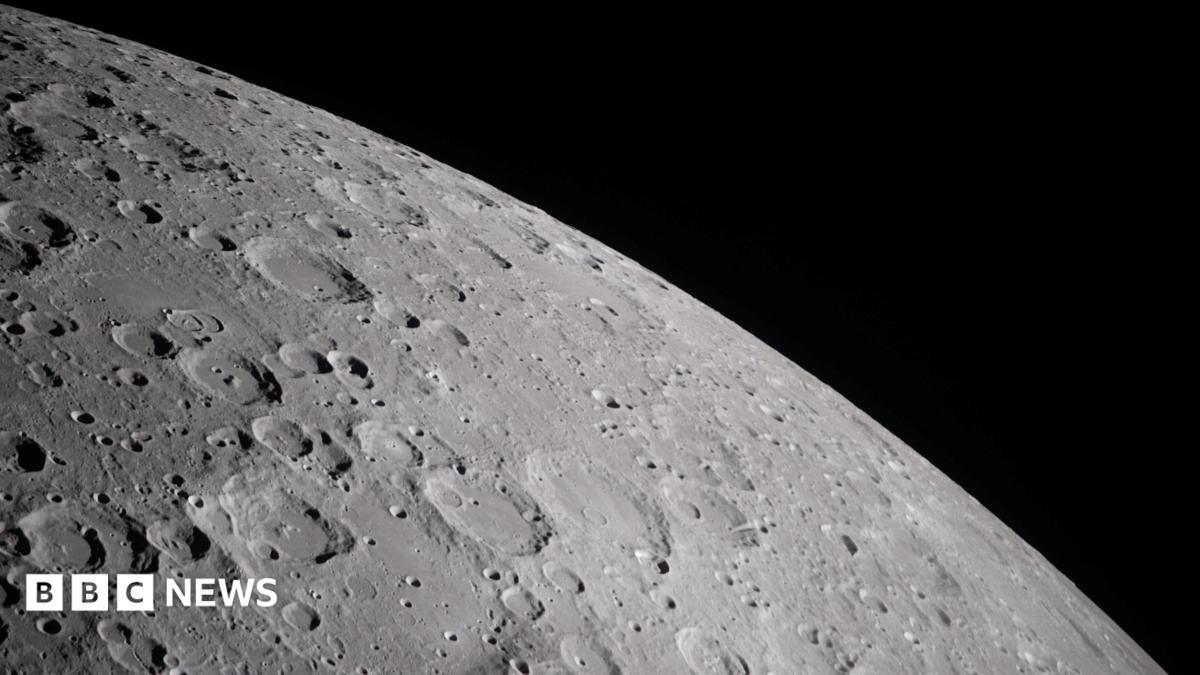
The first scientific observations, and possibly the first images, could come from powerful telescopes in the Americas while the lunar impact site remains in darkness. Even so, detecting a 14-metre object striking the daylight side of the Moon, approximately 385,000km away, will be challenging—but not impossible.
Scientists may need hours, days or even weeks to process the images and remove interference before the data clearly reveals the newly formed lunar crater.
The discovery of the crater by an orbiting spacecraft will be highly anticipated. Researchers already know the rocket’s precise size, speed and impact location, transforming the collision from a random event into a rare, controlled lunar impact experiment.
For planetary scientists, this is an exceptional opportunity to test models showing how impacts create craters, scatter debris across the Moon’s surface and generate seismic vibrations within its interior.
The findings could also have important practical benefits.
By measuring how much lunar rock and dust the impact ejects, engineers can design safer lunar landers and future Moon bases. The research will help determine how far debris may travel and how strongly the ground could shake in surrounding areas.
Source: www.bbc.co.uk