



When I began my research career about a decade ago, there were no female academics in the Department of Mining Engineering at Central South University in Changsha, China. This year, I became the department’s first female professor. I welcome this progress, but it also highlights how recently perceptions have started to change about who can pursue a career in mining engineering.
I have visited mines across China and overseas for research and fieldwork, yet I was repeatedly told that I could not go underground. In some cases, I learned this only after planning my research and traveling to the site. The situation was frustrating and illogical: researchers who helped design deep-mine monitoring and early-warning systems were unable to observe the underground environments where those systems would operate.
How to expand access to the critical minerals the world needs
I do not blame mine managers for restricting underground access. They must comply with workplace regulations while managing serious hazards, including unstable rock, extreme heat, flooding, dust, heavy machinery and limited evacuation routes.
However, protection can become inequitable when every activity described as “underground mining” is treated as carrying the same level of risk. China’s 2012 law strengthening workplace rights and health protections for women continues to prohibit female employees from working in underground mines. Dozens of countries have similar restrictions. These rules were created for legitimate safety reasons because women can face specific hazards in mining (OS Mokwena Others. safety 121; 2026). However, the regulations often fail to distinguish between repeated underground production shifts and brief, supervised visits to calibrate sensors or inspect mine-monitoring equipment. Targeted regulatory reform is needed.
Timing is also important. Modern mining involves far more than excavation. Researchers install and test sensors, analyze seismic activity, model ventilation systems, supervise autonomous mining equipment, inspect underground infrastructure, operate remote-control systems and plan ecological restoration. Many of these activities can be completed on the surface, but some require limited underground access. Because the risks differ by task, the rules should reflect those differences.
I support a task-based system with three distinct pathways.
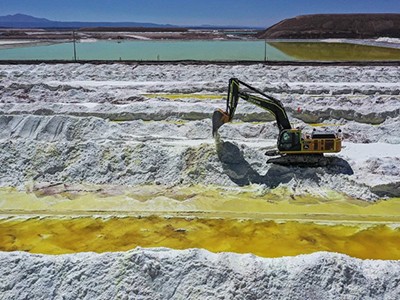
Demand for lithium is soaring: Here’s how to make mining more sustainable
Prolonged, high-exposure production work should remain subject to the strictest legal protections. Employers must not use inclusion as a reason to weaken safety standards, reduce staffing or pressure workers to accept unnecessary risks.
Short-term underground visits for mining research, education or equipment testing should instead be governed through clear legal pathways. Access should require a site-specific risk assessment, mandatory safety training, properly fitted personal protective equipment, strict time limits, real-time personnel tracking, qualified supervision and a detailed emergency plan. Participation must be voluntary. If these safeguards cannot be guaranteed, or if the research objective can be achieved from the surface, underground access should not be permitted.
Applicants for surface-based mining roles should be assessed on their skills and professional competence, rather than being excluded because of outdated qualification rules designed for traditional underground production work.
Source: www.nature.com