


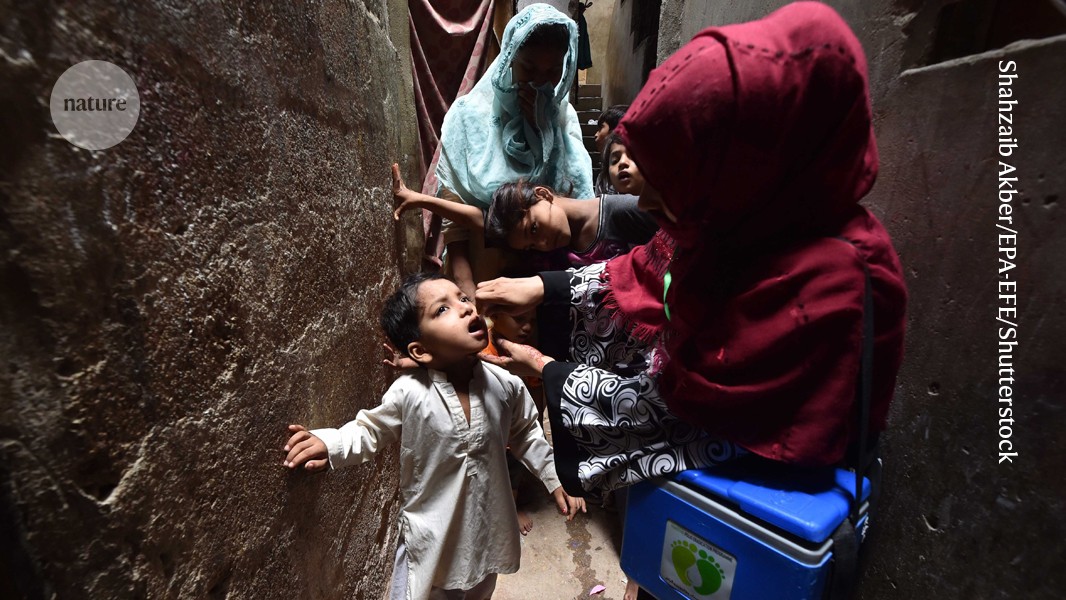
Ten years ago, the polio virus seemed on the brink of extinction. The last reported cases of wild polio occurred in Nigeria in August 2016, with the virus remaining endemic only in Afghanistan and Pakistan. Amid worldwide optimism, Hamid Jafari, the former head of polio control at WHO, confidently stated, “It may take months, not years, to eradicate polio in Pakistan.”
Polio is on the brink of eradication. Here’s how to avoid going back
However, the target for eradication has continually shifted: from 2019 to 2023, and now to 2025. Last month marked another setback in halting virus transmission. Over the past decade, more than US$3 billion has been invested in eradicating polio in Afghanistan and Pakistan, with billions of oral vaccine doses administered. Health leaders had anticipated that polio would finally vanish during a period of low transmission last winter, but 14 new cases have emerged this year.
Newly identified challenges, such as unprecedented funding shortages and increasing vaccine hesitancy from New York to rural Pakistan, jeopardize these efforts.
In January of last year, the World Health Organization asserted that eradication was “within reach,” but few researchers were consulted. According to Nature, experts express concerns regarding these prospects for success. “Eradication is possible in theory, but not in practice,” stated Kimberly Thompson, a health economics researcher at Kid Risk in Orlando, Florida, which models polio transmission and eradication.
So, will the world ever wipe out polio, or is it time to consider a Plan B?
Ambitious Initiative
Efforts to eradicate polio depend heavily on the oral polio vaccine (OPV), a liquid containing live, attenuated poliovirus. Administering this vaccine to children not only protects them from disease but also impedes the virus’s replication in the intestines, preventing its spread. Herd immunity of approximately 90% is required in vulnerable areas to eliminate the virus. Another vaccine, the inactivated polio vaccine (IPV), contains inactivated viral particles and is given worldwide, providing disease protection but not preventing transmission.
In rare instances, the attenuated virus in OPV can mutate, resulting in vaccine-derived polio and paralysis. Vaccine-derived polio can spread within communities with low immunity levels. The ultimate strategy involves eradicating wild poliovirus using OPV, followed by careful withdrawal of the vaccine while using IPV to prevent outbreaks.
Initially, this approach yielded significant results. When the Global Polio Eradication Initiative (GPEI) launched nearly 40 years ago, wild polio caused 350,000 cases in 125 countries annually. By 2025, GPEI— a coalition of governments and international organizations—had reduced new wild polio infections to only 52 cases, a staggering 99.98% decrease. This initiative also prevented between 2.5 million to 6 million paralysis cases.
Leaders remain optimistic, with Arshad Qudus, acting director of GPEI, stating that progress toward zero polio infections is ongoing, with reduced transmission rates and smaller geographical spread. Some areas previously classified as ‘core reservoirs’ have not reported a case for over a year.
However, data paints a contrasting picture, showing fluctuations in polio infections. Wild infections dropped to 22 in 2017, soared to 176 in 2019, fell to 6 in 2021, then rebounded to 99 in 2024. This inconsistency is echoed in environmental virus detection, leading Thompson to declare: “We’re not headed for success.”

Source: World Health Organization
The cornerstone of polio eradication hinges on achieving high population immunity, especially intestinal immunity that combats infections. This level of immunity has been attained in even the most challenging geographies, and out of the three previously prevalent wild polio types, only one remains today.
If the rest of the world has successfully mitigated the infection, why have Afghanistan and Pakistan struggled? Is there something about Type 1 that makes eradication more difficult? “I think the answer is no,” contends David Salisbury, chair of GPEI’s Global Commission on Polio Eradication Certification, referencing successful eradication elsewhere. Some researchers suggest that oral vaccines may not achieve the same immunity levels in Afghanistan and Pakistan as they do in other regions, but this is generally considered a non-scientific argument.
“We know the tools and the principal sources,” stated Isabelle Blake, a polio epidemiology model at Imperial College London. She believes these challenges can be addressed effectively.
Despite considerable efforts, approximately 100,000 children in both countries remain unvaccinated in hard-to-reach areas, with immunization coverage under 50% in certain districts, according to Zulfikar Bhutta, a pediatrician at Aga Khan University in Karachi, Pakistan. Yet, many of these challenges have been overcome in other parts of the world, according to Salisbury.
Current violence between Pakistan and Afghanistan has rendered conflict zones in southern Pakistan inaccessible, hampering vaccination efforts, Quds noted. Additionally, cross-border movements are replenishing the virus reservoir, heightening community mistrust toward vaccine distributors. This year, at least four police officers were killed in Pakistan while assisting vaccinators, and restrictions against women and door-to-door vaccination efforts, vital to global achievements, have been instituted in southern Afghanistan.
Notably, polio has been eradicated in northeastern Nigeria, despite significant resistance from the Boko Haram rebel group between 2009 and 2016, which targeted vaccinators and healthcare infrastructure, Salisbury emphasized. Even the conflict in Gaza did not preclude 2024 negotiations for a humanitarian truce allowing the emergency vaccination of 640,000 children. Leaders have found ways to overcome religious opposition in various contexts.
Polio is on the brink of eradication. Here’s how to avoid going back
However, Quddas highlights that some of the challenges faced in Afghanistan and Pakistan are unique. In Gaza, there is clarity on authority and whom to negotiate with regarding operations. Conversely, in the chaotic region of the northwestern Khyber Pakhtunkhwa province of Pakistan, “the situation is chaotic with no specific group to negotiate with.” Furthermore, in southern Afghanistan, Salisbury acknowledges that bans on door-to-door vaccinations and restrictions on women present significant challenges.
Despite these obstacles, Quddas asserts that polio workers in these regions continue to innovate. “What is clear is that they will attempt every option,” remarked Kathleen O’Reilly, an epidemiologist at the London School of Hygiene and Tropical Medicine and a WHO polio advisor.
Today’s vaccination campaigns face additional hurdles. The novelty of this global mission has diminished. The low incidence of polio compared to other health issues has significantly undermined community enthusiasm for immunization efforts. The GPEI’s independent monitoring committee recently reported that polio funds were flowing to Afghan authorities “regardless of program efficacy.” “For the first time in polio eradication history, I don’t believe Afghanistan is committed to eradication,” [involved].
Falling Funds
A major obstacle this year is the 30% budget cut to the campaign. Disruption in U.S. involvement in global health programs partially contributed to this decline. While there is continued support for polio eradication in the United States—both from the public and Congress—the disease remains one of the few successfully eradicated.
The country’s new global health strategy, published last year, altered the funding landscape.
However, recent developments, such as the U.S. withdrawal from the WHO and the dismantling of the U.S. Agency for International Development under President Donald Trump, have considerably eroded the infrastructure and technical expertise previously aiding eradication efforts.
Now, the United States has formed bilateral health agreements with 34 countries, though the extent of support for polio control remains uncertain.

A health worker gives a child the polio vaccine in Pakistan, one of the last countries where wild poliovirus continues to spread.Credit: Muhammad Sajjad/AP via Alamy
Countries like the United Kingdom have also suspended contributions to the GPEI, while the Gates Foundation and other donors pledged $1.2 billion in December to address shortfalls in funding over the coming years.
Due to these budgetary constraints, GPEI has cut back on specific activities, notably the OPV vaccination in non-endemic regions. Modelers warn that this could create vulnerable areas susceptible to both wild polio and vaccine-derived polio outbreaks.
Cases of vaccine-derived polio have been declining since 2022, with 882 cases reported, primarily in sub-Saharan Africa. In 2016, cases surged following ineffective changes in the global vaccination program when the Type 2 oral vaccine was discontinued after its eradication.
Quddas attributes the recent decline in vaccine-derived polio cases to the rapid expansion of vaccination efforts in hard-hit areas.
However, both Blake and Thompson emphasize that preemptively inoculating at-risk populations who are currently uninfected is crucial for eradicating the outbreak—and that the current reduction in efforts undermines this imperative.
Uncertain Future
No one interviewed for this article believes that eradication is impossible in theory. However, many remain skeptical about its imminent achievement without abandoning business-as-usual strategies.
“If everything were functioning correctly and resources were sufficient, success would be attainable,” Thompson asserts. Yet after years of unmet goals and current funding challenges, she declares, “I believe we’ve already failed.”
Source: www.nature.com