


Super El Niño Could Break Records: Drought, Wildfires and Crop Failures Threaten Communities Worldwide
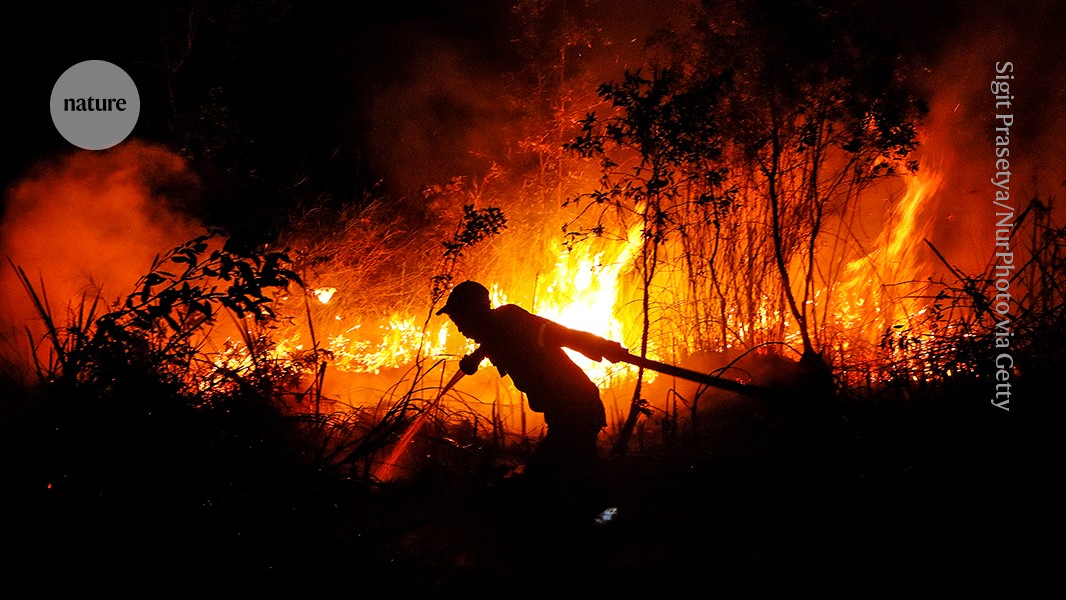
Peatland fires in Indonesia can be exacerbated by El Niño and release large amounts of carbon dioxide.
Credit: Sigit Prasetya/NurPhoto via Getty
As a climate scientist who studies land and ocean temperature records, I start each day by extracting observations and predictions of El Niño weather patterns from 14 major models using a real-time dashboard. Over the past few months, those numbers have been nothing short of extraordinary.
El Niño temperatures are already far above previous strong events
In early September, sea surface temperatures in the central tropical Pacific Ocean were approximately 2.9 degrees Celsius above the current climate baseline, calculated as the average over the past 30 years. This is more than 1 °C higher than temperatures recorded at the same stage of the strong El Niño events in 1997 and 2015.
Current projections suggest there is a more than 90% chance that this year’s event will outperform every El Niño event since records began in the 1870s.
El Niño brings drought, floods and wildfire risks
El Niño does not affect every region of the world in the same way, but its widespread effects are well understood. The phenomenon can cause droughts and crop failures in some areas and floods in others. It can also fuel wildfires in dry forests and peatlands, while overheated oceans can trigger coral bleaching.
Agencies ranging from national agriculture ministries to the World Health Organization must begin preparing immediately to reduce these risks.
Southern Africa faces severe drought and crop risks
One of the clearest and most consistent effects of El Niño is drought in southern Africa. During the four strongest El Niño events between 1980 and 2016, the region had an approximately 80% chance of below-normal rainfall during the wet season from December to February.
Even a relatively mild El Niño event in 2023–2024 caused severe drought, prompting disaster declarations in Zimbabwe, Zambia and Malawi and reducing the Zambezi River to record lows. South Africa’s maize crop fell by nearly half during the 2015–2016 El Niño event.
With the planting season starting in October, the government has only a few weeks to act. Priorities include distributing drought-tolerant, early-maturing crop varieties to high-risk areas and expanding programmes that provide assistance after crop failure, similar to measures adopted in Ethiopia during the 2015–2016 drought.
Indonesia faces rising peatland-fire and haze risks
Some impacts are already visible. Rainfall is decreasing across Indonesia, increasing the risk of peatland fires.
During the 1997 El Niño event, fires in Indonesia released an estimated 3 to 9 gigatonnes of carbon dioxide. This corresponds to about 13–40% of global fossil-fuel emissions in that year.
The fires and haze associated with El Niño in 2015 were linked to around 100,000 excess deaths across Indonesia, Malaysia and Singapore.
The Indonesian government has taken important steps to reduce these risks, including establishing a peatland restoration agency and restricting the logging of primary forests and peatlands. However, the risks remain high, making early prevention and preparedness essential.
Source: www.nature.com