


A traditional traction elevator utilizes cables to ascend and descend elevator cabins in buildings. One end of the cable is attached to a counterweight, allowing for smooth movement. You simply enter the cabin, press a button, and an electric motor manages the journey to your desired floor. While you rise, the counterweight descends, and the process is reversed when descending.
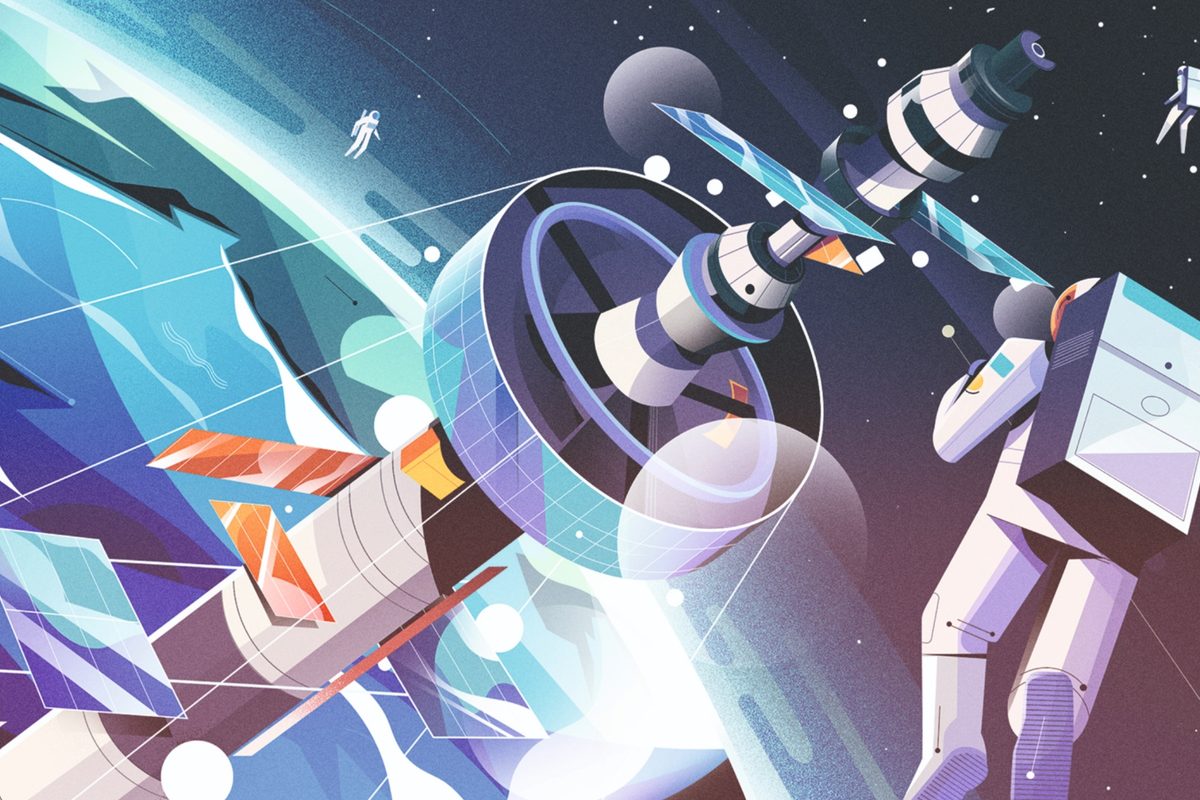
Interestingly, the concept of a space elevator emerges from this fundamental design. It envisions cables extending thousands of kilometers from space to Earth, thereby eliminating the need for rockets. This technology not only significantly reduces energy consumption compared to traditional rocket launches but also avoids environmental pollution.
Although it may seem like science fiction, the idea of a space elevator has intrigued scientists since 1895, when Russian rocket scientist Konstantin Tsiolkovsky first proposed the concept of a “ladder to the heavens.”
The primary challenge is determining where to anchor the cable in space. The solution lies in geostationary satellites. This unique orbit allows objects to remain fixed above a specific point on Earth, located approximately 36,000 km (22,200 miles) above the equator.
As the cable is extended down from the satellite, the satellite elevates higher to maintain its position against the cable’s weight. Below geostationary orbit, gravity keeps the cable taut, while above it, the centrifugal force achieves the same effect.
The cable needs a secure connection to the ground. Some researchers propose using mountain tops or tall towers to minimize cable length. Others suggest mobile bases positioned on ships or floating platforms that can maneuver to avoid storms or space debris.
Once the space elevator is operational, a “climber” will transport payloads up the cable. But will the entire structure pose a risk when reaching orbit? Experts maintain that payloads must not exceed 1% of the cable’s mass, ensuring safety despite the cable’s considerable weight.
However, challenges remain regarding cable strength. It must be at least 50 times stronger than steel. While researchers are continually experimenting, creating an adequately strong cable has proven elusive.
Recent advancements by the International Society of Astronautics suggest that materials like carbon nanotubes or graphene may provide the necessary strength. With these innovations, the vision of space elevators might soon become a reality.
This article answers the question (by Thomas Brezzo): “Can we really build a space elevator?”
For inquiries, please email [email protected] or connect with us on Facebook, Twitter, and Instagram (include your name and location).
Discover more incredible science insights on our Ultimate Fun Facts page.
Read more:
Source: www.sciencefocus.com