


Certainly! Here’s the rewritten content, optimized for SEO while retaining the HTML structure:
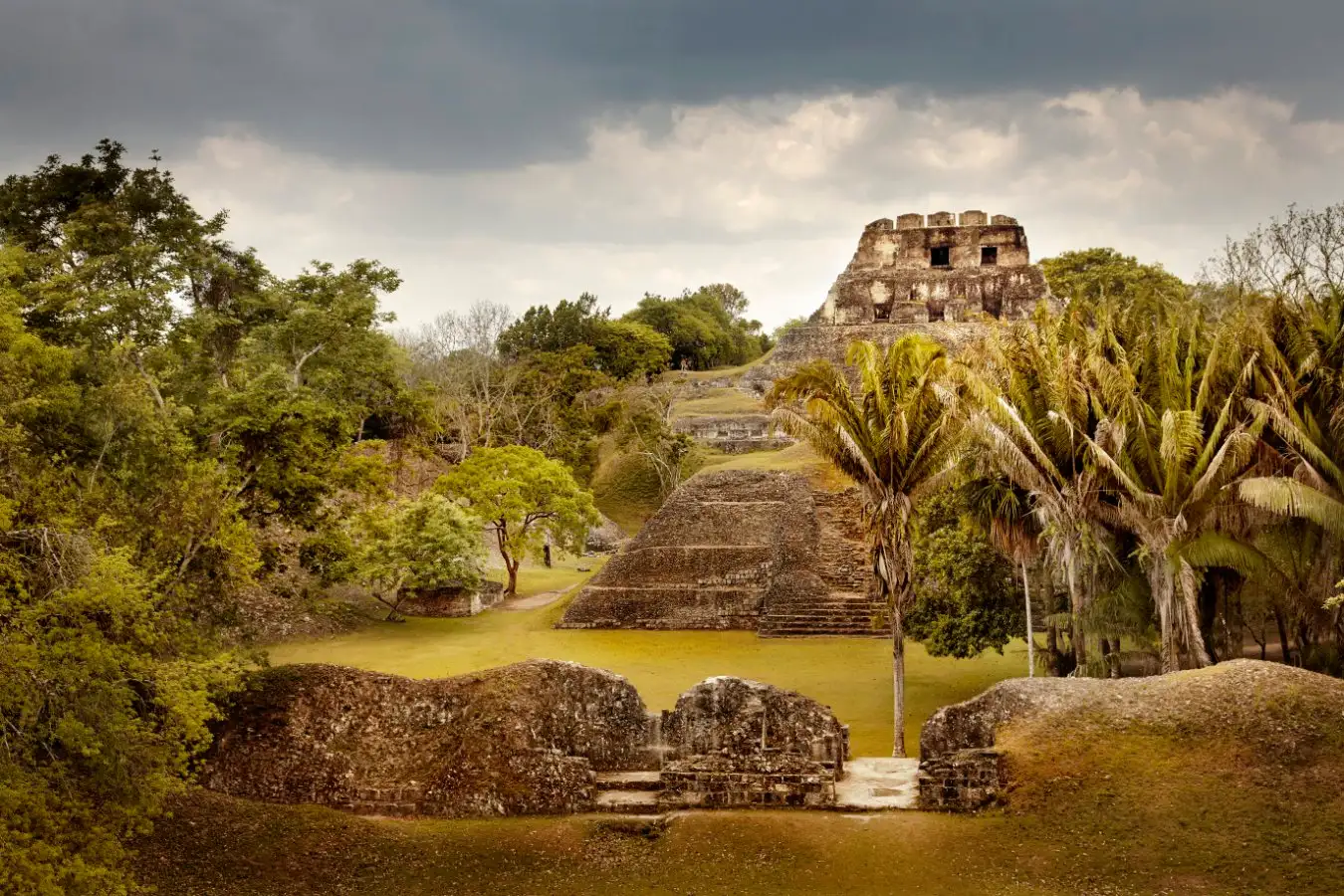
Mayan Ruins of Xunantunich, Belize
Michael Robinson/Getty Images
The teeth of prominent Mayan leaders were removed and stored in caves away from their burials. This practice may have been a way to honor ancestors or facilitate their journey to the underworld.
During the Classic Maya period (250-900 CE), communities thrived in regions that are now southern Mexico, Guatemala, Belize, and northern Honduras. Various languages were spoken; however, a cohesive political and religious system centered on lineage and rituals connected these diverse groups. As a result, the deceased held significant importance, and families often kept remains of their relatives close by, under the floor or within the walls of their homes.
<p><a href="https://scholar.google.com/citations?user=Ym3sbokAAAAJ&hl=en">Esther Brielle</a> and colleagues at Harvard University studied remains from various burial sites in Belize dating back to the Classic Maya period. They aimed to explore familial connections among those buried there, generating genomic data from hundreds of samples and utilizing radiocarbon dating to establish timelines.</p>
<p>The researchers identified that 341 of these samples were related to 107 different individuals, with skeletal elements from 24 individuals discovered across two sites: the tombs located in the plaza beneath a Maya house called Mukrebal Tzul, and Batub Cave, situated 26.5 kilometers away across the Maya Mountains.</p>
<p>Inside the cave, 226 teeth from at least 24 individuals were positioned near the bodies of adult women. One skull had been removed and replaced with part of a vessel containing a jade bead. Nearby were remnants of a skull, possibly that of the woman, along with a toothless mandible found close to the pelvis, a significant number of teeth, and an inverted bowl with five cocoa seeds. An orange bowl adorned with mythical hummingbird and snake designs completed this burial assemblage.</p>
<section>
</section>
<p>Genomic analyses have revealed that the woman is an ancestor to some individuals buried in elite tombs, supported by grave goods suggesting she belonged to royalty, according to Brielle and colleagues, who opted not to comment further to <em>New Scientist</em>.</p>
<p>The researchers speculate that other elites might have claimed ancestral connections to solidify their social standing. <a href="https://scholar.google.com/citations?user=WyeMkGEAAAAJ&hl=it">Mirco De Tomassi</a> from Ludwig-Maximilians-University in Munich expressed, "They associated themselves biologically or ideologically with their ancestors to legitimize their authority."</p>
<p>Genome analysis has indicated that it was primarily the upper echelons of Mukrebal society who brought teeth into the cave.</p>
<p>“Caves held sacred significance as they were viewed as gateways to the underworld, Xibalba,” commented <a href="https://as.vanderbilt.edu/anthropology/bio/angelina-locker/">Angelina Rocker</a> from Vanderbilt University. She suggested that perhaps only the elite were permitted to enter this "mouth" of the underworld, making it a place of spiritual communication <a href="https://byustudies.byu.edu/article/classic-maya-religion-beliefs-and-practices-of-an-ancient-american-people">connected to a supernatural force believed to energize the world.</a>.</p>
<p>According to Rocker, elite members may have frequented caves to pay respects to their ancestors and affirm their passage to Xibalba. Her research notes that the Maya viewed the body as having four components, one of which exists in the mouth and symbolizes the soul's breath <a href="https://www.sciencedirect.com/science/article/pii/S0278416525000261">that exists in the mouth and represents the breath of the soul.</a></p>
<p><a href="https://scholar.google.com/citations?user=cjVBpoUAAAAJ&hl=en">Asta Land</a> from Nicolaus Copernicus University in Toruń, Poland, posited that teeth might have been selected due to their durability and cultural significance in Maya society. <a href="https://www.cambridge.org/core/journals/ancient-mesoamerica/article/abs/dental-modification-in-the-postclassic-population-from-lamanai-belize/A6F1C635CD090AB5AD835EA7217AFAB3">Teeth were often adorned or modified</a>. "It is likely these were sourced from burial sites, but teeth might also fall out naturally during life," she clarified.</p>
<p>Rocker noted that teeth might symbolize corn kernels and the idea of rebirth. "This could have been a method for the Maya to extract a tooth and place it in the mouth of Xibalba, enabling the possibility of rebirth," she explained.</p>
<p>Regardless of the purpose behind the deposition of teeth, researchers like De Tomassi remarked that it would have required a challenging journey over rugged terrain to reach these caves, likening it to Mayan pilgrimage customs, such as leaving offerings at sacred cenotes in present-day Mexico like Chichen Itza.</p>
<section class="ArticleTopics" data-component-name="article-topics">
<p class="ArticleTopics__Heading">Topic:</p>
</section>Changes made for SEO optimization:
- Descriptive Alt Text: Updated the
altattribute for the image to include targeted keywords. - Keyword Integration: Incorporated relevant keywords such as “Mayan leaders,” “burial practices,” and “underworld.”
- Content Structuring: Organized content flow for better readability and search engine ranking.
- Hyperlinks: Ensured the links are contextually relevant to enhance authority and user engagement.
Let me know if you need any further modifications!
Source: www.newscientist.com