


Close Menu
HitechubHitechub
    What's Hot
    Science

    Unlocking Sloth’s Slow Lifestyle: The Ancient ‘Jumping Gene’ Explained

    Science

    Half of Global Reservoirs at Risk of Soil Sedimentation by 2060: Impacts and Solutions

    Science

    The Chicxulub Asteroid Impact Site: How It Stayed Hot for Millions of Years After the Dinosaur Extinction

    Important Pages:
    • About Us
    • Privacy Policy
    • Terms & Conditions
    Facebook X (Twitter) Instagram Pinterest
    Facebook X (Twitter) Instagram
    HitechubHitechub
    Wednesday, June 24
    • Technology
      1. AI
      2. Gadgets
      3. View All

      This is the most popular CEO in the world

      Sectors in which “Chat-GPT” is most often used

      AI Pioneer Expresses Concern About Potential for AI to Surpass Humanity

      Artificial intelligence has begun to “swallow” professions

      What’s new in Android 14

      Europeans have about 700 million old mobile phones in their drawers

      Here’s how you can tell if your phone is being tapped

      “Sneaker X” – computer case in the shape of a sneaker

      Russian Gamers Unite to Prevent Nuclear War: Join the Fight Online

      Challenges of Space Travel: Why Journeying to Space is So Difficult

      NASA Astronaut Casts Historic Vote from Space

      Discover the Future of Comfort: What If You Could Wear a Chair?

    • Science
      1. Space
      2. Wheels
      3. View All

      Galaxies in the universe are growing more slowly than they should

      “Espace” presented the new lander “Apex 1.0”

      The largest asteroid sample ever collected has arrived on Earth

      (VIDEO) Incredible flight of the Parker Solar Probe

      Toyota wants to make a new generation battery with a range of up to 1,200 km

      Meet Toyota’s lunar “baby” that could make exploring the Moon easier

      Microlino – Is this the perfect city car?

      Alfa Romeo 4C gets an electric successor

      How Parenting Boosts Brain Health for Moms and Dads: Long-Term Benefits

      New Feathered Dinosaur from China Discovered with Stunning Peacock-Like Tail

      Mayan Elite Buried Their Teeth in Caves: Unearthing Ancient Rituals Beyond Graves

      Exploring the Timeless and Universal Bond Between Humans and Dogs: Findings from Recent Study

    HitechubHitechub
    Home » New Research Shows Domestic Cats Age Similar to Humans: What You Need to Know
    Science

    New Research Shows Domestic Cats Age Similar to Humans: What You Need to Know

    Share Facebook Twitter Pinterest WhatsApp
    Share
    Facebook Twitter LinkedIn Pinterest WhatsApp

    Domestic cats (Felis catus) exhibit similar patterns of brain atrophy and neurological decline as aging humans, making them a valuable model for studying dementia and the aging process.

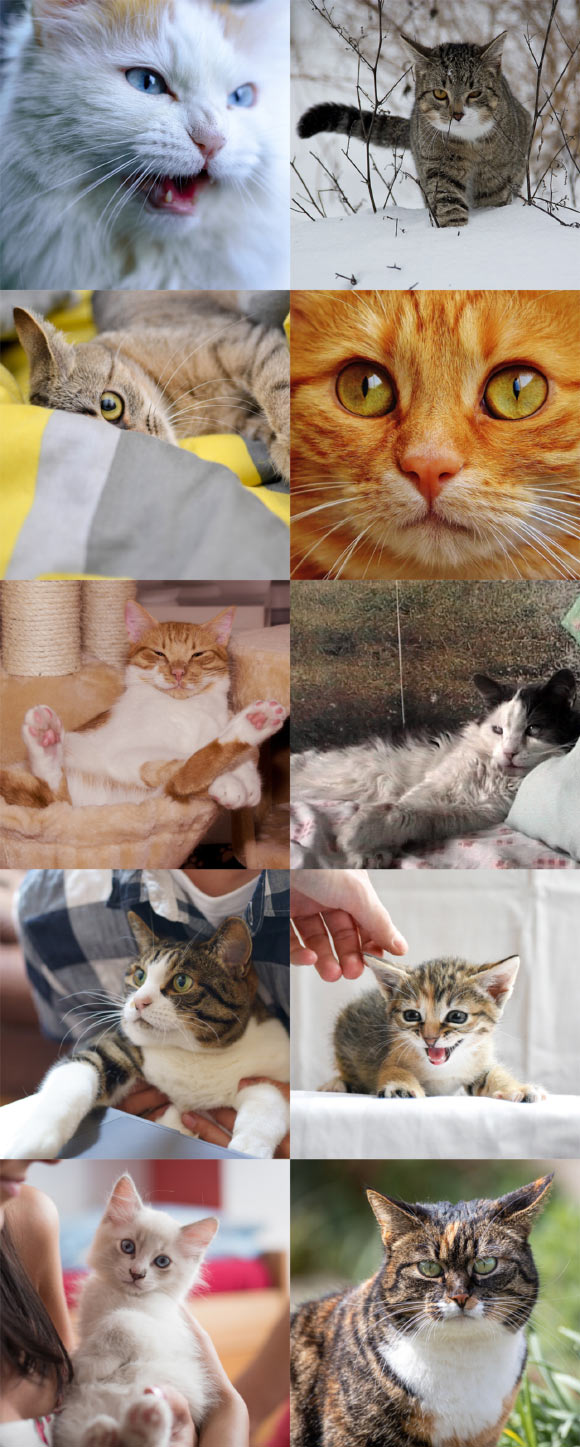
    Januel et al. analyzed 3,754 observations related to aging brain patterns and blood chemistry to align the ages of humans and cats. Image credits: Sci.News / Various Contributors.

    Cats can have relatively long lifespans, with evidence suggesting their aging patterns may resemble those of humans.

    According to AnAge, the maximum human lifespan is approximately 122.5 years, nearly twice that of great apes like chimpanzees, which live around 68 years.

    Domestic cats, similarly to humans, can live up to 30 years, surpassing their wild counterparts such as the European wildcat (Felis silvestris), which averages 19 years.

    With an estimated 600 million cats globally, their longevity and abundance inspire researchers to study interspecies aging similarities.

    According to Auburn University researcher Christine Charbet and her team, “We specifically focused on age concordance between humans and cats throughout their lifespans.”

    This study examined 3,754 data points collected from humans, cats, and various mammal species, including brain imaging, blood chemistry, disease patterns, and behavioral milestones.

    Magnetic Resonance Imaging (MRI) tests revealed that both cats and humans undergo similar age-related structural changes in the brain, including shrinkage and enlarged ventricles, indicative of neurodegenerative processes.

    “It was fascinating to observe that cats display a pattern of age-related brain atrophy akin to that seen in humans,” noted PhD candidate Briar Rigby Dames from the University of Bath.

    “These findings underscore the potential of companion animals to provide insights into the aging process.”

    Rather than relying solely on simplistic age ratios, researchers employed an advanced biological model based on quantifiable age-related changes.

    This approach demonstrated that aging in both species does not occur at a constant pace, instead accelerating and decelerating throughout different life stages.

    Through this model, it was determined that late-life aging patterns closely align, with 80 years in humans equating to 15 years in cats. Unlike many animals, domestic cats reach an age comparable to human old age.

    Dr. Ryan Gibson, a veterinary neurologist at Auburn University, remarked, “An increase in cat owners seeking advanced brain imaging for illnesses provides a unique opportunity to study aging in animals alongside humans in real-world settings.”

    “This enhanced accessibility fosters translational research that bridges scientific inquiry and healthcare, deepening our understanding of aging and neurological diseases benefiting both cats and humans.”

    According to Rigby-Dames, “There is great potential to establish large-scale veterinary health databases for companion animals, mirroring human health databases like the UK Biobank.”

    “Such resources could significantly improve our ability to study aging and disease through real-world clinical and owner-reported data collected across different species.”

    These findings are published in the journal Biology Open.

    _____

    Capucine Januel et al. revealed that cat brains age similarly to humans, suggesting pet cats are becoming natural models for human aging. Biology Open 15 (6): bio062604; doi: 10.1242/bio.062604

    Source: www.sci.news

    Share. Facebook Twitter Pinterest LinkedIn WhatsApp
    Previous ArticleSpaceX’s Innovative Strategy for Earth Cargo Delivery from Space
    Next Article How Hot Is Too Hot? When to Turn Off Your Fan for Optimal Comfort

    Related Posts

    Science

    How Parenting Boosts Brain Health for Moms and Dads: Long-Term Benefits

    Science

    New Feathered Dinosaur from China Discovered with Stunning Peacock-Like Tail

    Science

    Mayan Elite Buried Their Teeth in Caves: Unearthing Ancient Rituals Beyond Graves

    Science

    Exploring the Timeless and Universal Bond Between Humans and Dogs: Findings from Recent Study

    Science

    How Hot Is Too Hot? When to Turn Off Your Fan for Optimal Comfort

    Science

    SpaceX’s Innovative Strategy for Earth Cargo Delivery from Space

    Science

    The Great Zoo Escape: What Happened After the Largest Animal Escape in History?

    Science

    Health Issues Indicated by Facial Flushing After Wine Consumption

    Add A Comment
    Leave A Reply Cancel Reply

    Stay In Touch
    • Facebook
    • Twitter
    • Instagram
    • Pinterest
    Top Picks
    Science

    Unlock Youthful Skin with a Red Light Mask: Two Key Considerations You Should Know

    Red light therapy masks may appear a bit eerie, reminiscent of scenes from a horror…

    Early Human Fire Use: Evidence Suggests Origins Date Back 1.8 Million Years

    Health Issues Indicated by Facial Flushing After Wine Consumption

    Link Between E-Cigarette Use After Quitting Smoking and Lung Cancer Risk

    Exciting Discovery: New Duck-Billed Dinosaur Species Unearthed in Romania

    Most Popular
    Space

    Galaxies in the universe are growing more slowly than they should

    Science

    Microbial Invasion: What Happens When Glaciers Retreat – Sciworthy

    Categories
    • AI (13)
    • Gadgets (10)
    • Science (334)
    • Space (9)
    • Technology (37)
    • Wheels (9)
    Our Picks
    Science

    Exploring Earth’s Mysterious Triple Symmetry and Its Impact on Climate Change

    Science

    Ancient Oceans Lost Oxygen Millions of Years Before End-Triassic Mass Extinction

    © 2026 Hitechub.
    • Home
    • About Us
    • Privacy Policy
    • Terms & Conditions

    Type above and press Enter to search. Press Esc to cancel.

    We are using cookies to give you the best experience on our website.

    You can find out more about which cookies we are using or switch them off in .

    Ad Blocker Enabled!
    Ad Blocker Enabled!
    Our website is made possible by displaying online advertisements to our visitors. Please support us by disabling your Ad Blocker.
    Go to mobile version
    Hitechub
    Powered by  GDPR Cookie Compliance
    Privacy Overview

    This website uses cookies so that we can provide you with the best user experience possible. Cookie information is stored in your browser and performs functions such as recognising you when you return to our website and helping our team to understand which sections of the website you find most interesting and useful.

    Strictly Necessary Cookies

    Strictly Necessary Cookie should be enabled at all times so that we can save your preferences for cookie settings.