


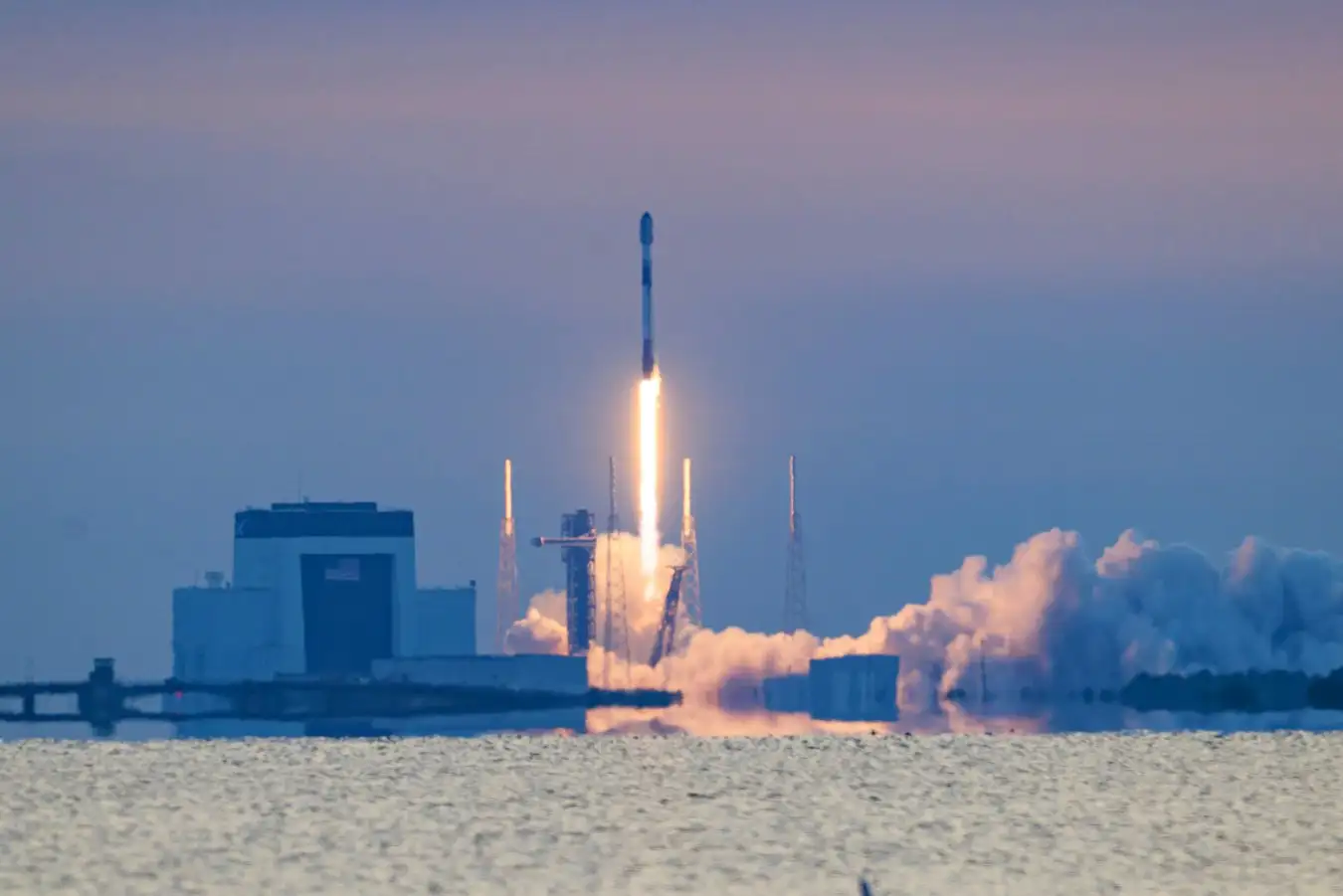
SpaceX Falcon 9 Rocket Launches Starfall Capsule
Credit: Jennifer Briggs/ZUMA Presswire/Shutterstock
SpaceX successfully launched a revolutionary Starfall delivery system today, sending a demo capsule into low Earth orbit. While details about upcoming missions remain sparse, SpaceX has indicated that Starfall is designed to transport cargo like pharmaceutical compounds and semiconductor materials from space.
The Starfall capsule lifted off this morning at approximately 6:50 AM local time (11:52 BST) aboard a Falcon 9 rocket from Cape Canaveral, Florida. It successfully landed on a floating platform in the Atlantic Ocean.
What is Starfall’s Purpose?
Despite limited public disclosures, the U.S. Federal Aviation Administration (FAA) review published in May outlines that Starfall aims to facilitate the “transportation and delivery of goods through space.” SpaceX asserts that the mission will provide reliable access to microgravity environments for scientific and manufacturing purposes. The FAA has also approved two associated re-entry landings for this demonstration mission.
Unlike SpaceX’s crewed vehicles that ferry astronauts to the International Space Station, Starfall’s spacecraft is solely for cargo. This capsule, a black cylinder lacking windows, measures about 3 meters in diameter, stands under 1 meter tall, and can carry a payload of up to 1 ton. It consists of two sections designed to separate upon re-entry. The upper section houses the payload, while the carbon fiber heat shield below contains compressed gas for safe cargo transport back to Earth.
Launch Details
Following the Falcon 9 rocket’s launch, the booster made a successful landing on a floating platform. However, SpaceX has not yet provided further updates regarding the Starfall capsule’s status in space, including its expected orbital duration or the planned splashdown location in the Pacific Ocean, 800 miles off California’s coast.
Is SpaceX Leading the Way?
Other smaller companies, such as American Varda Space Industries (VSI) and Welsh Space Forge, are also venturing into manufacturing materials in low Earth orbit. VSI aims to produce medicines in orbit for transport to Earth, while Space Forge focuses on semiconductors. However, their operations are significantly smaller compared to Starfall.
SpaceX’s contract with the U.S. military suggests that Starfall could complement the DoD’s Rocket Cargo initiative, which leverages SpaceX’s Starship rockets for rapid supply deliveries. Starfall might play a crucial role in fulfilling smaller delivery needs. Additionally, the military collaborates with numerous companies, including Jeff Bezos’ Blue Origin and New Zealand’s Rocket Lab, to explore cargo transport from space.
Topic:
Source: www.newscientist.com