


Close Menu
HitechubHitechub
    What's Hot
    Science

    How Pursuing Big Dreams Can Lead to Exhaustion and Emotional Strain

    Science

    The Impacts of El Niño: Potential Negative Effects and What Lies Ahead

    Science

    Japan’s Eastward Shift: How the 2011 Earthquake Changed the Landscape

    Important Pages:
    • About Us
    • Privacy Policy
    • Terms & Conditions
    Facebook X (Twitter) Instagram Pinterest
    Facebook X (Twitter) Instagram
    HitechubHitechub
    Thursday, June 25
    • Technology
      1. AI
      2. Gadgets
      3. View All

      This is the most popular CEO in the world

      Sectors in which “Chat-GPT” is most often used

      AI Pioneer Expresses Concern About Potential for AI to Surpass Humanity

      Artificial intelligence has begun to “swallow” professions

      What’s new in Android 14

      Europeans have about 700 million old mobile phones in their drawers

      Here’s how you can tell if your phone is being tapped

      “Sneaker X” – computer case in the shape of a sneaker

      Russian Gamers Unite to Prevent Nuclear War: Join the Fight Online

      Challenges of Space Travel: Why Journeying to Space is So Difficult

      NASA Astronaut Casts Historic Vote from Space

      Discover the Future of Comfort: What If You Could Wear a Chair?

    • Science
      1. Space
      2. Wheels
      3. View All

      Galaxies in the universe are growing more slowly than they should

      “Espace” presented the new lander “Apex 1.0”

      The largest asteroid sample ever collected has arrived on Earth

      (VIDEO) Incredible flight of the Parker Solar Probe

      Toyota wants to make a new generation battery with a range of up to 1,200 km

      Meet Toyota’s lunar “baby” that could make exploring the Moon easier

      Microlino – Is this the perfect city car?

      Alfa Romeo 4C gets an electric successor

      Watch This Spine-Chilling AI Robot That Never Stops Chasing You!

      TESS Uncovers the Most Distorted Exoplanet Ever Detected

      Ancient DNA Reveals Neanderthal Life’s Last Chapter in Northwestern Europe

      Breakthrough in Cancer Research: Antarctic Creature Holds Promise for New Treatments

    HitechubHitechub
    Home » Ancient DNA Reveals Neanderthal Life’s Last Chapter in Northwestern Europe
    Science

    Ancient DNA Reveals Neanderthal Life’s Last Chapter in Northwestern Europe

    Share Facebook Twitter Pinterest WhatsApp
    Share
    Facebook Twitter LinkedIn Pinterest WhatsApp

    Recent research has unveiled genetic insights from 27 Neanderthals residing in Belgium and France, approximately 52,500 years ago, offering a deeper understanding of how our closest relatives organized their lives before their extinction.

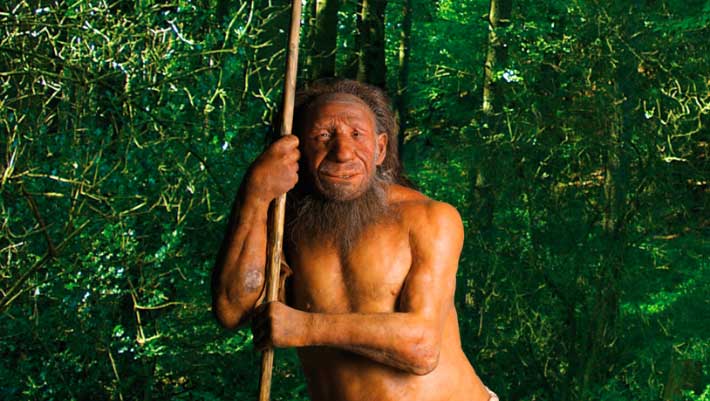
    Neanderthal reconstruction. Image credit: Neanderthal Museum.

    Neanderthals inhabited Europe and western Asia for a span ranging from approximately 430,000 to 40,000 years ago.

    The high-quality nuclear genomes of four Neanderthals have unveiled significant insights into their diversity, population history, and interactions with early modern humans.

    More recent Neanderthals from Croatia, dating back 45,000 years, exhibited greater genetic diversity and less evidence of recent inbreeding compared to older Neanderthals from the Denisova and Chagyrskaya caves, which are 120,000, 110,000, and 60,000 years old, respectively.

    Furthermore, low coverage of the nuclear genomes from the four late Neanderthals suggests a close genetic similarity among individuals from distant regions, such as Mezmaiskaya in the Caucasus and Les Côtés in France, hinting at potential long-distance connections among late Neanderthals.

    Alba Bossams-Mesa, a postdoctoral researcher at the Max Planck Institute for Evolutionary Anthropology, stated, “Until now, we had only four high-quality Neanderthal genomes and limited low-quality genomes, making it challenging to address key questions about Neanderthal regional diversity.”

    “By generating genetic data from multiple individuals in present-day Belgium and France, we can now more thoroughly investigate late Neanderthal populations.”

    In a groundbreaking study, Bossoms Mesa and her team recovered genetic material from 26 Neanderthals in Belgium and France.

    They also sequenced a high-quality genome from a 45,000-year-old Neanderthal male discovered in Belgium’s Goyet Cave, marking it as the fifth detailed Neanderthal genome ever produced.

    While prior studies of Neanderthals from the Altai region of Siberia indicated signs of interbreeding among kin, Belgian Neanderthals showed no such genetic traits.

    The research further revealed that most Neanderthals in Belgium and France were more closely related to one another than to their contemporaneous counterparts in other European regions, indicating distinct regional populations that maintained broader connections across the continent.

    Dr. Benjamin Peter of the Max Planck Institute for Evolutionary Anthropology noted, “Our findings suggest that situations observed in one locale cannot be universally applied to all Neanderthals.”

    “Late Neanderthals from northwestern Europe seemed to belong to an interconnected regional population, rather than a small, isolated group that frequently interbred among close kin.”

    Despite modern humans arriving in the region approximately 47,000 years ago, no traces of recent human DNA were detected in the Neanderthal genome.

    “Our results highlight a notable asymmetry,” Bossams-Mesa added.

    “While we consistently find that early modern humans carry Neanderthal ancestry, there is currently no clear evidence that late Neanderthals possessed any recent modern human lineage.”

    Scientists also explored the hypothesis that Neanderthals gradually weakened due to accumulating genetic defects.

    Comparative studies between early and late Neanderthals indicated no significant rise in harmful mutations over time, challenging the idea that genetic deterioration led to their extinction.

    The ultimate factors determining the fate of Neanderthals remain an open question.

    This study, however, demonstrates that the last few millennia in northwestern Europe were not characterized by biological collapse.

    Dr. Janet Kelso from the Max Planck Institute for Evolutionary Anthropology emphasized, “This study underscores the potential of ancient DNA to uncover variations within Neanderthals at a finer scale than previously achievable.”

    “Rather than regarding Late Neanderthals as a single population facing decline, we are beginning to appreciate a more intricate picture of regional diversity, connectivity, and population history.”

    Further details can be found in the study featured in this week’s issue of Nature.

    _____

    A. Bossams Mesa et al. Genetic diversity of late Neanderthals in northwest Europe. Nature, published online June 24, 2026. doi: 10.1038/s41586-026-10625-1

    Source: www.sci.news

    Share. Facebook Twitter Pinterest LinkedIn WhatsApp
    Previous ArticleBreakthrough in Cancer Research: Antarctic Creature Holds Promise for New Treatments
    Next Article TESS Uncovers the Most Distorted Exoplanet Ever Detected

    Related Posts

    Science

    Watch This Spine-Chilling AI Robot That Never Stops Chasing You!

    Science

    TESS Uncovers the Most Distorted Exoplanet Ever Detected

    Science

    Breakthrough in Cancer Research: Antarctic Creature Holds Promise for New Treatments

    Science

    How Daily Bright Light Exposure Can Help Prevent Dementia

    Science

    Instant Stress Relief Techniques: Quick Tips for Finding Peace Instantly

    Science

    Discover the Top 17 Must-Read Science Books of 2026

    Science

    Ancient Philosophers’ Lost Writings Rediscovered from Unreadable Scrolls

    Science

    How Phages Could Enhance Vaccine Immunity While Targeting Cancer Cells

    Add A Comment
    Leave A Reply Cancel Reply

    Stay In Touch
    • Facebook
    • Twitter
    • Instagram
    • Pinterest
    Top Picks
    Science

    Enhancing Your Aging Microbiome: Are Prebiotics, Probiotics, and Postbiotics the Key?

    Can prebiotics, probiotics, and postbiotics help restore gut microbiome balance? Joshua Earl/Unsplash I often find…

    Experts Baffled: Unexplained Activity in Mini-World Near Pluto

    Earth’s Complex Life May Thrive for 500 Million More Years Than Previously Anticipated

    Exploring the Quantum Illusion of Time Through the World of Toys

    Experts Warn: California Faces Historic Risk of Major Earthquake

    Most Popular
    Space

    The largest asteroid sample ever collected has arrived on Earth

    Science

    How Parenting Boosts Brain Health for Moms and Dads: Long-Term Benefits

    Categories
    • AI (13)
    • Gadgets (10)
    • Science (363)
    • Space (9)
    • Technology (37)
    • Wheels (9)
    Our Picks
    Science

    Jupiter’s Electron Acceleration Near-Light Speed: Unveiling the Origins of Cosmic Rays

    Science

    Transforming Polystyrene with Sunlight and Sulfur: Innovative Upcycling Techniques – Sciworthy

    © 2026 Hitechub.
    • Home
    • About Us
    • Privacy Policy
    • Terms & Conditions

    Type above and press Enter to search. Press Esc to cancel.

    We are using cookies to give you the best experience on our website.

    You can find out more about which cookies we are using or switch them off in .

    Ad Blocker Enabled!
    Ad Blocker Enabled!
    Our website is made possible by displaying online advertisements to our visitors. Please support us by disabling your Ad Blocker.
    Go to mobile version
    Hitechub
    Powered by  GDPR Cookie Compliance
    Privacy Overview

    This website uses cookies so that we can provide you with the best user experience possible. Cookie information is stored in your browser and performs functions such as recognising you when you return to our website and helping our team to understand which sections of the website you find most interesting and useful.

    Strictly Necessary Cookies

    Strictly Necessary Cookie should be enabled at all times so that we can save your preferences for cookie settings.