


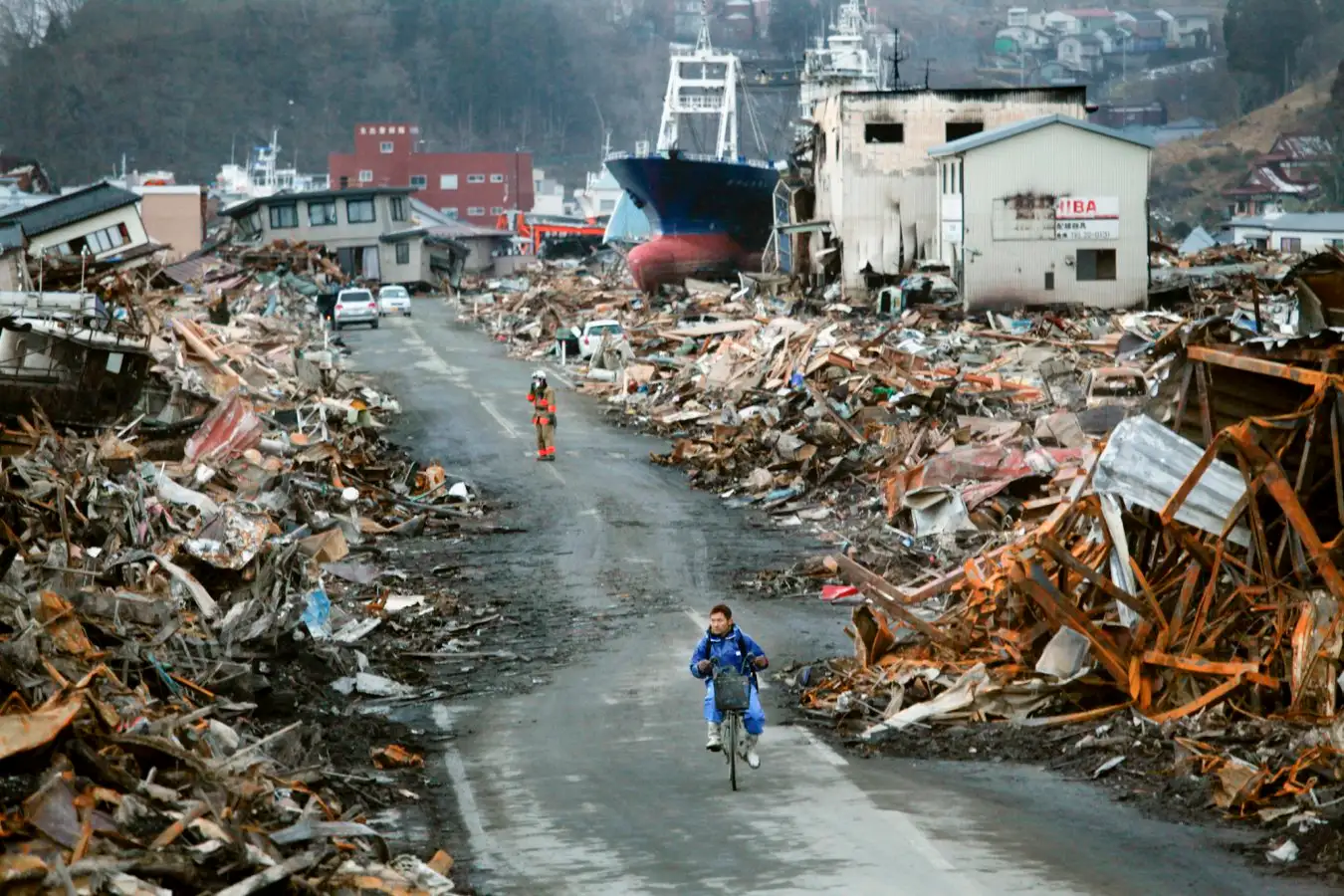
Kesennuma Fishing Port After the 2011 Tohoku Pacific Coast Earthquake
Carolyn Cole/Los Angeles Times via Getty Images
Just 15 minutes after the massive 9.0 magnitude Tohoku earthquake struck on March 11, 2011, nearly all of Japan experienced a shift of approximately half a centimeter eastward. This movement was initiated by extremely powerful seismic waves that traveled 5,800 kilometers deep into the Earth’s core and bounced back.
While a five-millimeter shift may appear trivial compared to the widespread devastation caused by the earthquake—including the catastrophic meltdown of three reactors at the Fukushima Daiichi nuclear power plant and the devastating 40-meter tsunami—it indicates a significant geological event.
This geographical shift occurred across an impressive distance of 3,000 kilometers, almost seven times the length of the earthquake’s primary rupture line and exceeding previous measurements of tectonic slip.
Park Sun Young, a researcher at the University of Chicago, highlights the abnormal timing and pattern of the shifts: “Our observations show that no typical earthquake was happening at that time, and a corresponding 5-millimeter eastward movement occurred almost simultaneously throughout most of Japan.”
This widespread movement was measurably extensive, not only from north to south within Japan but also reaching into adjacent oceanic regions.
As Park elaborates, “This is not just localized movement; the eastward shift is ubiquitous across Japan, particularly in areas containing GPS stations. If we had equally dense instrument coverage on the ocean floor, we could further quantify this offshore movement, but the changes have been recorded almost uniformly across land in Japan.”
Through an analysis of comprehensive GPS and seismic data collected during this disaster, Park and colleagues uncovered the triggers for such monumental geological movements and explained why the rupture materialized 15 minutes post main shock.
Typically, earthquakes generate waves penetrating deep into the Earth’s layers, reflecting off the core; however, these waves usually weaken significantly by the time they resurface.
In the Tohoku case, the initial shock was so significant that it maintained strength even when it returned, causing tremors nationwide as four adjacent tectonic plates moved in synchronization.
As Professor Park notes, “The intense shaking from the initial Tohoku earthquake likely weakened the plate boundaries, making them more prone to movement once the nuclear reflection waves arrived.”
This phenomenon suggests a previously unidentified post-earthquake rupture mechanism. Park emphasizes the need to acknowledge potential seismic risks from waves that travel deeply after significant earthquakes, which could trigger subsequent earthquakes over extended distances.
In light of these findings, further research is critical to understand the implications of such seismic activity in other regions with similar geological configurations, says Robin Lee from the University of Canterbury in New Zealand.
“This study illustrates that large earthquakes can induce extensive delayed faulting within minutes, affecting a broader area than previously anticipated,” Lee concluded.
Related Topics:
Source: www.newscientist.com