


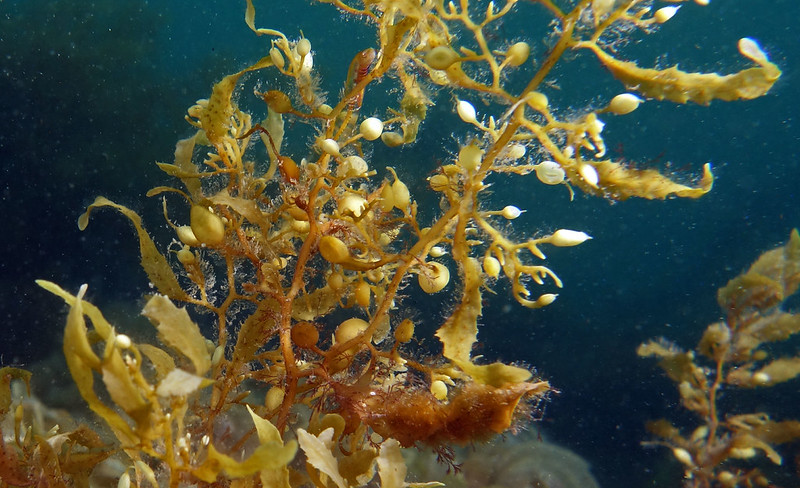
If you’ve ever swum in the ocean and encountered seaweed, you’ve likely come across Sargassum. This floating seaweed can rapidly multiply in coastal waters, significantly degrading water quality, disrupting ecosystems, affecting fisheries, and harming tourism. However, despite these challenges, scientists suggest that Sargassum may offer unexpected benefits.
It plays a role in extracting valuable metals known as rare earth elements (REEs).
Rare earth elements are categorized by their atomic weight and mass:
light rare earth elements
include cerium, praseodymium, and neodymium, while
middle rare earth elements
comprise gadolinium, terbium, and dysprosium. Finally,
heavy rare earth elements
consist of erbium, thulium, and ytterbium. These elements are essential in manufacturing magnets, electronic motors, wind turbines, spacecraft, and various high-tech devices. Traditional extraction methods, like open-pit mining and chemical processing, are invasive, leading to habitat destruction and toxic waste. Additionally, global access to REEs is limited, complicating importation. But what if we could extract these metals using more sustainable methods?
Researchers from Woods Hole Oceanographic Institution and the University of California, Los Angeles, have discovered that Sargassum has the potential to accumulate REEs and provide sustainable solutions. They harvested live Sargassum samples, rinsing them, storing them in sterile seawater, and aerating them under a 12-hour light/dark cycle to maintain their vitality. Another set of samples was dried under controlled outdoor conditions and stored in airtight containers before being rehydrated in seawater for three hours prior to experimentation.
Each experiment utilized 5 grams (approximately 0.2 ounces) of Sargassum, with mixtures containing nine rare earth elements (cerium, praseodymium, neodymium, gadolinium, terbium, dysprosium, erbium, thulium, and ytterbium) at varying total concentrations: 0.1 micromolar (μM), 11 μM, 100–110 μM, and 575-600 μM REE. Each experiment was conducted four times—twice with fresh seaweed and twice with rehydrated seaweed.
After one, three, and seven days, researchers extracted a gram (about 0.04 ounces) of seaweed from each solution to dissolve it in acid, releasing the absorbed rare earth elements. Two plasma-based methods were employed to analyze the concentrations of REEs in each seaweed sample and the remaining solution. The data were used to determine the bioconcentration factor, which measures how effectively seaweed absorbs rare earth elements from the environment.
Findings indicated that the bioconcentration factor of the raw seaweed exceeded 1,000 after seven days at a lower REE concentration (0.1 μM). For higher concentrations (11 μM), bioconcentration factors ranged from approximately 400 to 700. However, such REE levels proved toxic to fresh Sargassum, resulting in its decline two weeks later. Extremely high REE concentrations (100–600 μM) were immediately toxic, causing the seaweed to perish within a day.
The researchers concluded that once the seaweed dies, it loses the ability to actively uptake REEs into its tissues; instead, the elements can only accumulate on the surface—a process known as adsorption. This is akin to how powdered sugar adheres to a donut; once coated, no more sugar sticks. Consequently, the amount of REEs absorbed was limited. For raw seaweed samples, the bioconcentration factor remained below 250, even at the highest REE concentrations. In contrast, hydrated Sargassum showed decreased consumption of REEs at low concentrations, without toxicity, while continuing to accumulate at higher concentrations.
Finally, the team compared Sargassum to a conventional industrial method for accumulating REEs, known as activated carbon. Due to its rich surface area and high porosity, activated carbon readily binds with rare earth elements. In a 0.1 μM REE solution, both materials accumulated similar amounts of REEs. However, at a concentration of 575–600 μM, Sargassum absorbed nearly twice as much rare earth elements as activated carbon, particularly for heavy rare earth elements.
The research team concluded that Sargassum acts as a natural hyperaccumulator, effectively concentrating REEs. They recommend future studies to assess Sargassum’s performance in natural environments, as successful implementation could facilitate the accumulation of rare earth elements from wastewater, including mine drainage or other high-REE water sources. This sustainable approach could expand global access to valuable metals while managing toxic algal blooms.
Post views:
33
Source: sciworthy.com