


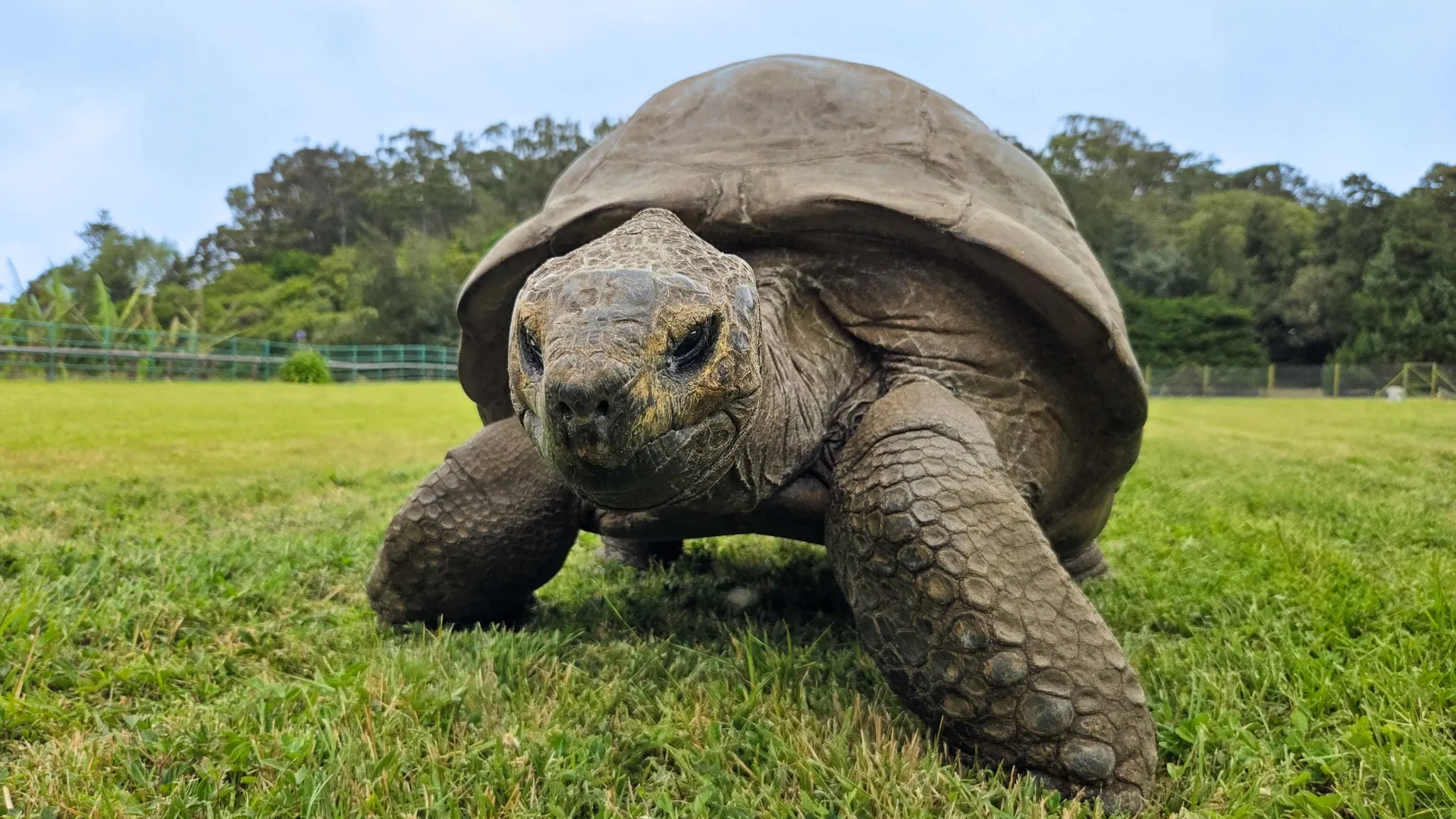
Estimated to be 194 years old, Jonathan the giant tortoise is believed to have lived longer than any other known land animal. Scientists studying his exceptional lifespan have identified genetic clues that may help explain how he remained remarkably resilient for nearly two centuries, including variants linked to DNA repair, reduced inflammation, insulin regulation and cancer suppression.
Genetic protection against aging
The findings suggest that Jonathan’s longevity is not due solely to inherited genes. His body also appears to avoid some of the genetic changes that typically accumulate with age, helping preserve essential biological functions.
In a study published in Science Advances, researchers identified 287 distinctive genetic variants associated with protection against the effects of aging. These variants influence several important processes, including repairing damaged DNA, limiting inflammation, regulating insulin activity and suppressing cancer.
Jonathan is an Aldabra giant tortoise (Aldabrachelys gigantea) believed to have hatched in 1832. He was already alive during the lifetimes of Charles Darwin and Queen Victoria. He is currently recognized as the oldest living giant tortoise and the oldest known living land animal.
A surprisingly youthful epigenome
One of the most unexpected findings came from examining Jonathan’s epigenome—the system of chemical markers that helps determine which genes are switched on or off. These regulatory mechanisms typically change as animals age, potentially disrupting cellular processes and contributing to age-related decline.
To investigate how Jonathan’s biology had changed over time, the researchers compared his epigenome with that of a young giant tortoise from the same species.
They found that regulatory mechanisms involved in DNA repair and metabolism had remained surprisingly stable. Despite Jonathan’s advanced age, the regulation of these genes was very similar to that observed in much younger tortoises.
The result suggests that stable gene regulation may be one factor helping giant tortoises withstand the biological stresses associated with extremely long-term aging.
The study is also the first to examine the epigenome of giant tortoises. The project was led by Karel, a US nonprofit organization focused on longevity research. The scientists believe that studying animals capable of surviving for centuries could provide new insights into the mechanisms behind exceptionally long lifespans.
“In Jonathan, we found that gene regulators involved in energy production and DNA repair have remained incredibly stable for almost two centuries,” said Dr Justin Gerlach of Peterhouse, University of Cambridge, who worked on the study.
He added: “Few creatures teach us as much about aging as the giant tortoises of the Galapagos and Seychelles. It’s a real privilege to work with really old giant tortoises. You get the feeling that they’re not just research subjects, but collaborators.”
Gerlach has spent decades researching the ecology and conservation of giant tortoises. However, this project was the first investigation into the biological mechanisms that may be responsible for their extraordinary longevity.
Could giant tortoise DNA inform human longevity research?
Researchers hope that Jonathan’s genetic traits could eventually help scientists develop approaches to slowing age-related decline and preventing chronic disease in humans.
Identifying the biological systems that allow some animals to remain healthy for unusually long periods could reveal protective mechanisms with potential applications in future medical treatments.
“Nature has already solved the puzzle of aging in surprising ways, and Jonathan’s genome provides a blueprint for cellular resilience,” said Stephen Clark, MD, founder of Karel and senior author of the study.
He added: “Our goal is to take these evolutionary insights and instantly translate them into practical and affordable treatments for everyday people. Aging is the greatest risk factor for nearly every chronic disease we face, and through the generosity of our philanthropic partners, we can democratize access to longevity care.”
Although the findings offer intriguing clues about exceptionally long lifespans, further research will be needed before they can be translated into treatments for humans.
Nearly two centuries on a remote Atlantic island
Jonathan has spent most of his unusually long life in St. Helena, a British overseas territory in the South Atlantic. He lives on the grounds of Plantation House, the official residence of the island’s governor.
He arrived in St. Helena from the Seychelles 144 years ago as a gift to the governor. Jonathan was already fully grown when he reached the island, providing further evidence of his remarkable age.
The giant tortoises of the Galapagos and Seychelles Islands are among the last surviving representatives of a group of giant reptiles that once played an important ecological role on many of the world’s islands.
Today, these extraordinary survivors give scientists a rare opportunity to investigate how evolution has enabled certain animals to withstand the effects of time. Jonathan’s unusually stable gene regulation offers a particularly valuable window into the biology of aging and the possibility of extending healthspan.
Source: www.sciencedaily.com