


The global shipping industry needs scalable low-carbon marine fuels to achieve the International Maritime Organization’s target of net-zero greenhouse-gas emissions by 2050. Yet the available alternatives remain limited. Batteries can power ferries and harbour vessels, but they are generally impractical for long-distance shipping1. Sustainably produced methanol is difficult to scale2. Ammonia is toxic, while its production and distribution can generate significant pollution3. Hydrogen is bulky and challenging to store safely on ships4.
Against this backdrop, nuclear propulsion for commercial ships is attracting renewed attention. Nuclear energy produces no direct carbon dioxide emissions during operation and could eliminate the need to store thousands of cubic metres of fuel on board, creating more room for cargo. Nuclear-powered vessels could also travel faster and avoid refuelling stops, potentially reducing voyage times. For ship owners, the technology could cut annual marine-fuel and carbon-tax costs by tens of millions of dollars per vessel (see go.nature.com/4hs7u3r).
China reins in the spiralling construction costs of nuclear power — what can other countries learn?
A new generation of nuclear-powered commercial vessels could enter service within the next decade as interest from governments and industry grows. In May, the US Maritime Administration requested public input on a commercially viable and scalable small modular reactor system for maritime applications. In 2028, London-based Core Power plans to open an order book for mass-produced floating nuclear power plants, with full commercialization expected in the mid-2030s and nuclear-powered civil ships to follow. In China, state-owned Jiangnan Shipyard in Shanghai plans to build the world’s first thorium-powered container ship by 2035.
A 2023 US report estimates that several hundred nuclear-powered merchant vessels — primarily container ships, large bulk carriers and oil tankers — could operate worldwide by 2050 if nuclear propulsion captures a 2–5% market share5 (see ‘Commercial shipping goes atomic’). However, a commercial ship carrying a reactor is effectively a mobile nuclear facility. It must therefore be protected against hijacking, grounding, collision, sabotage and missile attacks.

Source: Ref. 5
Before nuclear ships return to commercial routes, governments must establish robust international rules. Engineers, nuclear regulators, maritime authorities, port operators and shipping companies will need to ensure that these vessels remain safe, secure and controllable throughout their lifetimes. Existing regulations, however, are outdated and fragmented.
Two major international initiatives are now under way. In late August, the International Atomic Energy Agency (IAEA) plans to bring nuclear and maritime regulators together in Washington DC to launch its Atomic Technologies Licensed for Applications at Sea (ATLAS) initiative. In June 2025, the International Maritime Organization (IMO) began updating its 1981 Code of Safety for Nuclear Merchant Ships and expects to adopt a revised code in 2030.
The IAEA and IMO should connect reactor licensing, ship certification, port access and emergency response within a single international framework. Without coordination, companies, ports and countries could develop incompatible systems — increasing the risk of confusion and a nuclear accident at sea.
From military nuclear vessels to commercial shipping
Nuclear power has been used at sea for decades, supplying propulsion for submarines, aircraft carriers and icebreakers. Compact reactors with shielding, rigorous maintenance programmes and extensive crew training have operated in demanding maritime conditions for at least 70 years, including beneath polar ice.
The US Navy operates one of the world’s largest nuclear fleets. By December 2024, it had 77 nuclear-powered warships — 66 submarines and 11 aircraft carriers — representing roughly half of the global nuclear-powered naval fleet. Since 1955, US nuclear vessels have travelled approximately 300 million kilometres.
China, France, India, Russia and the United Kingdom also operate nuclear-powered submarines, while Russia maintains a fleet of civilian nuclear icebreakers. The global nuclear naval fleet is smaller than it was at the end of the Cold War: more than 400 nuclear submarines were in operation or under construction in 1989, compared with around 150 in service today.
Forty years after Chornobyl, more nuclear disasters are inevitable — plan for them
Yet naval experience also highlights the challenges of applying nuclear technology to commercial shipping. A military nuclear programme operates within a sovereign system: one country, or a close group of allied countries, can design and build the reactor, provide maintenance infrastructure, train crews and accept responsibility for safety.
Commercial shipping is far more complex. A vessel may be designed in one country, built in another, registered under a third flag, insured in a fourth, operated through numerous foreign ports and eventually dismantled in a country with weaker safety standards6.
Previous attempts to commercialize nuclear merchant ships failed to achieve widespread success. Only four nuclear-powered civil merchant vessels have been built. Launched in 1959, the US NS Savannah was developed as part of President Dwight Eisenhower’s Atoms for Peace programme. Although it travelled internationally and visited numerous ports, the complex permit process for port calls and berthing made it commercially impractical as a cargo ship.
West Germany’s Otto Hahn, launched in 1964, transported ore worldwide for nine years. It travelled 1.2 million kilometres and visited 33 ports in 22 countries before its reactor was removed and the vessel converted to conventional propulsion in 1982.
Japan’s Mutsu, launched in 1969, suffered a major public-relations setback in 1974 when a shielding defect allowed neutrons to escape during a reactor test. Although the incident was not catastrophic, it generated local opposition and kept the vessel out of service for years.
Russia’s Sevmorput entered service in 1988 and spent decades transporting cargo along the Northern Sea Route in the Arctic. It was the only nuclear-powered merchant ship still operating in the 2020s, having remained in service as a state-owned, ice-capable cargo vessel.
Advanced nuclear reactor technologies for ships
Most early nuclear ships used low-enriched uranium fuel, similar to that used in conventional civilian nuclear power stations. Today, developers are considering a wider range of marine nuclear reactor technologies7. Options include light-water reactors, high-temperature gas-cooled reactors, lead-cooled fast reactors, molten-salt reactors and heat-pipe reactors. Several other experimental designs are also being assessed.
A broader technology portfolio also creates additional safety and regulatory questions. Every nuclear-powered ship will require reactor licensing, insurance, trained crews, maintenance, port approval, emergency planning, decommissioning and radioactive-waste management. Even the final disposal of the Savannah remains an unresolved regulatory issue. Some proposed business models involve leased reactor modules, remote monitoring, centralized refuelling and centralized decommissioning. These arrangements could reduce operating costs, but they do not remove the need for comprehensive ship-safety systems.

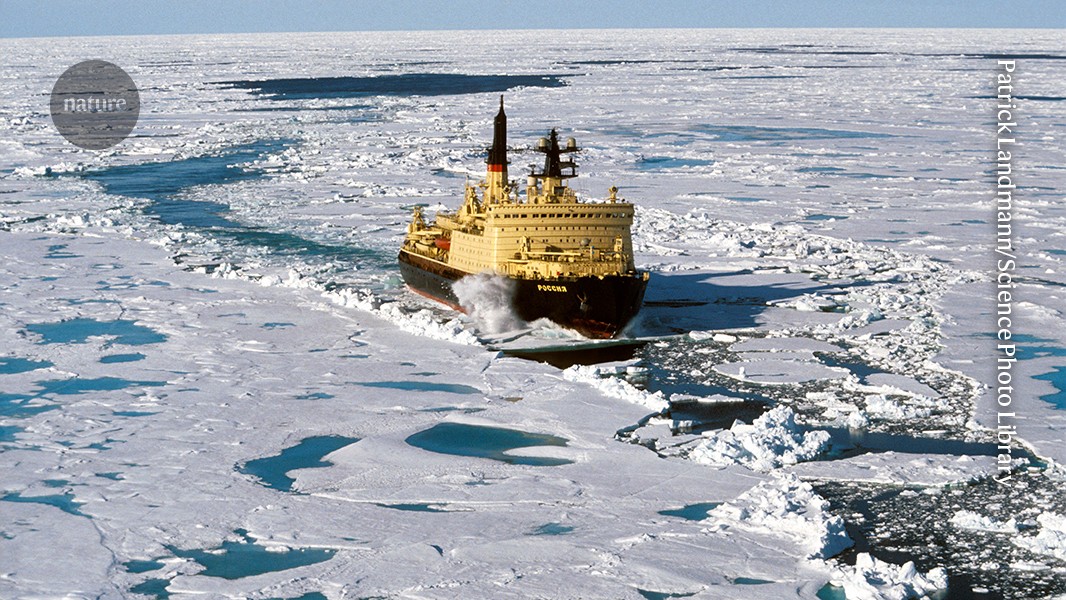
One of two nuclear reactors on board the Russian ship Rossiya. Credit: Patrick Landmann/Science Photo Library
Military history demonstrates how equipment failures and poor planning can escalate. Soviet nuclear submarines experienced loss-of-coolant accidents, unexpected power surges and reactor-core damage. On the K-19 in 1961, emergency repairs to restore reactor cooling exposed sailors to lethal radiation. On the K-27 in 1968, an accident involving a liquid-metal-cooled reactor caused fatal radiation exposure. In 1985, a power surge during refuelling aboard the K-431 at Chazhma Bay near Vladivostok triggered a steam explosion, killing several workers and contaminating the surrounding area.
New reactor designs could reduce certain hazards, particularly those associated with high-pressure coolant systems. Low-pressure operation, sealed reactor cores, passive heat-removal systems and stronger containment structures may improve safety8. However, advanced designs generally shift rather than eliminate risks. A molten-salt reactor could avoid some high-pressure coolant accidents, but regulators would still need to determine whether salt corrosion can be controlled during long-term exposure to vibration. They would also need solutions for tritium, volatile fission products, radiation shielding and reliable removal of decay heat after shutdown.
Why port approval is also a nuclear safety issue
A nuclear-powered vessel will need a reactor licence, maritime safety certificates and authorization to enter ports. Each approval involves different technical assessments and legal responsibilities.
Nuclear regulators focus on reactor safety, radiation protection and nuclear security. The flag state must assess seaworthiness and crew safety. Port authorities are primarily concerned with whether the ship can enter a harbour, berth, unload cargo, take refuge or remain in port without endangering nearby communities.
For conventional vessels, these decisions are routine. For nuclear-powered ships, they are closely interconnected. If a harbour master, pilot, terminal operator, insurer or emergency-service provider cannot understand the safety assurances behind a reactor licence, that licence has limited practical value.
The Savannah’s port visits required extensive negotiations over berthing, transit, emergency procedures and public reassurance. The experience of the Mutsu showed that once public confidence is lost, technical arguments may not be enough to secure access: a nuclear ship may simply not be welcome.
Managing war, terrorism and maritime security risks
War, terrorism and geopolitical instability create additional risks for nuclear-powered commercial shipping. The financial case for nuclear vessels generally assumes orderly maritime traffic and peaceful cooperation between ports. Recent events in the Red Sea and Strait of Hormuz, including attacks and military strikes involving Iran, challenge that assumption. Iranian-supported Houthi forces in Yemen have repeatedly targeted commercial vessels with drones, missiles and unmanned boats. Restrictions and attacks in the Strait of Hormuz have also disrupted shipping and stranded thousands of seafarers.
A nuclear-powered ship travelling through such waters could face the same missiles, drones, boarding attempts and electronic interference as a conventional tanker — but the potential consequences would be far greater.
A marine reactor cannot detonate like a nuclear weapon because the fuel composition and reactor geometry make that impossible. Nevertheless, serious hazards remain. Damage to nuclear fuel, loss of shielding or coolant, hydrogen fires and steam explosions could release radioactive material or contaminated firefighting water. A damaged reactor vessel could also become a shipwreck that no port is prepared to accept.
Whether a missile strike would make a maritime reactor unsafe would depend on the location and severity of the damage. A strike on the bow or a container stack might not reach a reactor positioned near the centre of the vessel. However, an impact on the engine room, electrical switchboard, emergency generators, control cables or cooling-water intakes could disable systems needed for a safe shutdown.
A container fire could burn for days and prevent rescue teams from reaching the reactor compartment. Damage below the waterline could threaten the ship’s stability and flood areas that the reactor design assumes will remain dry.

Autonomous ships are on the horizon: here’s what we need to know
Follow-up attacks could endanger rescuers and emergency responders. A boarding party might evacuate the crew after the reactor has shut down, but radioactive decay heat would still need to be controlled. For nuclear-powered commercial shipping to become viable, regulators must therefore address not only routine operations but also extreme emergencies, hostile attacks and long-term responsibility for a damaged vessel.
Source: www.nature.com