


Predatory Wasps Are Taking Over Ant Plants in Borneo, Disrupting a 10-Million-Year Partnership
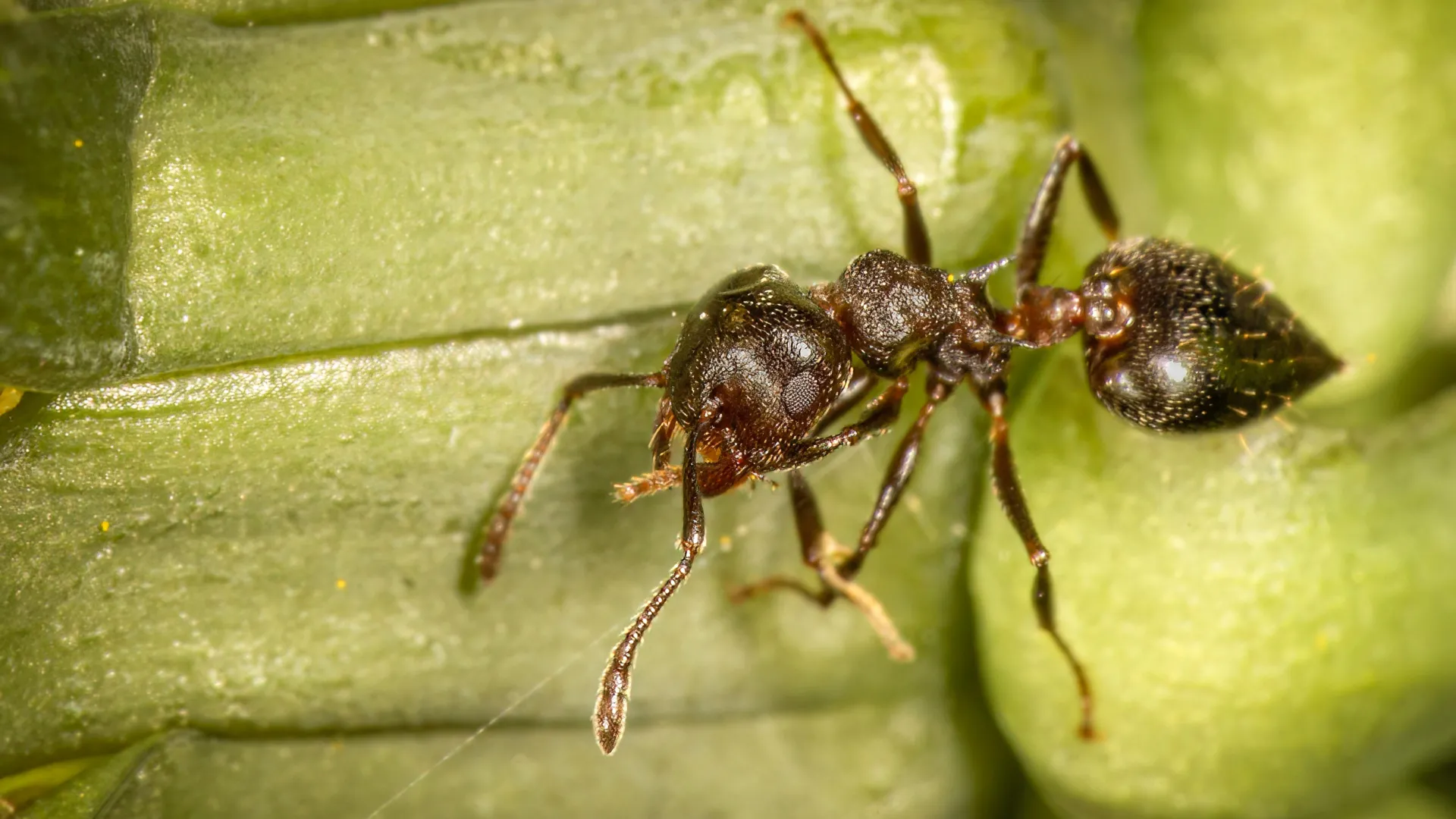
Scientists studying the tropical forests of Malaysian Borneo have discovered an unexpected shift in one of the region’s oldest ecological partnerships. An international team from Queen Mary University of London, the Royal Botanic Gardens, Kew, the Center for Biology of the Czech Academy of Sciences and other institutions found that predatory wasps are increasingly occupying the hollow stems of the tropical plant Macaranga pearsonii.
The findings, published in PeerJ, show that wasps are moving into structures that evolved specifically to shelter ant colonies.
For at least 10 million years, these “ant plants” have maintained a close mutualistic relationship with ants. The plants produce hollow chambers where ants can live and provide them with nutritious food bodies. In return, the ants actively defend their host plants against leaf-eating insects such as caterpillars.
Researchers now say there is evidence that this ancient relationship may be breaking down.
Predatory wasps turn ant shelters into nurseries
The team examined young Macaranga pearsonii trees growing in both logged forests and oil palm plantations. When the researchers dissected the plants, they discovered that some of the hollow chambers were being used by predatory wasps for a very different purpose.
Lead author Lestina explained:
“While investigating these ant plants, we noticed that many of the stems were hollow in an unusual way. When we opened them, we found them full of flies, and the flies had been eaten alive by wasp larvae. Adult wasps hunt flies, paralyze them and store them inside the plant’s cavities to feed the larvae.”
Rather than serving as shelters for ants, some of the plant chambers had become nurseries stocked with prey for developing wasp larvae.
The researchers also found a strong link between wasp occupancy and human-altered environments. Plants growing in oil palm plantations were much more likely to contain wasps than plants found in logged forests.
Trees occupied by wasps consistently had much smaller ant colonies. This pattern raises the possibility that wasps are replacing ants entirely, although the researchers say experiments are needed to determine whether that is actually happening.
Habitat disturbance may be helping wasps spread
Co-author Dr. Kulsum M. Husser explained:
“Human activities are changing habitats around the world, and these changes in species interactions are exactly what we would expect. We don’t yet know whether this wasp is native or invasive, but its prevalence is clearly linked to landscape disturbance.”
The discovery could have implications beyond the ants, wasps and individual plants involved.
Macaranga species are often among the first plants to establish in areas that have been cleared or damaged. If these plants lose their ant defenders, their health could suffer, potentially affecting the broader process of forest regeneration.
“If plants lose their defenses from ants and their health deteriorates, forest recovery after disturbance may be hindered,” Yusa added.
Ancient ecological partnerships can change over time
Senior author Dr. Feil, from Queen Mary University of London, said the disruption could eventually have evolutionary consequences.
“When the benefits of mutualism are disrupted, it can trigger long-term evolutionary changes. If wasps exploit these structures and the structures become less valuable to plants, plants may stop investing in them. These subtle, long-term effects of human activity are far less understood than direct biodiversity loss.”
The relationship between ants and tropical plants is just one of thousands of tightly connected ecological partnerships found in tropical ecosystems.
Other mutualistic relationships may also become unstable if human disturbance makes it easier for new “invaders” to enter them, even when those species are native. This could weaken plants’ natural defenses and change which species dominate within tropical forests.
The discovery provides an early warning that ecosystems can begin changing in subtle ways long before species disappear completely. In this case, the first signs are unfolding inside the hollow stems of tropical plants, where a partnership lasting millions of years may be beginning to crumble.
Source: www.sciencedaily.com