


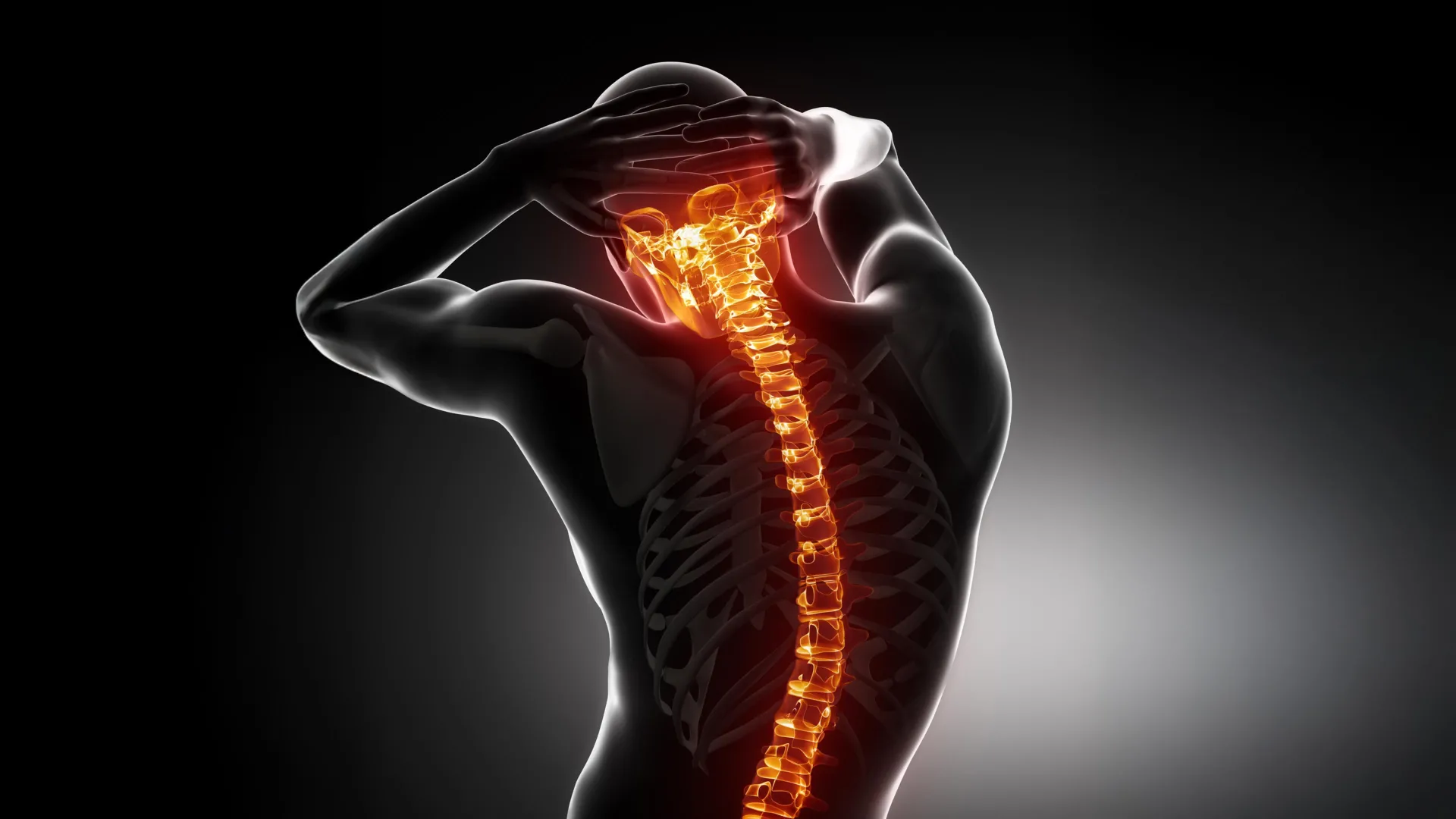
Changes in gene activity may play a role in neck and back pain by damaging the spinal discs that act as the body’s natural shock absorbers, new research suggests.
Researchers studying zebrafish found that disrupted gene activity can trigger mineral buildup in the spine. The process resembles abnormal bone formation and can cause spinal tissues to become unusually hard.
The findings identify several biological pathways that could become targets for future treatments for back pain and intervertebral disc degeneration (IVDD). They also suggest that zebrafish could be a valuable model for testing potential therapies.
What Causes Spinal Disc Degeneration?
Back pain affects most people at some point in their lives. One common cause is the gradual breakdown of the intervertebral discs, the flexible cushions positioned between the bones of the spine.
This condition, known as intervertebral disc degeneration, is widespread and places a significant burden on patients and health care systems. At present, no medications can stop or reverse IVDD, leaving surgery as the only long-term treatment option for some patients.
Genetic factors are known to influence a person’s risk of developing spinal disc degeneration. Previous studies have linked early-onset disc problems to a gene involved in collagen IX, a protein that helps hold together the structural fibers within spinal discs.
To understand how defects in this gene may contribute to disc disease, researchers from the Universities of Edinburgh and Bristol studied zebrafish bred without a working copy of the gene.
Zebrafish Showed Human-Like Spinal Disc Damage
As the zebrafish aged, they developed spinal abnormalities similar to those seen in people with disc disease. Their vertebrae fused together, while mineral deposits caused the tissues between the bones to become abnormally hard.
The researchers found that mineralization did not occur at the beginning of the disease process. Instead, a supportive scaffold within the developing spine first began to break down. Mineral deposits appeared only after this initial structural damage had taken place.
The team then analyzed gene activity in the zebrafish to identify biological processes that had become more or less active.
The analysis revealed disruptions in fat metabolism and the mTOR pathway, which helps regulate cell growth. The researchers also found changes in phosphate regulation and vitamin A signaling. All of these biological processes have been linked to abnormal mineral buildup in tissues.
Osteoporosis Drug Reduced Spinal Mineral Buildup
The study also identified several strategies that reduced spinal damage in the zebrafish.
A bisphosphonate, a class of bone-protecting drugs commonly used to treat osteoporosis, prevented minerals from accumulating in the spine. Spinal fusion was also reduced when the fish were given less food or treated with medicines that suppressed fat metabolism.
The researchers said the findings make phosphate regulation and fat metabolism particularly promising areas for the development of future treatments for spinal disc degeneration and back pain.
The study was funded by Arthritis UK and the Biotechnology and Biological Sciences Research Council (BBSRC) and published in the journal Communications Biology.
Research Could Lead to Treatments Beyond Surgery
Study lead Dr. Erika Kague, from the University of Edinburgh’s Institute of Genetics and Cancer, said: “For decades, surgery has been the only real answer for disc disease. By understanding the biology that drives the spine to harden, our zebrafish studies point to several ways of slowing it down, including a drug already used safely in patients. There’s more work to do, but for a condition that’s affected people for generations without a treatment in sight, this is super exciting.”
Dr. Caroline Aylott, Head of Research Delivery at Arthritis UK, said: “For the 9.5 million people across the UK living with back pain, this research brings fresh hope that potential new therapeutic approaches are on the horizon.
“We are proud to fund research that is unlocking the science behind the processes leading to spinal disc degeneration. Back pain is one of the UK’s most common conditions and has affected millions of people over generations. Dr. Erika Kague and her team at the University of Edinburgh have uncovered important genetic evidence that could help pave the way for new treatments, bringing us one step closer to a future in which fewer people have to live with the daily pain and challenges caused by back pain.”
Dr. Jef Grainger, Executive Director of Bioscience Advancing Knowledge at BBSRC, said: “This research shows how publicly funded discovery bioscience can generate the knowledge needed to address major health challenges. By revealing how healthy biological processes break down during age-related spinal disc degeneration, the study opens up promising avenues for future treatment development. It is a great example of how BBSRC-supported research helps turn scientific discovery into knowledge and innovation with the potential to improve people’s lives.”
Source: www.sciencedaily.com