


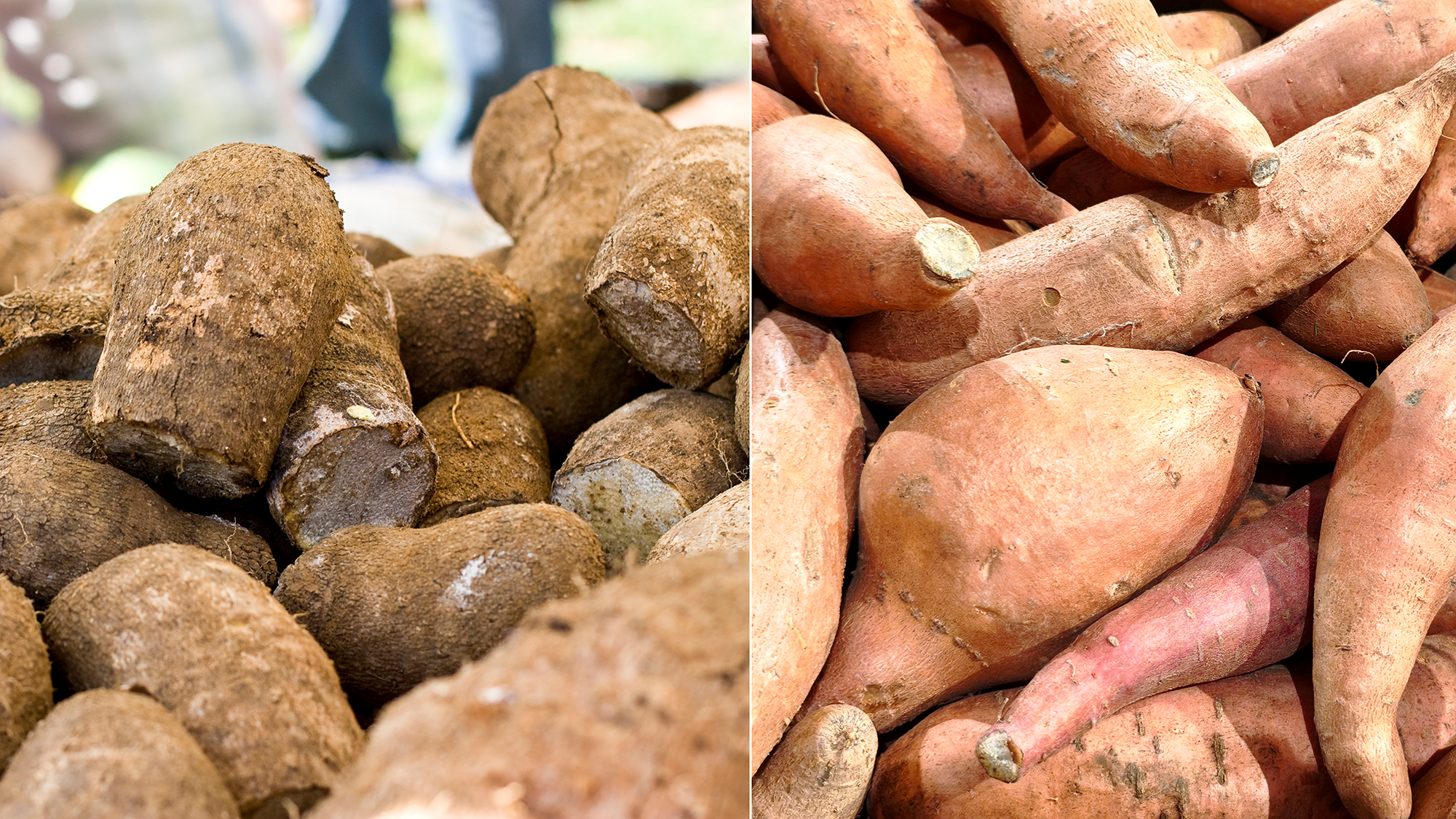
Yams and sweet potatoes are often mistaken for one another, especially in the United States, where the names are frequently used interchangeably. Despite their similar appearance and underground growth, yams and sweet potatoes are different plants with distinct botanical classifications, growing habits, flavors and nutritional profiles.
So, what is the difference between yams and sweet potatoes? The easiest ways to tell them apart are by their plant families, skin and flesh, texture, growing time and nutrient content.
“Botanically, sweet potatoes and yams are not closely related, as they belong to different plant families,” said Phillip Wadl, a research geneticist at the U.S. Vegetable Laboratory in Charleston, South Carolina.
Sweet potatoes (Ipomoea batatas) belong to the morning glory family, Convolvulaceae. True yams belong to the genus Dioscorea and the Dioscoreaceae family. Around 11 yam species are cultivated for food and income, according to Wadl.
Latest Videos From Live Science
How are yams and sweet potatoes different?
Yams and sweet potatoes also belong to different plant groups, or “cotyledon types,” according to Jeffrey Cole Denis Gregorie, a sweet potato specialist at the Sweet Potato Research Station in Chase, Louisiana.
Yams are monocots, meaning their embryos have one seed leaf, or cotyledon. Other monocots include grasses and lilies. Sweet potatoes are dicots, which have two embryonic seed leaves. Many fruits and vegetables, including grapes, squash, strawberries and tomatoes, are dicots.
The vegetables also store nutrients in different parts of the plant. Sweet potatoes develop enlarged storage roots, which are part of the root system. Yams produce tubers, which are enlarged underground stems that store nutrients.
The “garnet yam” is actually a sweet potato.
(Image credit: Sarawuth123 via Getty Images)
A sweet potato plant typically produces about four to 10 sweet potatoes, while a yam plant usually produces about one to five yams. Sweet potatoes generally mature in three to five months. Yams often require approximately six months to a year to reach maturity, according to Craig Yencho, a professor of horticultural science at North Carolina State University.
How to tell yams and sweet potatoes apart
Yams and sweet potatoes are easy to distinguish once you know what to look for. Sweet potatoes are usually shorter and more compact, with tapered ends. Yams are often longer and more cylindrical, and some have irregular, branching ends or “toes.”
Sweet potatoes come in several flesh colors, including orange, yellow, purple and white. Orange-fleshed sweet potatoes are the most common variety in the United States. Their skin is generally thin and smooth.
True yams often have thick, rough, bark-like skin. Their flesh may be white, purple or reddish. Ube, or Dioscorea alata, is a well-known purple yam commonly used in desserts such as ice cream, cookies and pound cake.
The difference between yams and sweet potatoes is also noticeable after cooking. Sweet potatoes are typically sweeter and have a moist, creamy texture, although some varieties are drier. Yams are generally starchier and drier, with an earthy, less-sweet flavor and a texture more similar to a standard potato.
Nutrition: Are yams or sweet potatoes healthier?
Both yams and sweet potatoes can be nutritious additions to a balanced diet, but their nutrient profiles differ.
Orange-fleshed sweet potatoes are especially rich in beta-carotene, a plant compound that the body can convert into vitamin A. Sweet potatoes also provide vitamin C, dietary fiber, potassium and several B vitamins.
Yams typically contain less beta-carotene than orange sweet potatoes. However, they provide potassium, vitamin C, manganese and dietary fiber. The nutritional value of either food can vary depending on the species, variety, serving size and cooking method.
Sweet potatoes are generally considered safe to eat raw or cooked. True yams should usually be cooked thoroughly, particularly wild varieties or yams that are not sold for commercial consumption. Some varieties contain compounds such as dioscorine that may be harmful when eaten raw. Cooking helps remove these compounds and makes the yams safer to eat.
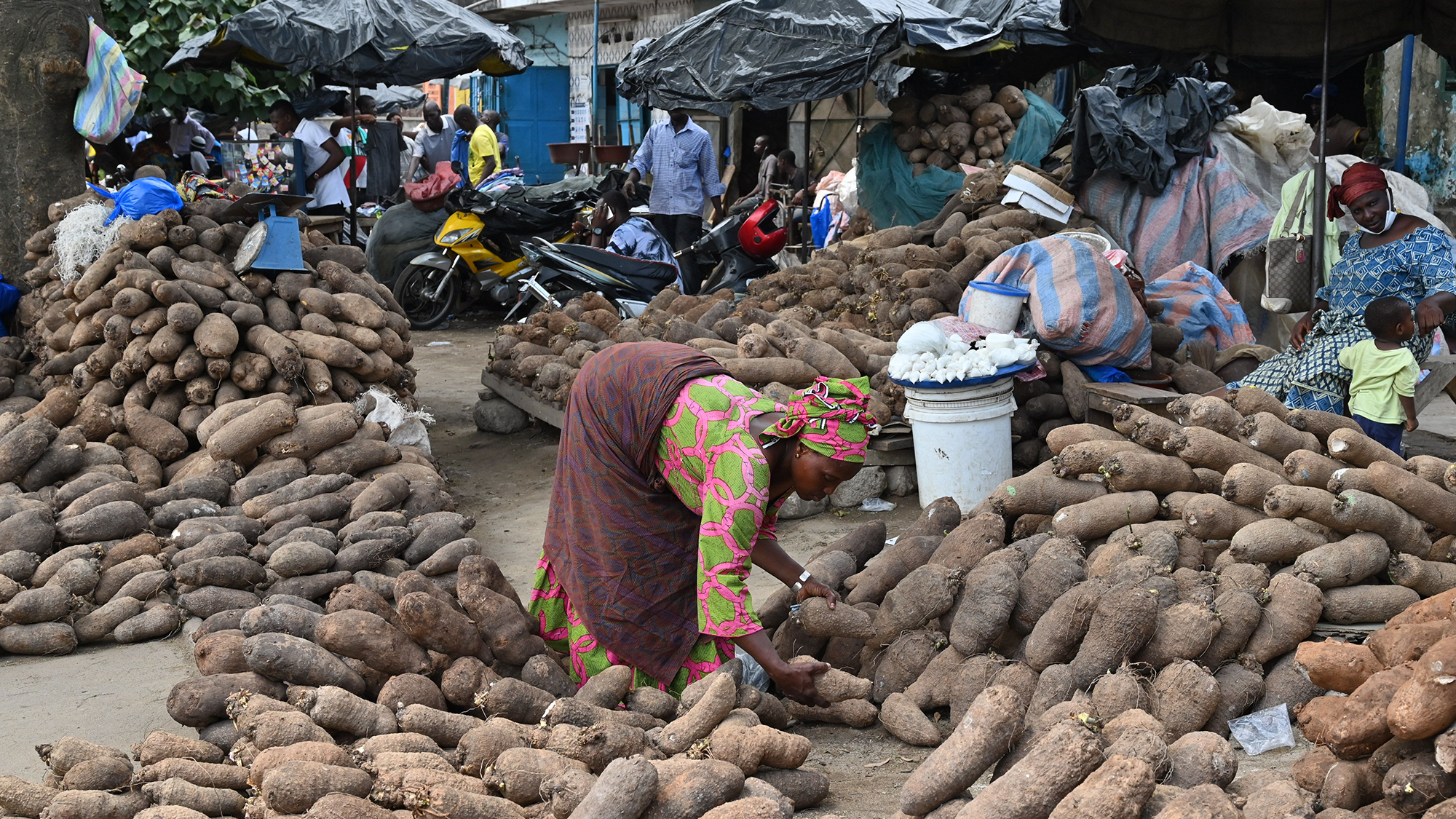
A woman sells yams at a market in Abobo, Ivory Coast.
(Image credit: ISSOUF SANOGO via Getty Images)
Why are sweet potatoes called yams in the United States?
If yams and sweet potatoes are different plants, why are sweet potatoes so often called yams in the U.S.?
The explanation is partly historical. Yams were an important food during the voyages of enslaved people from West Africa to the Americas. In North American plantation societies, African yams could not be grown easily, so sweet potatoes became a substitute staple food, said Judith Carney, a professor of geography at UCLA.
Because the two crops shared some similarities, the word “yam” gradually came to describe both foods in parts of the United States.
The U.S. sweet potato industry also adopted the term “yam” for marketing purposes. In supermarkets, the label is often used to distinguish moist, orange-fleshed sweet potatoes from drier, white-fleshed varieties.
As a result, products labeled “garnet yams” or “jewel yams” are usually not true yams. They are softer, sweeter varieties of sweet potatoes, according to the University of California, Davis.
True yams are available in many international markets in the United States. However, if you buy a “yam” at a typical U.S. supermarket, you are most likely buying a sweet potato.
Want to learn more about the foods you eat? Test your knowledge with our fruits and vegetables quiz!
TOPICS
Source: www.livescience.com