


New research led by Aston University suggests that New Zealand Manuka honey may help fight bacteria responsible for respiratory infections, including antibiotic-resistant strains such as MRSA. The honey’s antibacterial activity appears to result from the combined effects of methylglyoxal (MGO), sugars, and other compounds within the honey matrix.
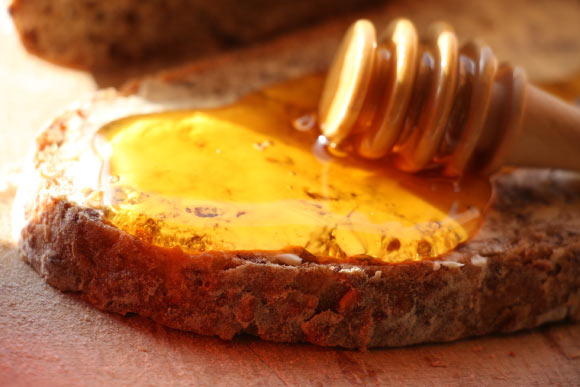
Allcott et al. Higher UMF grades in Manuka honey are associated with stronger antibacterial activity, indicating that its effects cannot be explained by sugar content or methylglyoxal alone. Image credit: Estelle Heights.
Manuka honey is produced by bees that pollinate the Leptospermum scoparium plant, commonly known as mānuka. It has attracted considerable attention in New Zealand and worldwide because of its broad-spectrum antibacterial properties, according to Aston University researcher Jonathan Cox and his colleagues.
“Unlike many other types of honey, Manuka honey’s antibacterial activity is primarily associated with non-peroxide mechanisms,” the researchers said.
Commercial Manuka honey is typically classified using the Unique Manuka Factor (UMF) grading system, which indicates authenticity and the presence of important marker compounds.
The independently certified UMF system includes tests for adulterants and measurements of methylglyoxal (MGO), leptosperin, and dihydroxyacetone.
UMF grades generally range from 5+ to 20+ or higher. Higher grades are typically associated with greater concentrations of MGO, although it has remained unclear whether a higher UMF consistently translates into stronger antimicrobial activity.
To investigate this question, the researchers worked with honey producer Comvita to test five grades of Manuka honey against respiratory pathogens, including methicillin-susceptible and methicillin-resistant strains of Staphylococcus aureus, as well as Klebsiella pneumoniae and Pseudomonas aeruginosa.
All five grades inhibited bacterial growth, and the antibacterial effect became stronger as the UMF grade increased.
Both tested Staphylococcus aureus strains, including drug-resistant MRSA, were particularly susceptible. They required substantially less Manuka honey to stop growth than the more resistant Gram-negative bacteria tested.
The researchers then examined why Manuka honey was more effective than ordinary sugar solutions. Honey contains a high concentration of sugars, which can draw water from bacterial cells through osmotic stress.
To determine whether this effect explained the results, the team compared Manuka honey with a sugar solution containing the same carbohydrate composition.
Although both solutions inhibited bacterial growth, Manuka honey was consistently more effective than sugar alone. This indicates that osmotic pressure is only one part of its antibacterial activity.
The researchers also prepared solutions containing MGO concentrations matching those naturally found in each Manuka honey grade. These MGO-only solutions showed antibacterial activity but were consistently less effective than the complete honey samples.
The difference was especially clear against the two Gram-negative bacteria, which were difficult to inhibit with MGO alone, even at relatively high concentrations.
Together, the findings suggest that Manuka honey’s antibacterial potency depends on the combined action of sugars, MGO, and other compounds within the honey matrix, rather than on a single active ingredient.
“Manuka honey is often viewed through the lens of one compound, MGO, but our findings show that the mechanism is considerably more complex,” Dr. Cox said.
“Premium Manuka honey appears to derive its antibacterial activity from multiple interacting factors. Understanding these interactions could help identify new approaches for addressing infectious diseases at a time of increasing antimicrobial resistance.”
“The complex nature of Manuka honey itself may offer valuable possibilities in the global fight against antimicrobial resistance. However, further research is needed to determine how it can be used most effectively.”
“Manuka honey has long been recognized for its distinctive antibacterial properties,” added Dr. Jackie Evans, Chief Scientific Officer at Comvita.
“This new study shows that MGO is only one part of the explanation.”
The results appear in the journal Microbiology.
_____
Gemma J. Allcott et al. 2026. Manuka honey’s unique manuka factor (UMF)-dependent antimicrobial activity against respiratory pathogens cannot be explained by sugar and methylglyoxal alone. Microbiology 172 (8); doi: 10.1099/mic.0.001746
Source: www.sci.news