


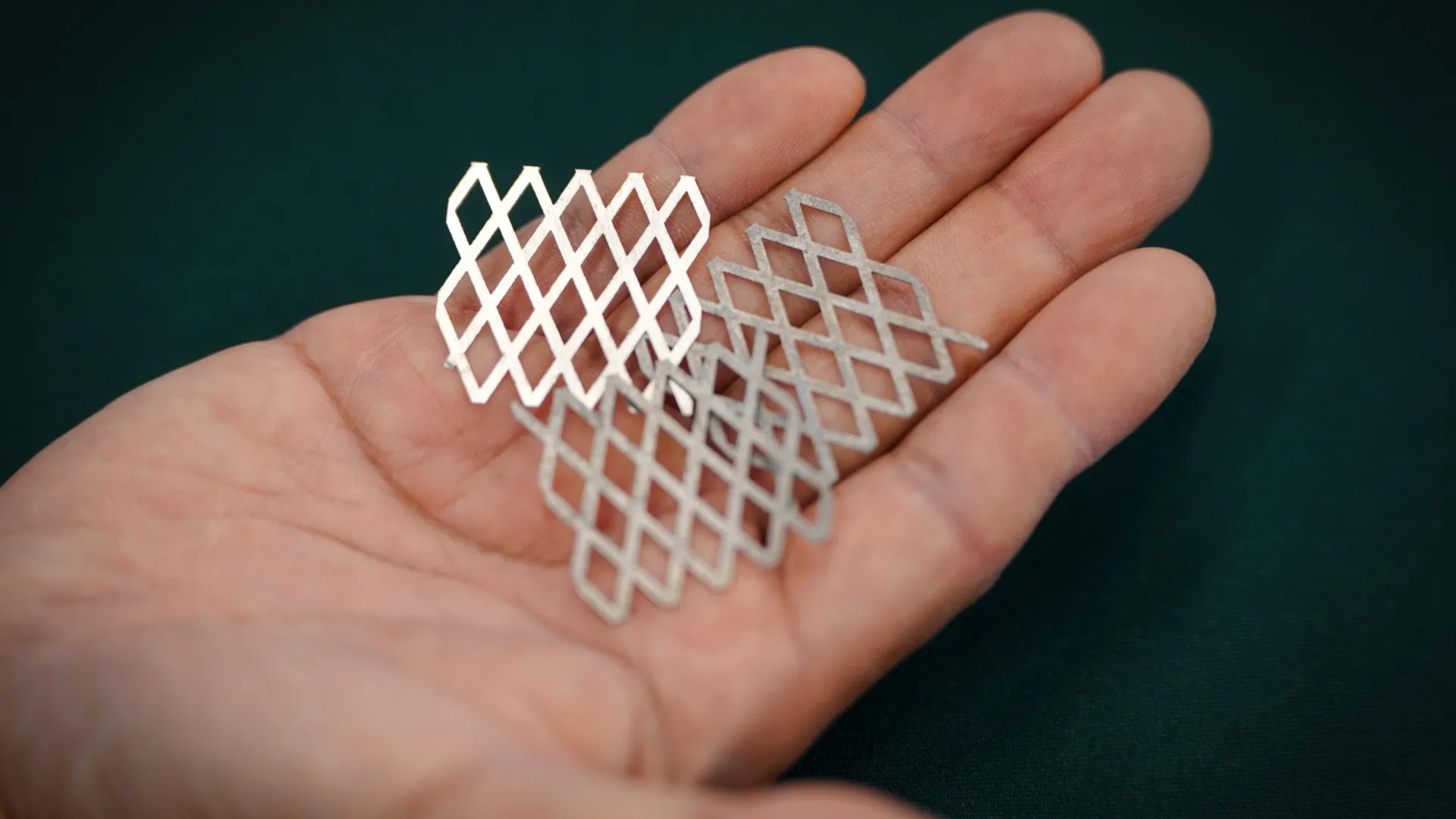
Researchers at the University of Hong Kong (HKU) have developed a new stainless steel for green hydrogen production that can withstand extreme corrosion while significantly reducing the cost of electrolyzer systems.
Led by Professor Ming-Hsin Huang of HKU’s School of Mechanical Engineering, the research team developed stainless steel for hydrogen, known as SS-H2. The advanced material is designed to remain stable in highly corrosive environments where conventional stainless steel can fail.
The breakthrough is the latest achievement in Huang’s long-running “Super Steel” project. His team previously developed stainless steel with anti-coronavirus properties in 2021, as well as exceptionally strong and tough supersteel in 2017 and 2020.
New stainless steel designed for green hydrogen
SS-H2 offers exceptional corrosion resistance, making it a promising material for electrolyzers that use seawater to produce green hydrogen. Researchers are actively seeking practical and sustainable technologies capable of producing hydrogen from abundant water resources.
Hydrogen is produced through electrolysis, a process that uses electricity to split water into hydrogen and oxygen. When the electricity comes from renewable sources such as solar or wind power, the hydrogen is known as green hydrogen. However, electrolyzer components must withstand intense chemical and electrical conditions, particularly when chloride-rich seawater is involved.
In saltwater electrolyzer tests, SS-H2 demonstrated performance comparable to titanium structural components currently used in systems that produce hydrogen from desalinated seawater or acidic solutions. The key advantage is its much lower cost.
The research was published in Materials Today in a study describing a “sequential double passivation” strategy for designing stainless steel for high-potential electrochemical applications. The researchers have filed patent applications in several countries, and two patents have already been granted.
Why conventional stainless steel has limitations
Stainless steel has been used for nearly a century and remains one of the most important materials for applications where corrosion resistance is essential. Much of its durability comes from chromium.
When chromium in the steel reacts with the surrounding environment, it forms a thin protective film on the surface. This passive layer helps prevent the underlying metal from continuing to corrode.
However, conventional stainless steel has important limitations when exposed to extremely high electrical potentials.
The protective chromium oxide layer, Cr2O3, can undergo further oxidation and form soluble Cr(VI) species. When this happens, the surface may experience a form of degradation known as transpassive corrosion.
In conventional stainless steel, transpassive corrosion can begin at approximately 1,000 mV, measured against a saturated calomel electrode (SCE). By comparison, water oxidation, a vital reaction in electrolysis, requires a potential of approximately 1,600 mV. This difference has limited the use of traditional stainless steel in high-voltage electrochemical systems.
Even 254SMO super stainless steel, widely regarded as a benchmark chromium-based alloy with excellent resistance to pitting corrosion in seawater, can lose its corrosion resistance when the electrical potential becomes sufficiently high.
A second protective layer improves corrosion resistance
Huang’s team overcame this long-standing challenge through a method the researchers call “sequential double passivation.”
Instead of relying only on the conventional chromium oxide layer, SS-H2 forms a second protective layer on top of it. This additional manganese-based layer begins forming at approximately 720 mV.
Together, the two protective layers enable SS-H2 to resist corrosion in chloride-containing environments at potentials of up to 1,700 mV. Chlorides, which are abundant in seawater, are highly aggressive toward many metals and can trigger localized corrosion.
Reaching 1,700 mV is significant because it exceeds the potential required for water oxidation. The researchers therefore describe SS-H2 as a major advance over conventional stainless steel for high-potential hydrogen production systems.
The role of manganese is particularly notable. Traditionally, manganese has been considered harmful to the corrosion resistance of stainless steel.
“Initially, we didn’t believe it because the general view is that Mn impairs the corrosion resistance of stainless steel. This base passivation is a counterintuitive discovery that cannot be explained by current knowledge of corrosion science. However, after examining the atomic-level results, we were extremely surprised and eager to exploit the mechanism,” said Kaiping Yu, the study’s lead author and a Ph.D. student supervised by Professor Huang.
Nearly six years of research
The project took almost six years, beginning with the discovery of the unusual steel and continuing through detailed investigations into its atomic-level behavior. The research has now progressed toward publication, patent protection and potential industrial applications.
Rather than focusing primarily on how alloys resist corrosion under normal conditions, Huang’s group has concentrated on developing materials that remain stable at much higher electrical potentials.
“Unlike the current corrosion community, which focuses primarily on resistance at natural potentials, we specialize in developing high-potential-resistant alloys. Our strategy overcomes the fundamental limitations of traditional stainless steels and establishes a new paradigm for alloy development at high potentials. This breakthrough is exciting and opens up new applications,” Professor Huang said.
Potential to reduce material costs by 40 times
The economic impact of SS-H2 could be substantial.
Electrolyzers that operate with desalinated seawater or acidic solutions currently require expensive titanium components coated with gold or platinum. These materials can account for a significant portion of an electrolysis system’s total cost.
According to the researchers, a 10-megawatt proton exchange membrane (PEM) electrolysis system currently costs approximately HK$17.8 million. PEM electrolysis uses a membrane and electricity to separate water into hydrogen and oxygen.
Structural components can account for approximately 53% of the system’s total cost.
The researchers believe SS-H2 could replace some of these expensive components with a significantly more affordable steel alternative. Their calculations indicate that the new material could reduce structural material costs by approximately 40 times, creating substantial opportunities for large-scale green hydrogen production.
Moving from the laboratory to industrial production
Several engineering challenges must still be addressed before SS-H2 can be widely deployed. Laboratory performance is only one part of the process, because commercial electrolyzers require components in practical forms such as metal mesh, wires and porous foam.
Despite these challenges, the research team has begun moving SS-H2 toward large-scale manufacturing.
“Challenges remain, from developing experimental materials for water electrolyzers to producing practical products such as mesh and foam. We have now taken a major step toward industrialization. SS-H2-based wires are being produced in cooperation with factories in mainland China. We are continuing to develop more economical SS-H2 applications for hydrogen production from renewable energy,” Professor Huang added.
The combination of high corrosion resistance and much lower material costs could make SS-H2 a valuable material for next-generation electrolyzers. If the technology can be successfully transferred from laboratory samples to industrial components, it may provide a more affordable way to produce green hydrogen from renewable energy and seawater.
Source: www.sciencedaily.com