


40,000-Year-Old Bird Figurines Discovered at Hohle Fels Cave in Germany
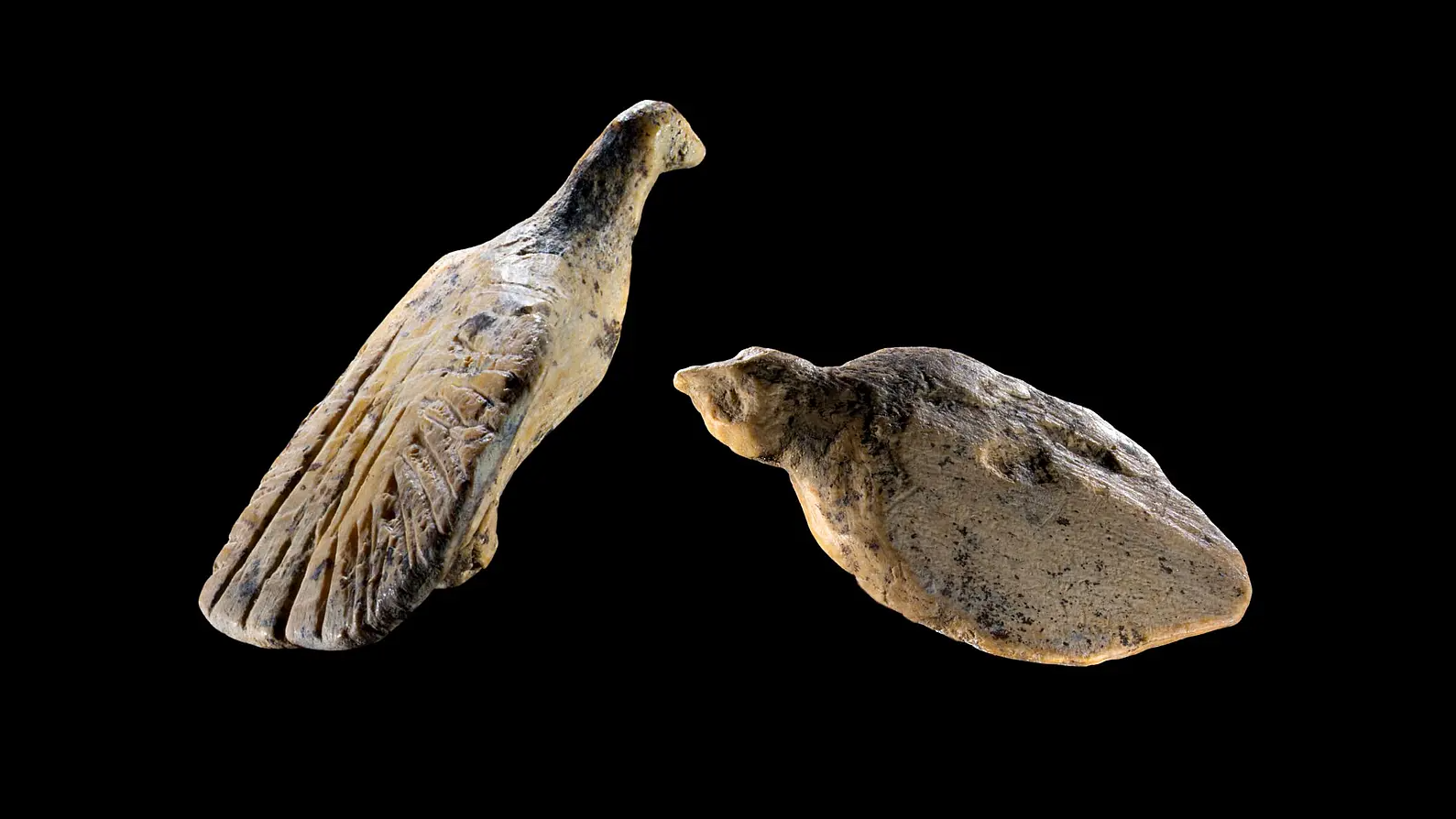
Archaeologists excavating the prehistoric Hohle Fels cave in Germany have discovered two tiny bird figurines carved from mammoth ivory. The thumbnail-sized sculptures provide new evidence that Ice Age humans possessed advanced artistic skills and could create highly detailed artwork more than 40,000 years ago.
“The figurines demonstrate that the earliest artists were skilled ivory-carvers, who could depict delicate motifs in miniature form,” Nicholas Conard, an archaeologist at the University of Tübingen and director of excavations at Hohle Fels, said in a July 29 statement.
Researchers found the two bird carvings in 2025, positioned only 5 feet (1.5 meters) apart in an archaeological layer dating to approximately 40,000 years ago. Their discovery brings the total number of bird figurines found at Hohle Fels to three. Archaeologists discovered a small water bird at the cave in 2001.
Latest Videos FromLive Science
Hohle Fels was occupied by early Homo sapiens during the Aurignacian period, which lasted from about 43,000 to 28,000 years ago. This era followed the decline and disappearance of Neanderthals in Europe and was marked by a major expansion of human creativity.
During the Aurignacian period, people produced some of the world’s first musical instruments, jewelry and figurative sculptures. The Venus of Hohle Fels, a 41,000-year-old ivory statuette depicting a woman with exaggerated breasts and buttocks, was discovered at the cave in 2008. It is widely considered the oldest figurative sculpture in Europe.
Archaeologists have also recovered animal figurines and an ivory rope-making tool at Hohle Fels, whose name means “hollow rock” in German.
Although the newly discovered bird sculptures are only about the size of a thumbnail, they contain an impressive number of distinctive details. Unlike highly abstract carvings, the figurines appear to capture specific characteristics of real birds.
“The carvings are not highly stylized but instead include many specific and unique features,” Conard said. “The artist has recorded detailed observations that allow us to consider which kind of bird is represented and what the bird could be doing.”
One of the ivory birds appears to be resting on the ground, possibly brooding over eggs. Its posture may indicate that it represents a ptarmigan, a game bird related to chickens and grouse. Ptarmigan bones have also been found in prehistoric layers at Hohle Fels.
The second figurine has its wings spread, suggesting that it may depict a bird in flight or performing a courtship display. Researchers believe it could also represent a ptarmigan, although its form may indicate a bird of prey.
The two miniature bird carvings provide important insights into the lives of early modern humans in Europe. They suggest that art played a significant role in Ice Age communities and that people closely observed the animals living in their environment.
However, archaeologists do not yet know what symbolic or practical meaning the figurines held for the Aurignacian people who lived at Hohle Fels. The sculptures may have served as personal talismans, objects linked to spiritual beliefs or symbols associated with a particular group.
Hohle Fels is unique among Ice Age cave sites because it is currently the only known location with bird figurines. The discovery may reflect the close relationship early humans had with the natural world and their ability to recognize subtle differences in animal behavior and anatomy.
“Our region and landscape have always been the home of a vast range of birds,” Stefanie Kölbl, managing director of the Museum of Prehistory and Ice Age Art, said in the statement. “Their calls signaled warnings, and the residents of the region often used their hollow bones and even mammoth ivory to make flutes that produced magical sounds.”
The newly discovered mammoth ivory bird figurines are on display at the Museum of Prehistory and Ice Age Art in Blaubeuren, Germany, through April 4, 2027.
How much do you know about the Paleolithic, Mesolithic and Neolithic periods? Test your knowledge with our Stone Age quiz!
Source: www.livescience.com